
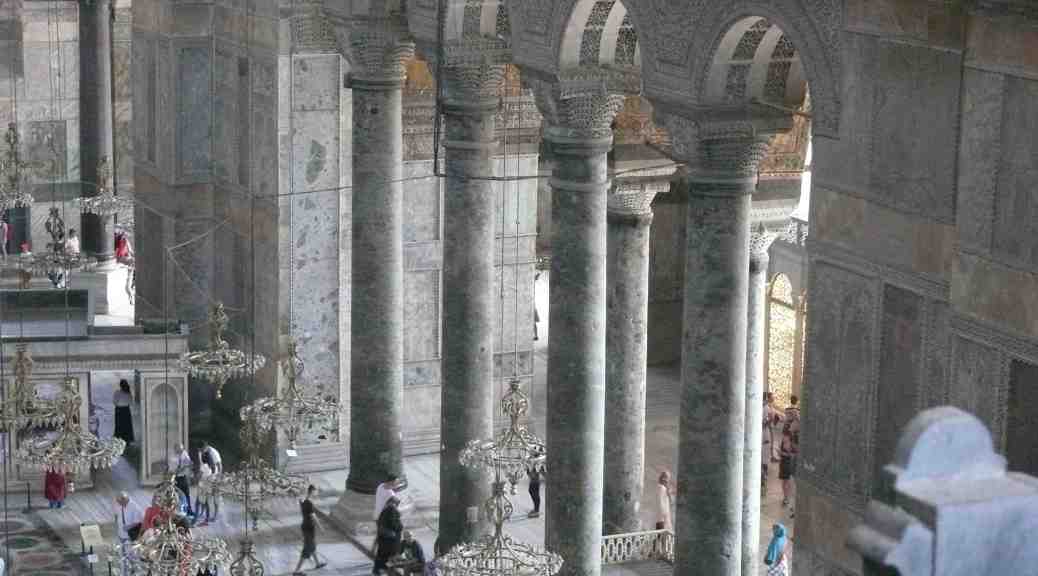

So for the first day of our tour of Turkey we stayed in Istanbul and went back to the area of our initial hotel [which was such a great location by the way!] to see the Blue Mosque, Topkapi Palace and Hagia Sophia. 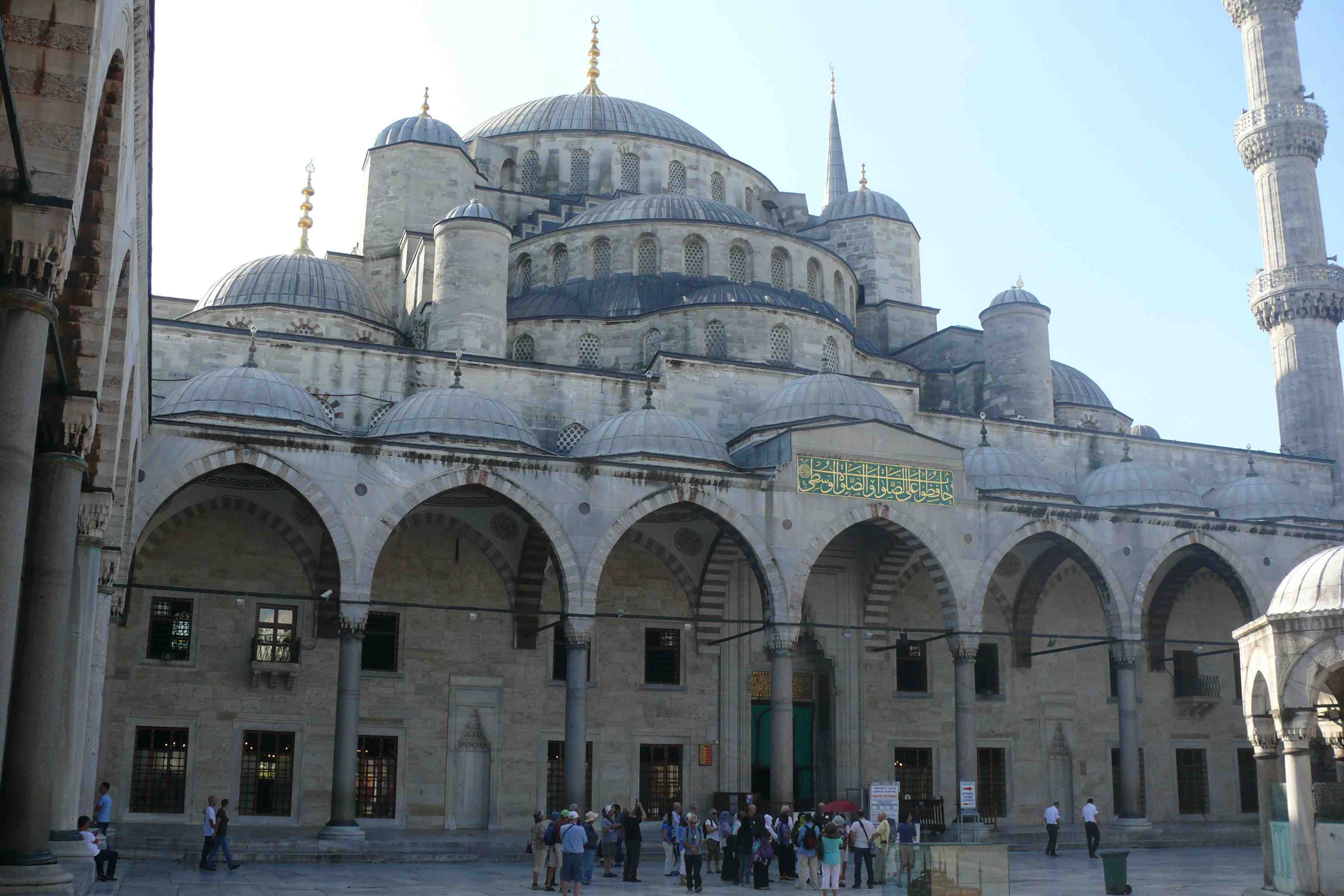 Each of them were quite amazing in very different ways.
The Blue Mosque was built between 1609 and 1616 and is the only mosque with 6 minarets. It’s called the Blue Mosque, 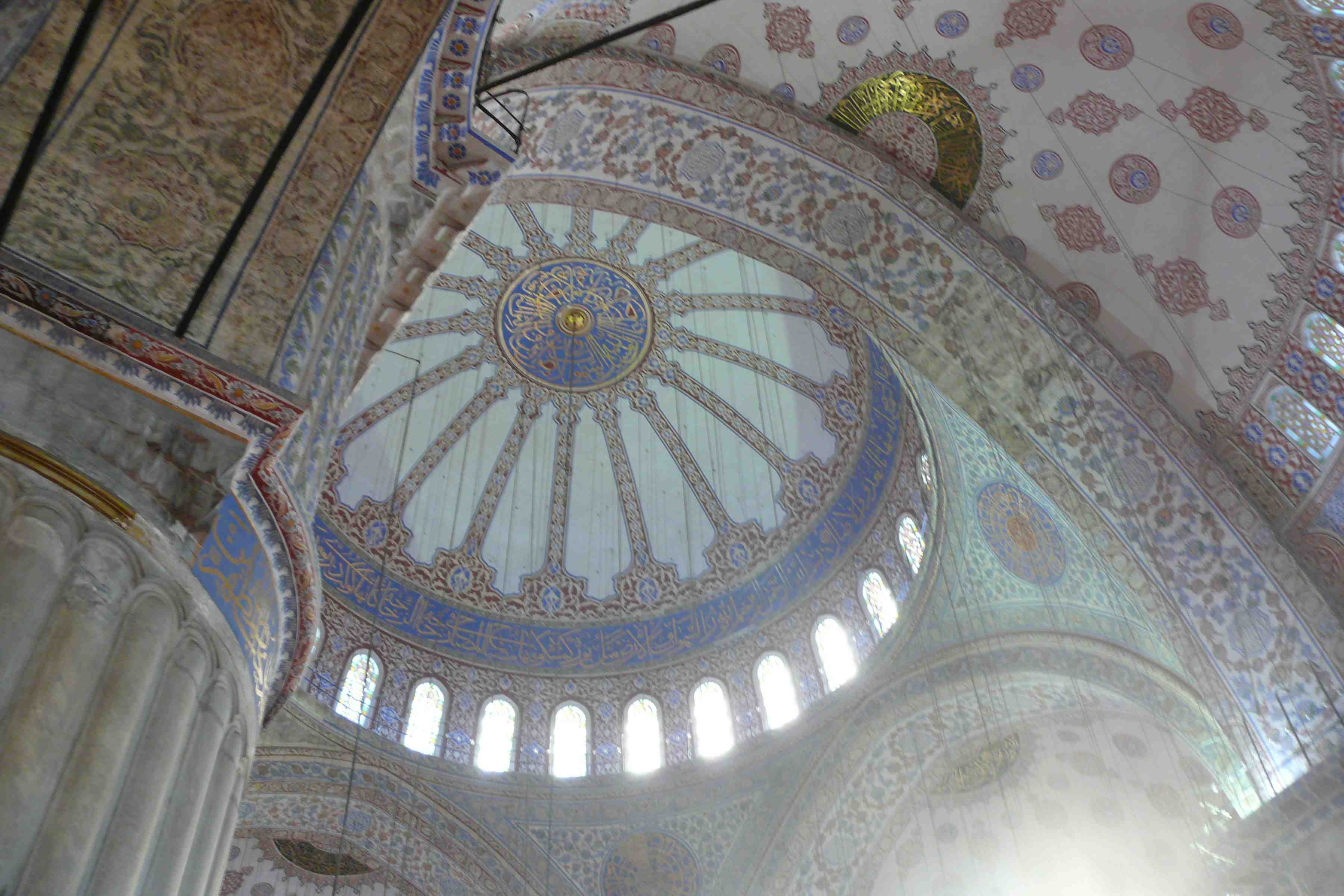 not because of anything particularly blue on the outside, but because of so many blue tiles on the inside. It is certainly a feat of architecture and engineering, but there are many mosques in Istanbul which all look very similar.
 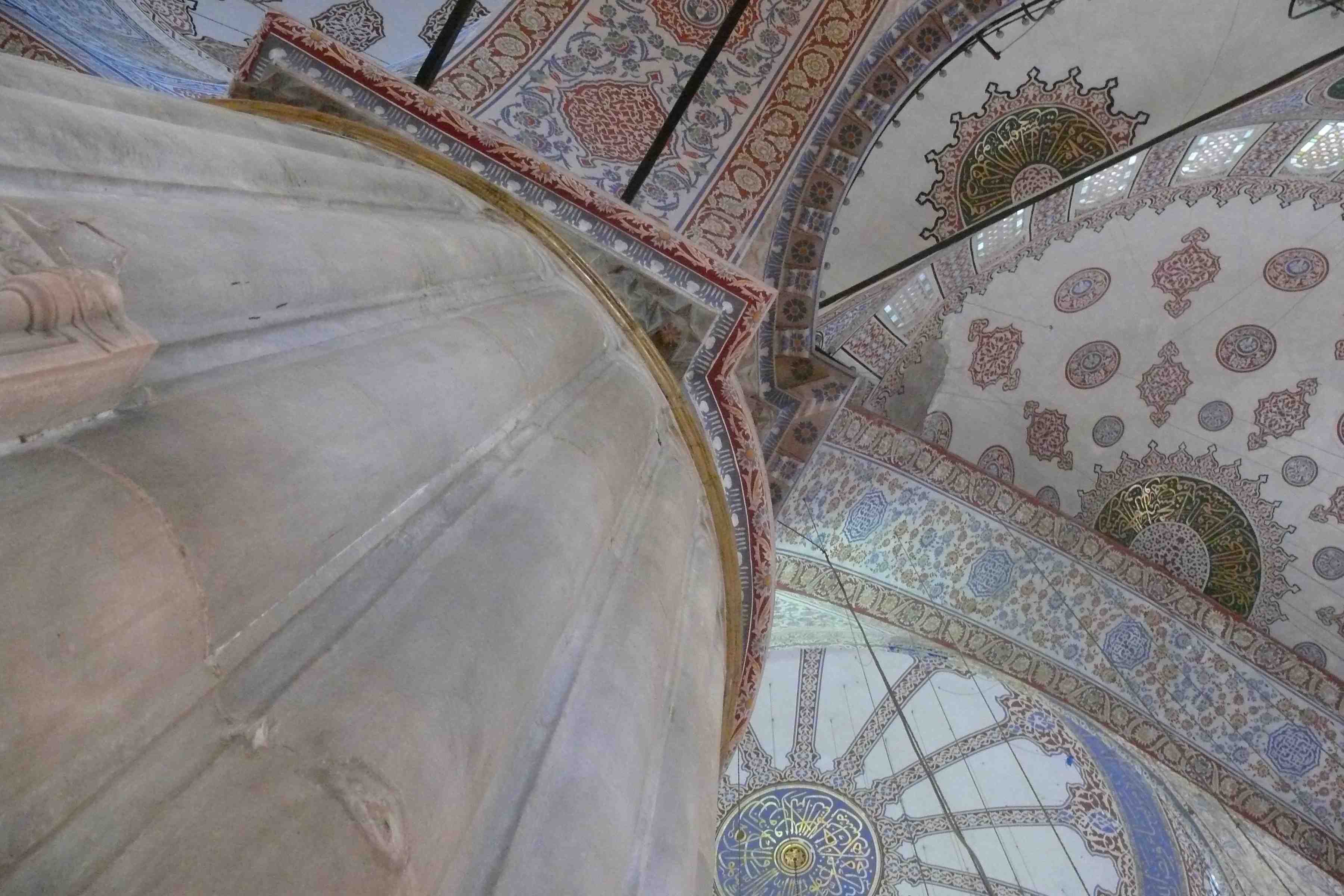 It was quite interesting being in the worship and meeting place of another religion and seeing the method and structure of worship. There are no seats as all praying is done on the floor.
 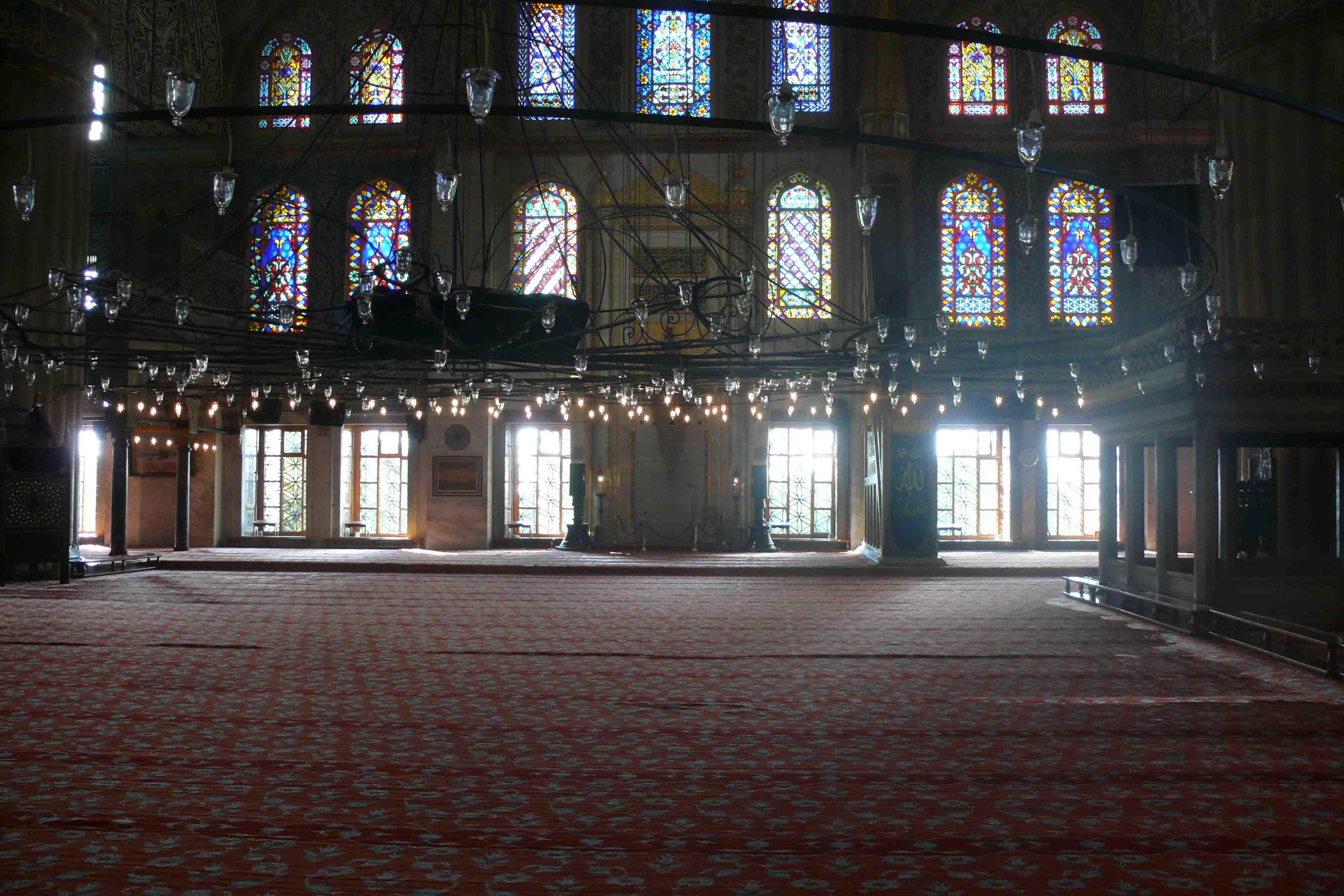 The women are in a separate section and the pulpit for the imam is very high and has a long narrow staircase like a tunnel rising to the top. The outer courtyard has a large fountain with taps as it is a requirement for Muslims that hands, feet and faces be washed before entering to pray.
The call to prayer from the minarets had an interesting beginning. It was obviously not possible to use bells, because that’s what Christians did, so it was decided to use the human voice instead. So the minaret towers were constructed on each mosque to enable the call to go out in all directions. At each call to prayer [five times a day] the imam would climb the minaret and sing the call to prayer. However, since the advent of electricity [around 1912] the call to prayer has been amplified through speakers, and these days it is a recorded call that goes out across the city. Even though Turkey is 99% Muslim, the vast majority of people are not practicing their religion with the exception of some Fridays and Ramadan, when people are much more religious and ask for forgiveness.
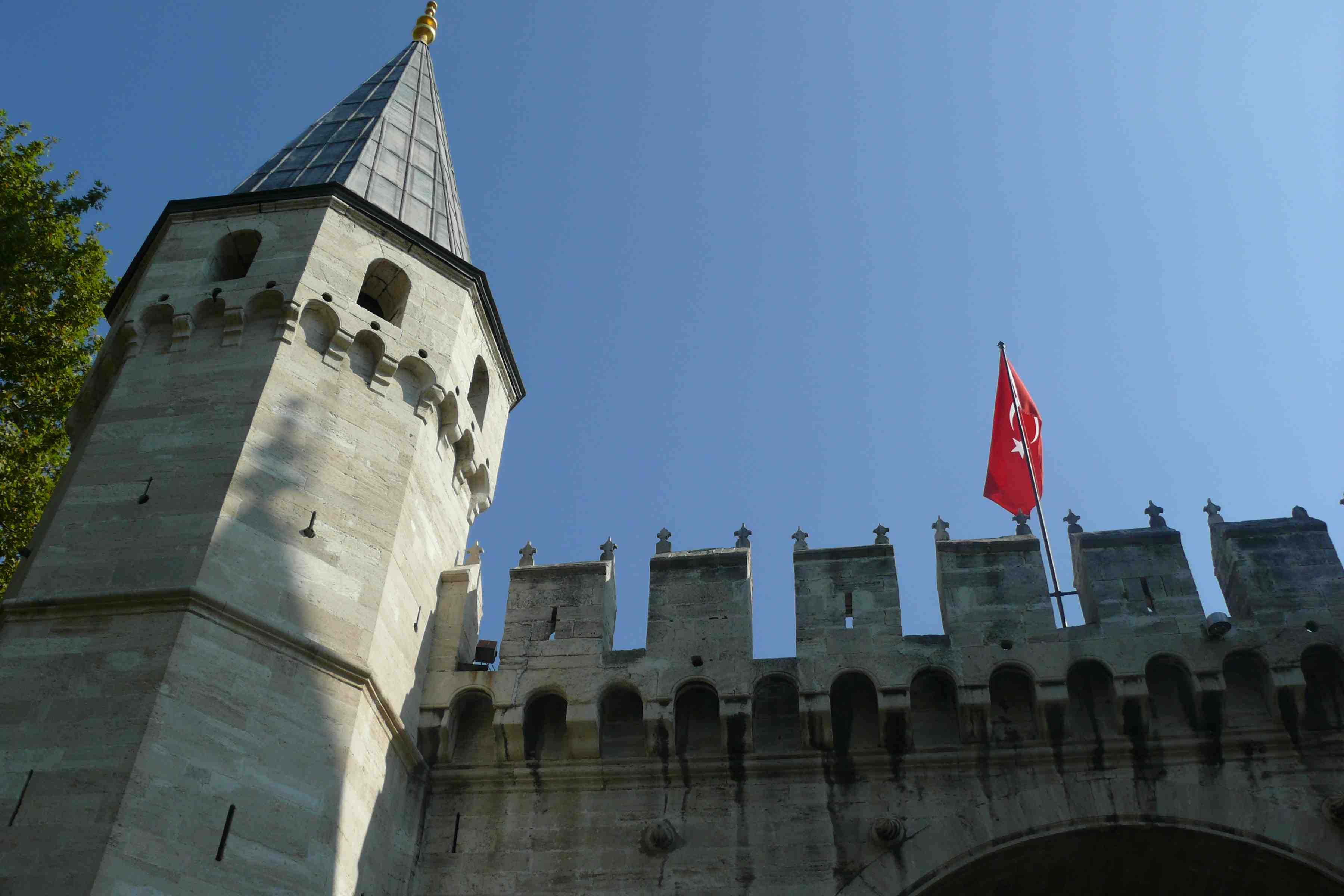 Topkapi Palace was the home of the Sultans and built in 1450s after the Ottomans conquered the city. It was abandoned as the palace when
 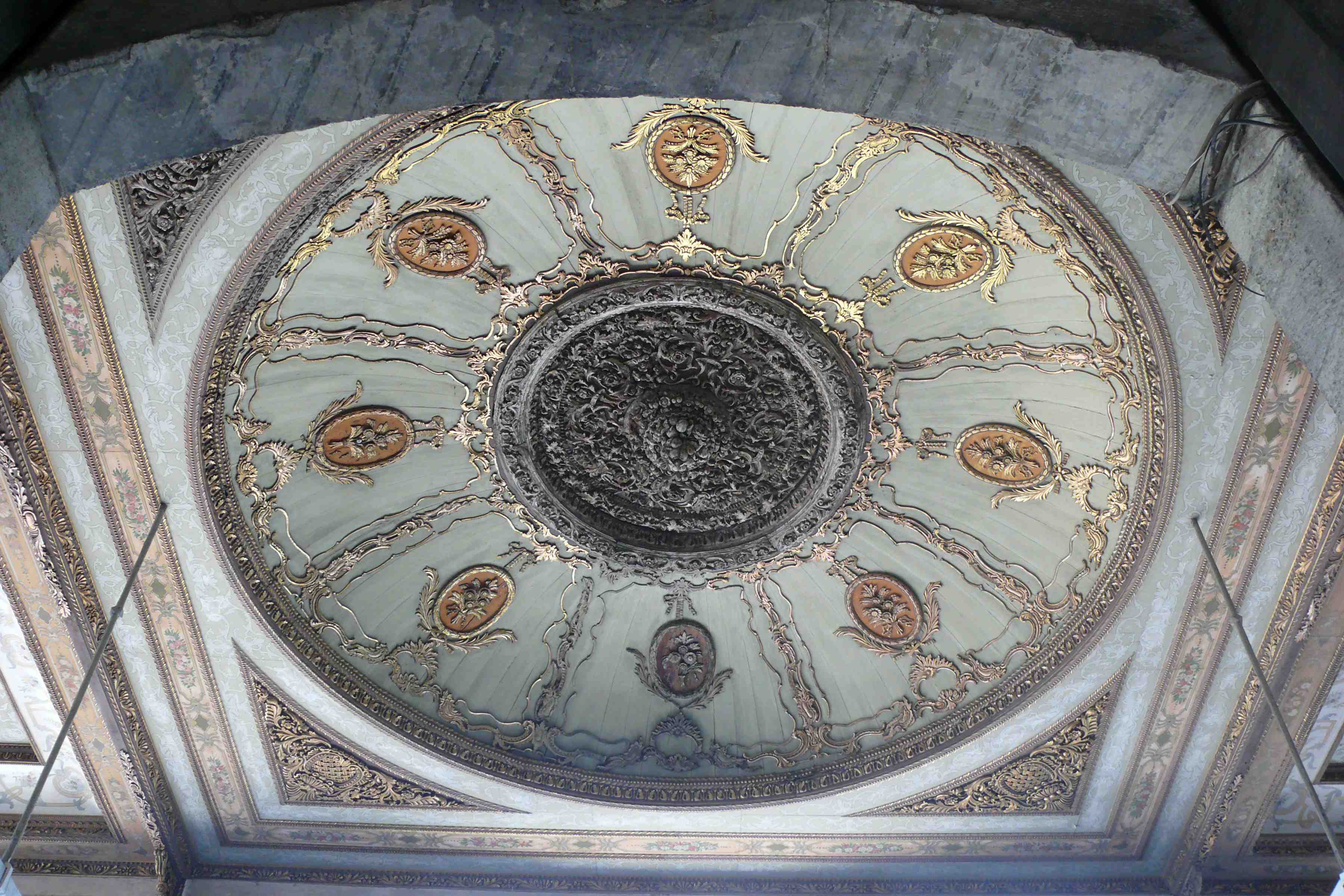 Dolmabahce Palace was built [which we saw last Friday] and has been a museum since 1924. Architecturally and internally it was nowhere near as imposing or decadent as
  Dolmabahce but the things we saw today were, nonetheless, amazing.
Unfortunately taking photos inside was not allowed, so we again recommend you search it out on google. With all the people who lived and worked in this palace [all revolving around one man – the Sultan] the kitchens had to cater for around 6,000 people daily. These have just been renovated as a museum and the size of the cauldrons was simply incredible. They had several handles on each one but there would be no way they could be lifted when full of hot food. Each day there were hundreds of cows, sheep and chickens cooked and about 1½ tons of rice. 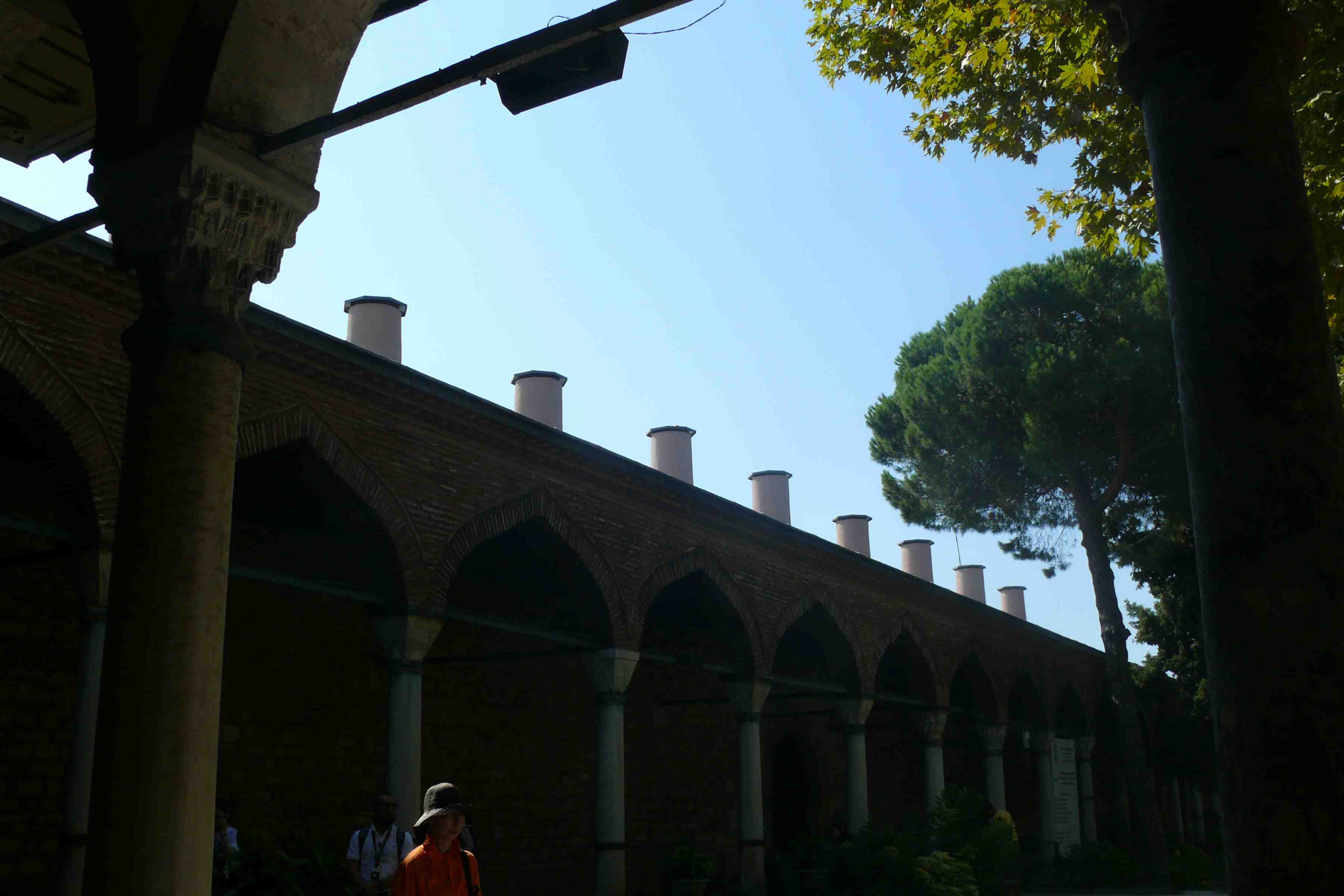 The chimneys indicate the amount of heat produced and the size of the ovens and of the kitchens required for the palace. I for one, would not have wanted to work there.
We saw the displays of clothing of several of the sultans, and the throne where he received guests was housed in its own building. The throne was not a chair, but actually more like a bed, about the size of two kingsize beds, with four posts and covered in red velvet.
The treasury building was an amazing display of jewels from many of the sultans, and the collection included an 86 carat diamond, the 5th largest in the world, surrounded by 49 other diamonds. Certainly no finger could hold it!
The armoury building was intriguing, showing various weapons from the ages, from bows and arrows, daggers, swords, scimitars, pistols, rifles, shields, helmets, armour, breastplates. A truly fascinating collection.
But here’s the most extraordinary – today we also saw some relics [apparently]. We saw Moses’ staff with which he parted the Red Sea, King David’s sword, Joseph’s turban. We saw a box with the prophet Muhammed’s tooth [the box was closed], we saw a box [again closed] with the prophet Muhammed’s beard inside, but as we were exiting that building, we saw a glass tube with some of Muhammed’s beard inside, and we also saw a footprint of Muhammed in marble, which miraculously appeared as he stepped on it.
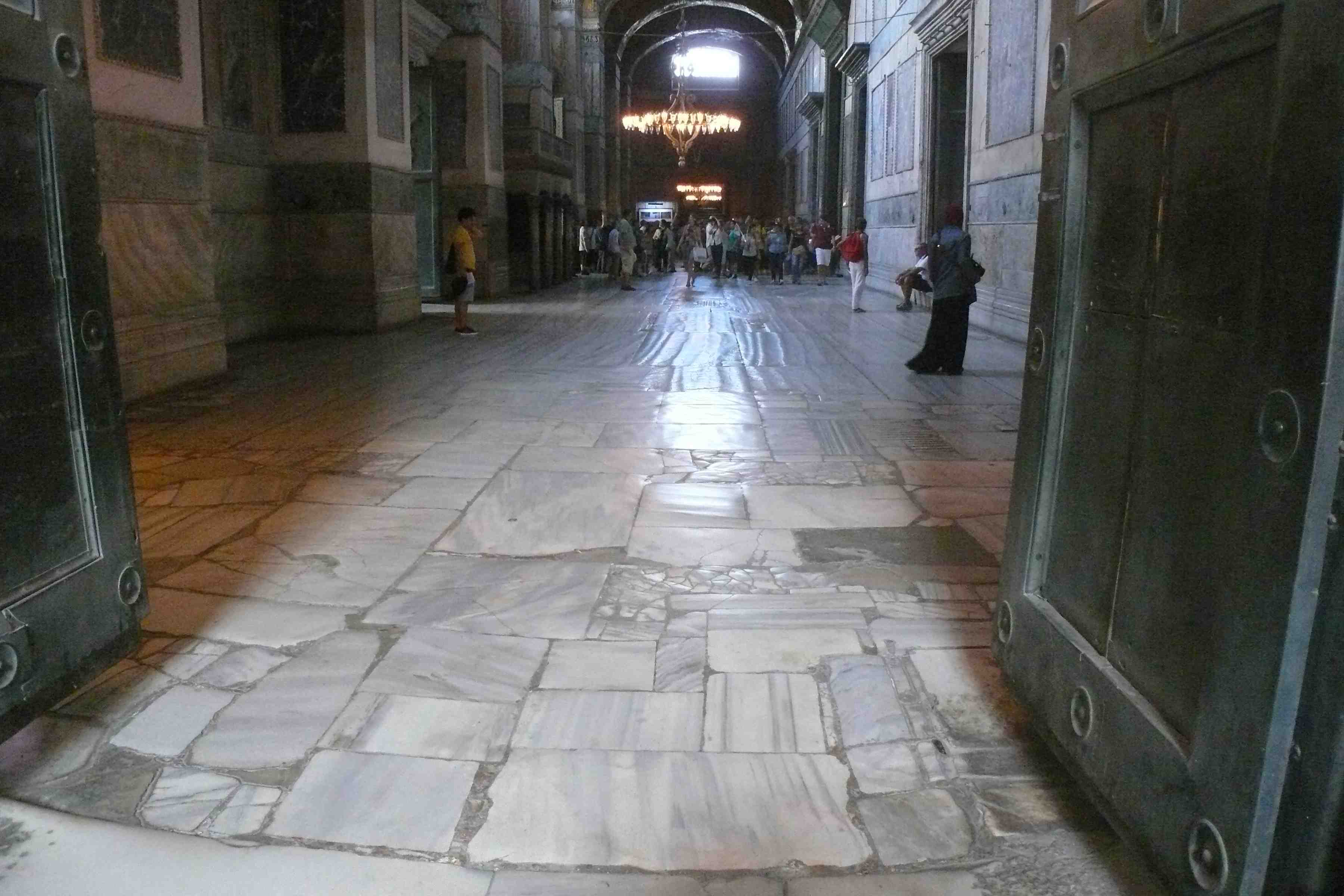
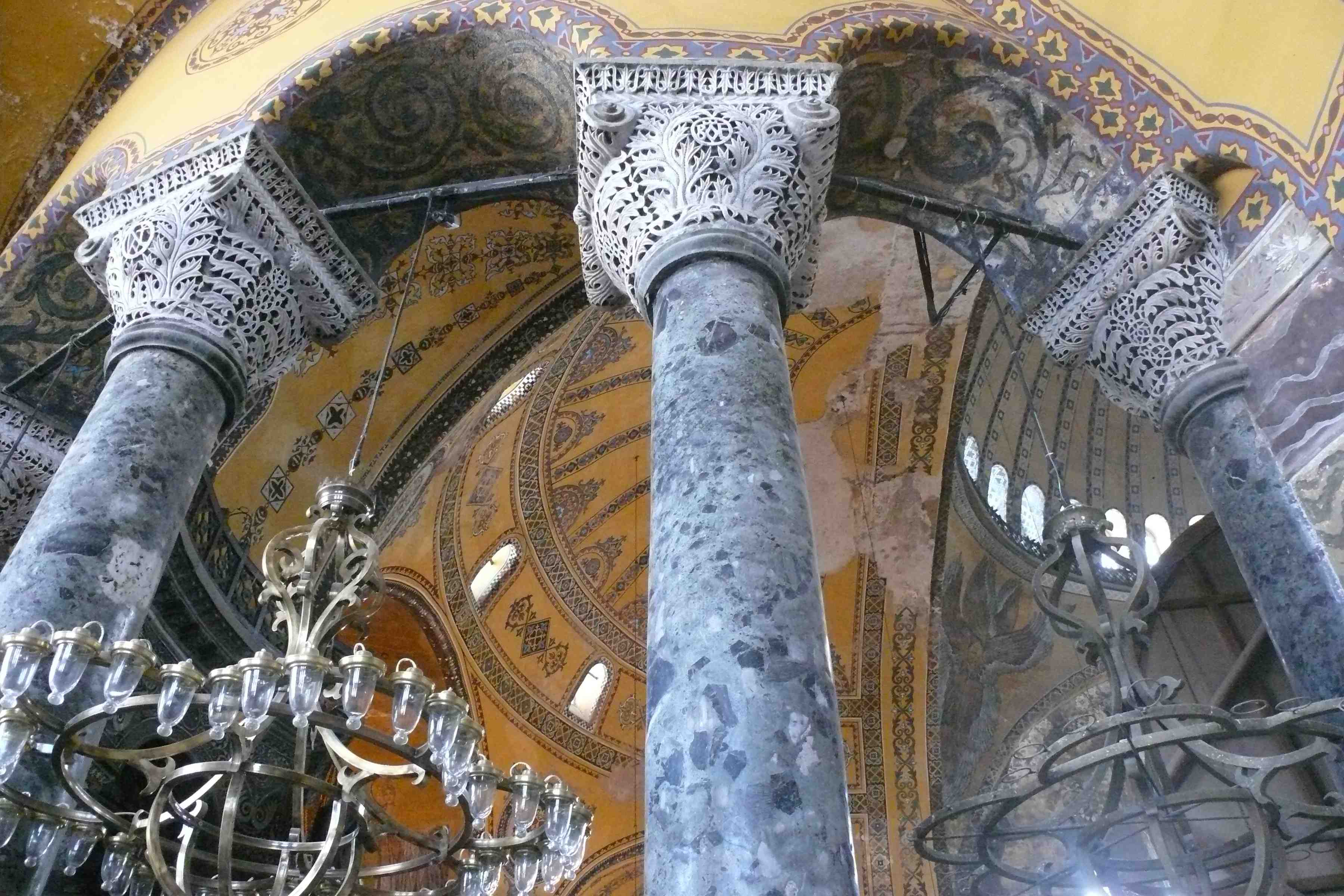
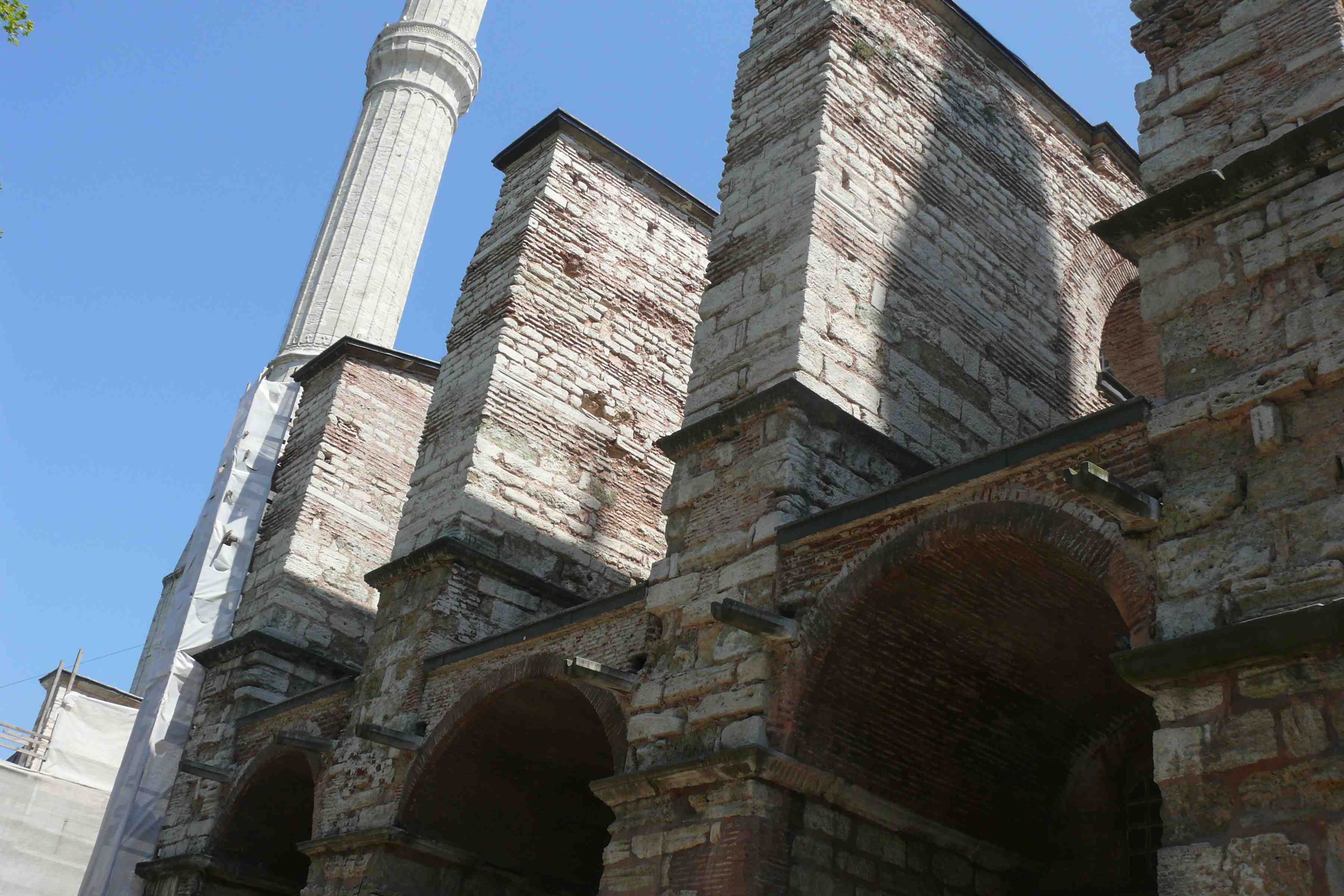 Our visit to Hagia Sophia though was the most amazing and jaw-dropping of the day.
  The building we saw today was the third to be constructed on the site as the first one [built in the 4th century] was burnt down in 404, and the second one [built from 415] was burnt down in 532. The current building was completed in 537 and more than 10,000 people were involved in construction.
 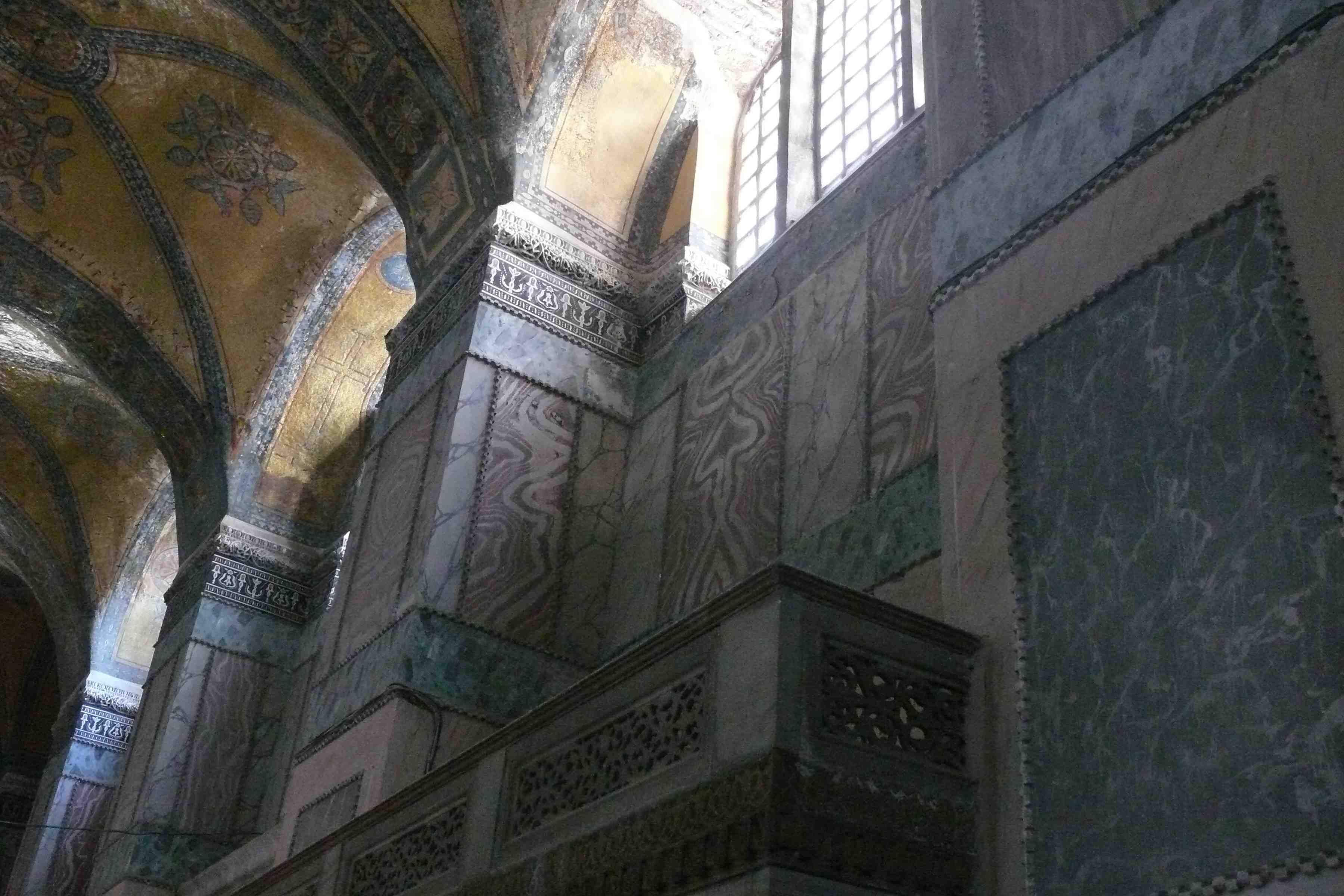 It was used as a Christian church for nearly 1,000 years before taken over by Muslims in 1453 after the conquest of Istanbul. Much of the Christian interior was converted to Muslim symbols,
 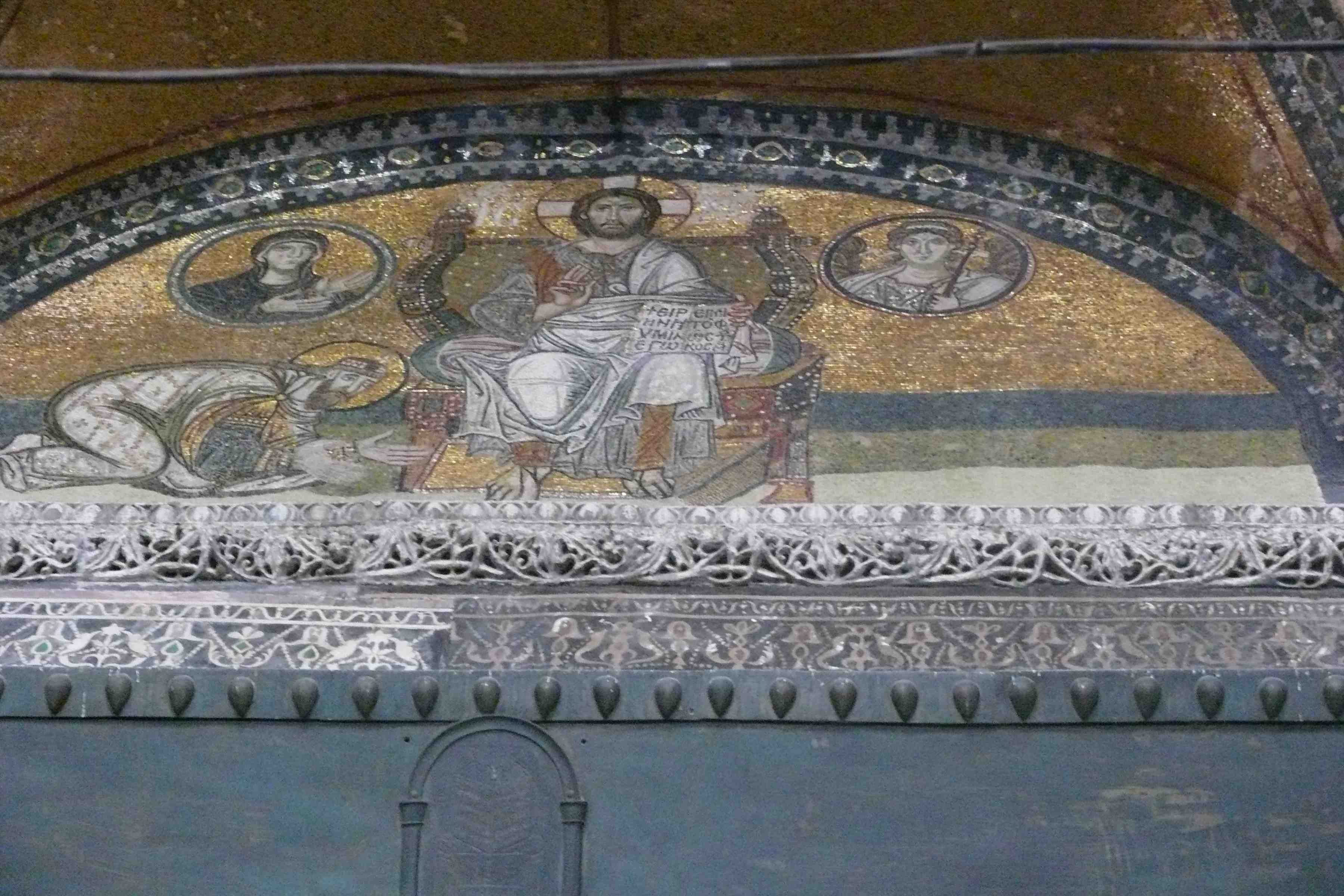 but in recent years, since it has become a museum, there has been some restoration and removal of the Islamic ‘layer’ and some amazing mosaic work and painting have been uncovered.
 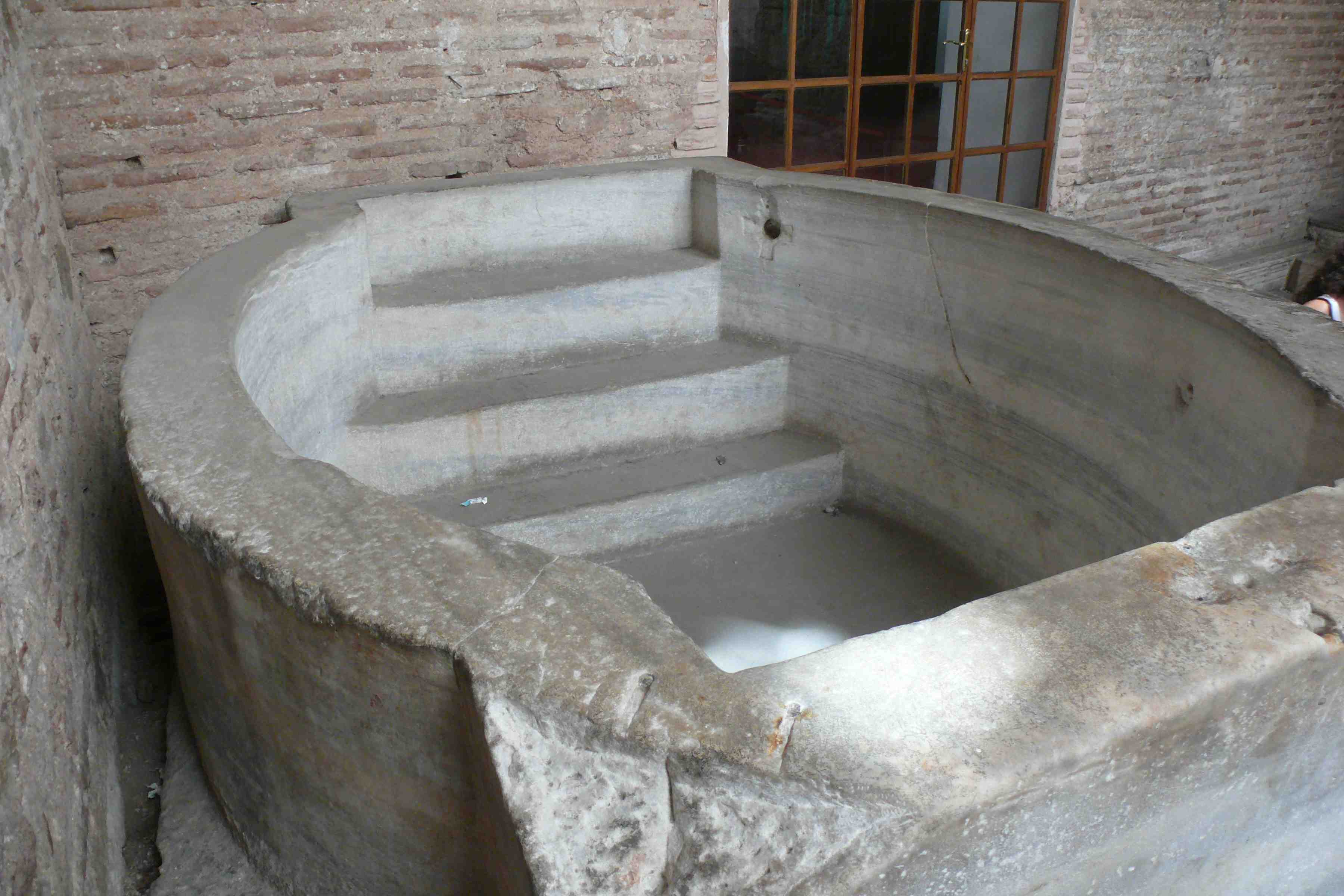 The building is in remarkably good condition despite its age and we could have spent much more time wandering round. There is more renovation work going on at the moment and it will be quite incredible to see what else might be revealed.
 We have learned so much today. And some of the most interesting was statistics – in Istanbul there are 5,000 mosques; 80,000 in all of Turkey; there are 257 churches
  across the nation; 7% of Turks practice daily prayer at a mosque and only 1% of females practice their religion.
After a visit to the Spice Bazaar we returned to the hotel, exhausted but very exhilarated.
 Chris and Lynda Johnson