
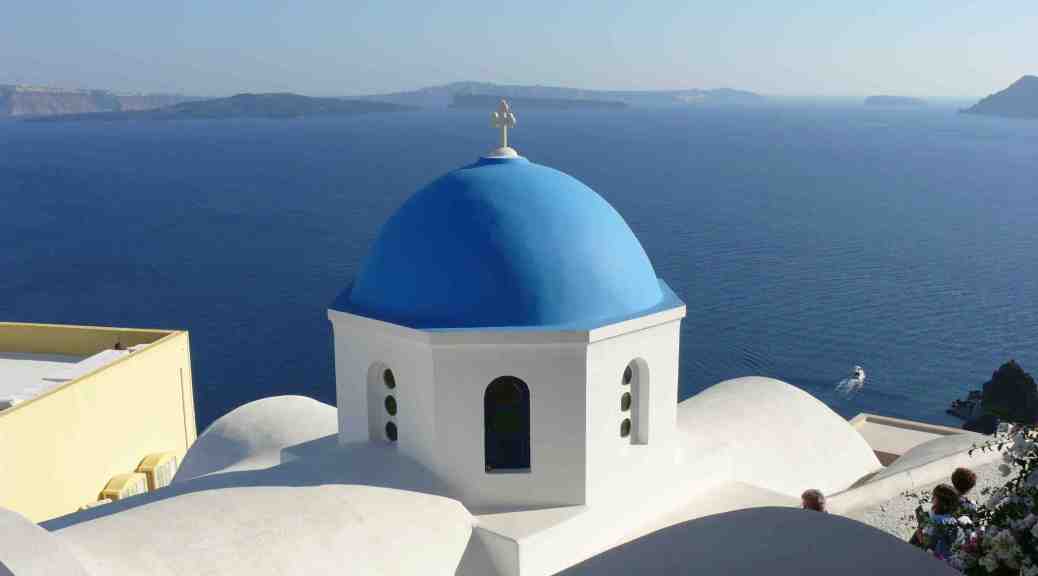
 We boarded our cruise ship for three days visiting Mykonos, Kusadasi [mainland Turkey], Patmos, Crete and Santorini.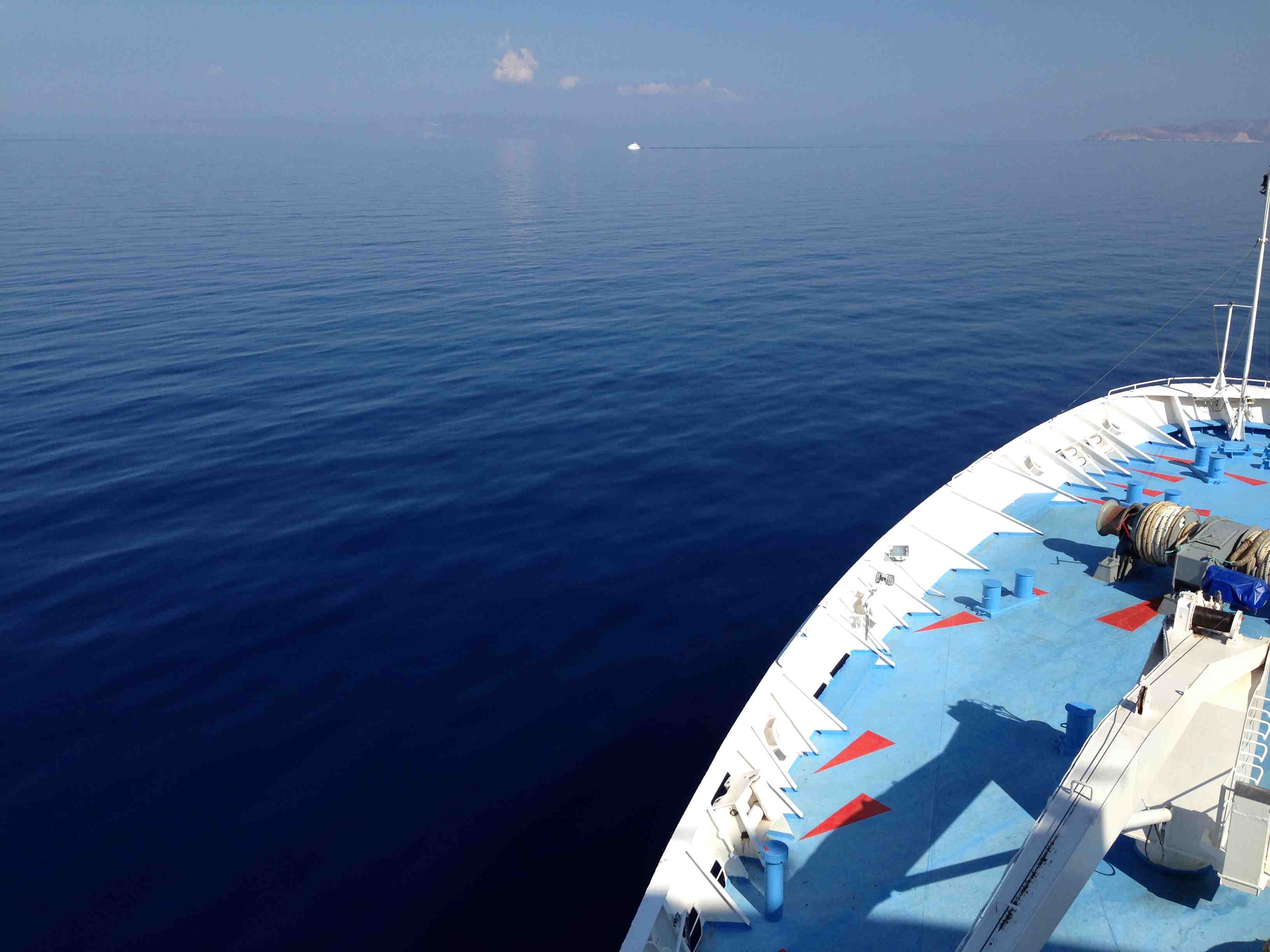
Never having cruised before, we were thoroughly looking forward to this portion of our tour of Greece, and there’s certainly something special about cruising this part of the world.
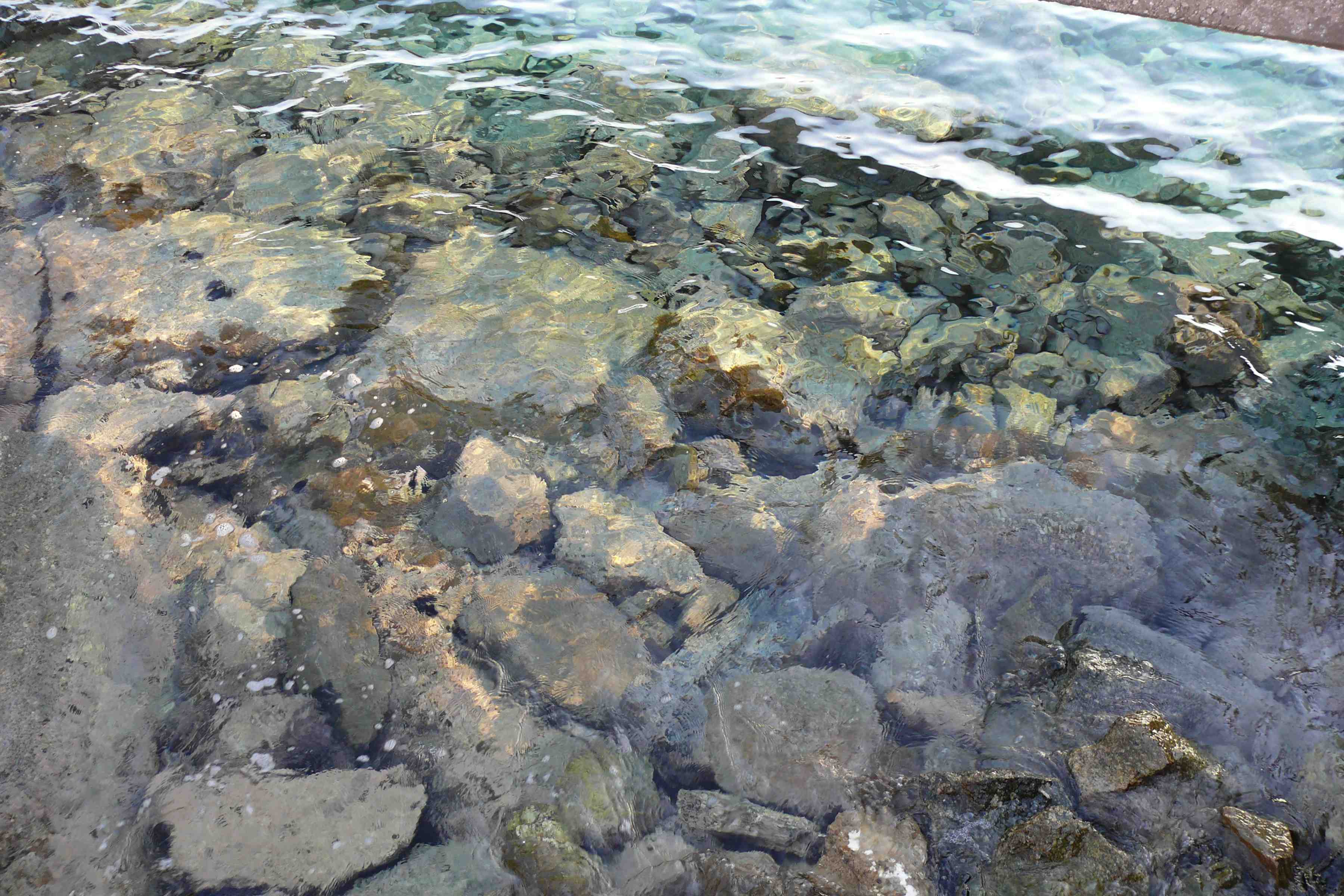
 The thing that struck me more than anything else was the colour of the water. We all see photos of the Mediterranean and the Aegean, and it is easy to think that the colour has been enhanced.
 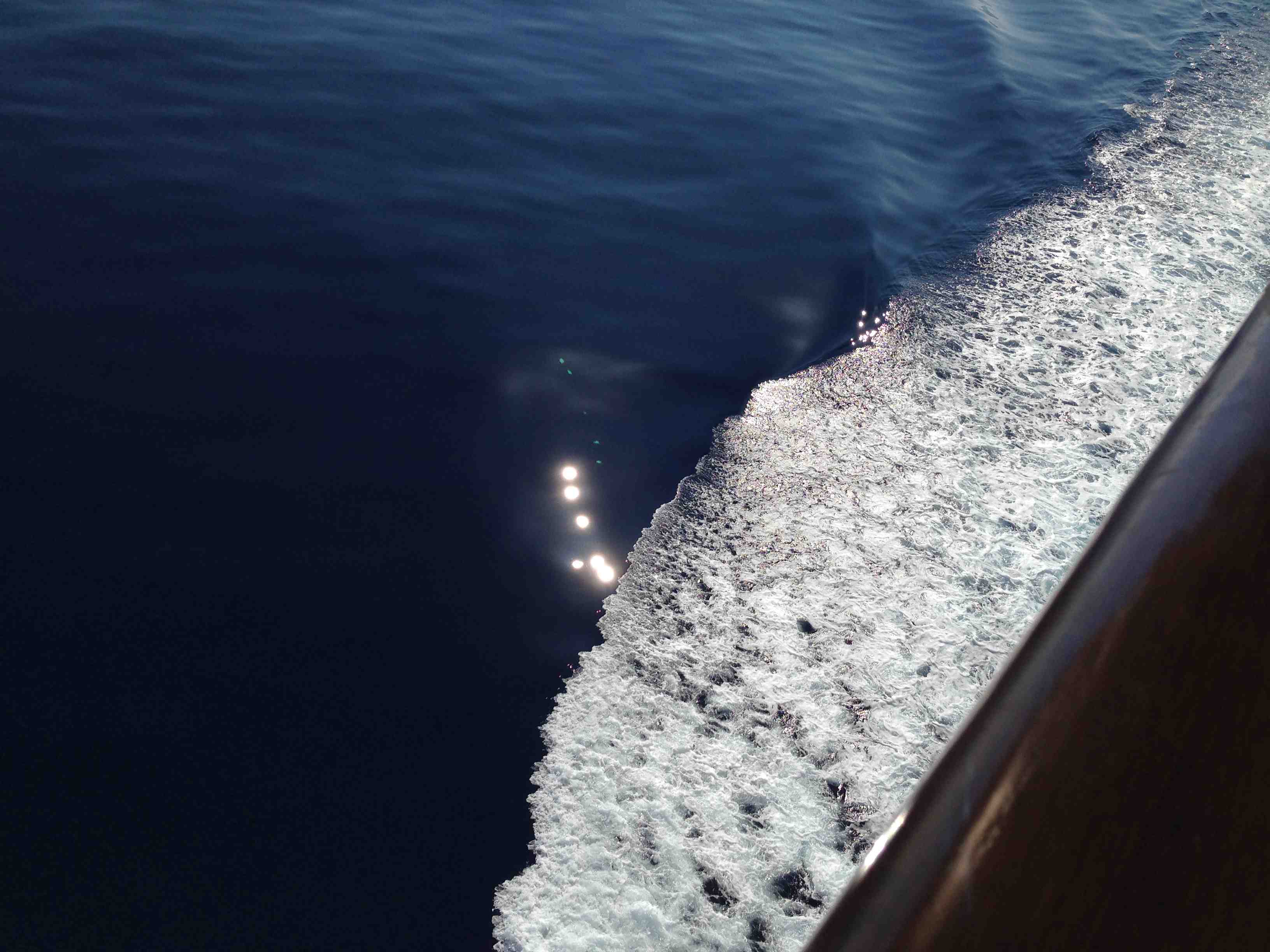 But as I looked out over the sides of the ship, the colour took my breath away. How could something that looks so artificial be so real. It was calm, it was surreal, it was fantastic. The only thing that could have made it better was for the hazy sky to be clear so that the islands around us were more distinct.
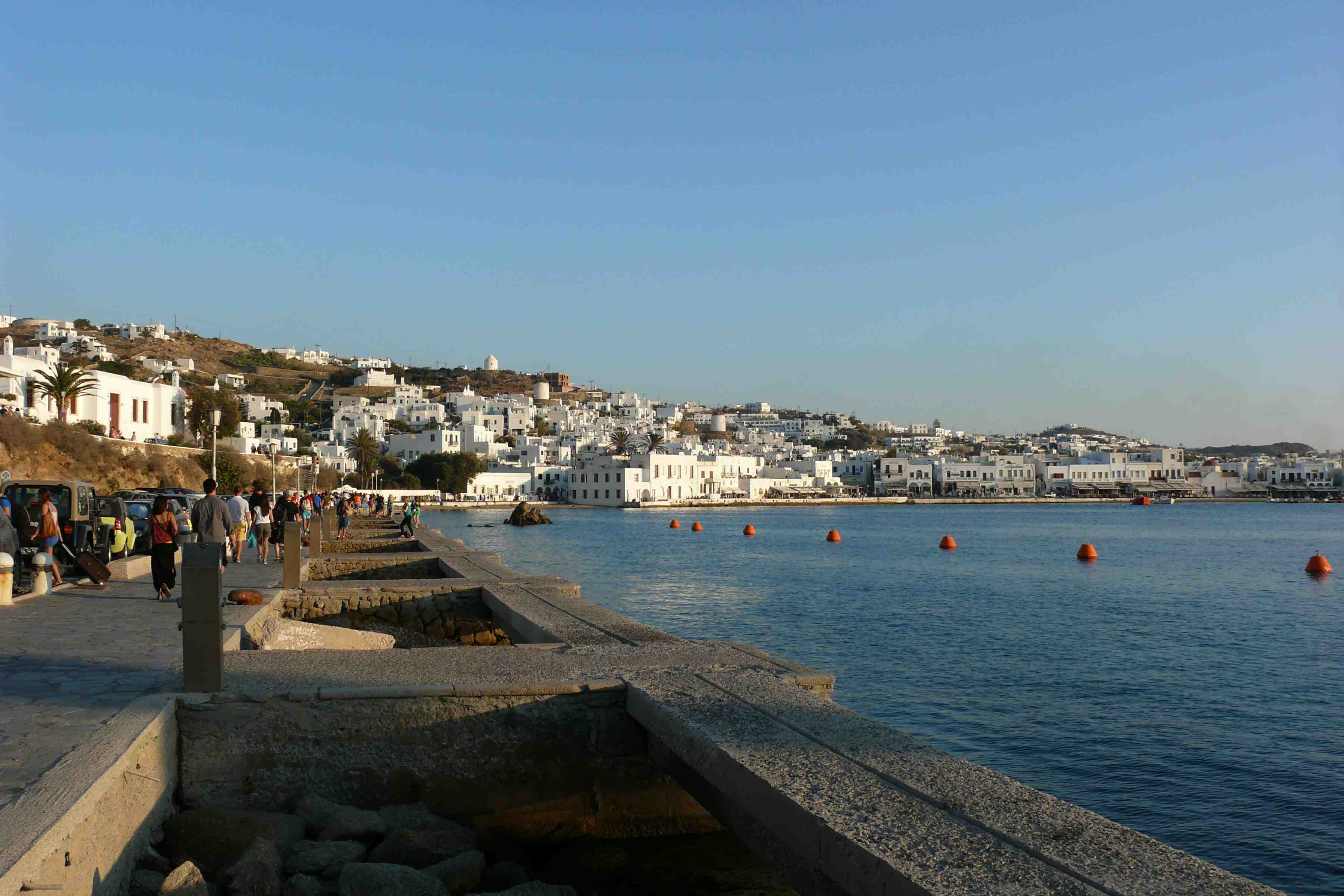
The first port of call was Mykonos and we arrived at 6pm. With still a couple of hours of daylight we were able to get into town fairly quickly and had a wonderful and  uplifting walk around this quintessential Greek town on a quintessential Greek island.
 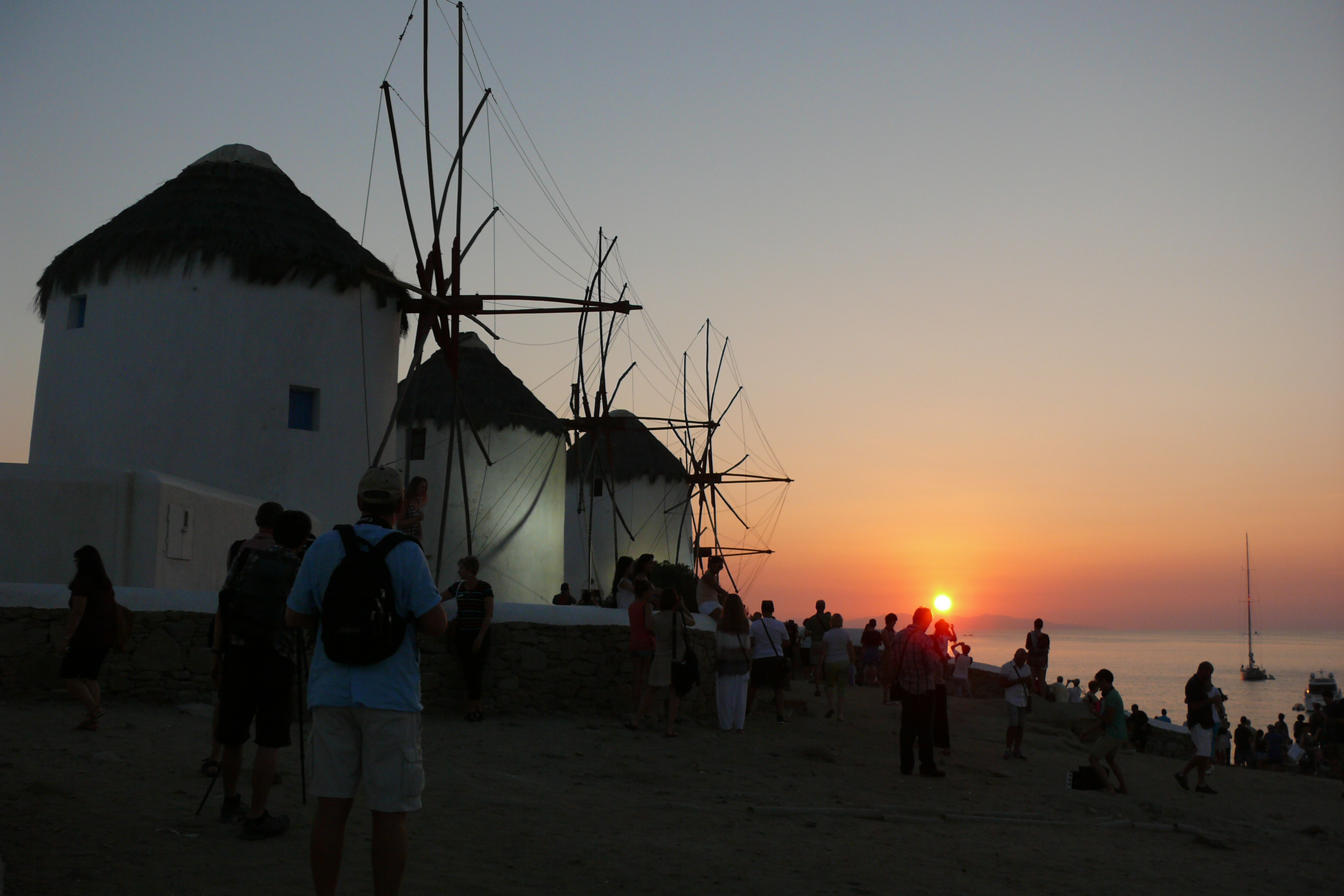 The sunset was absolutely amazing.
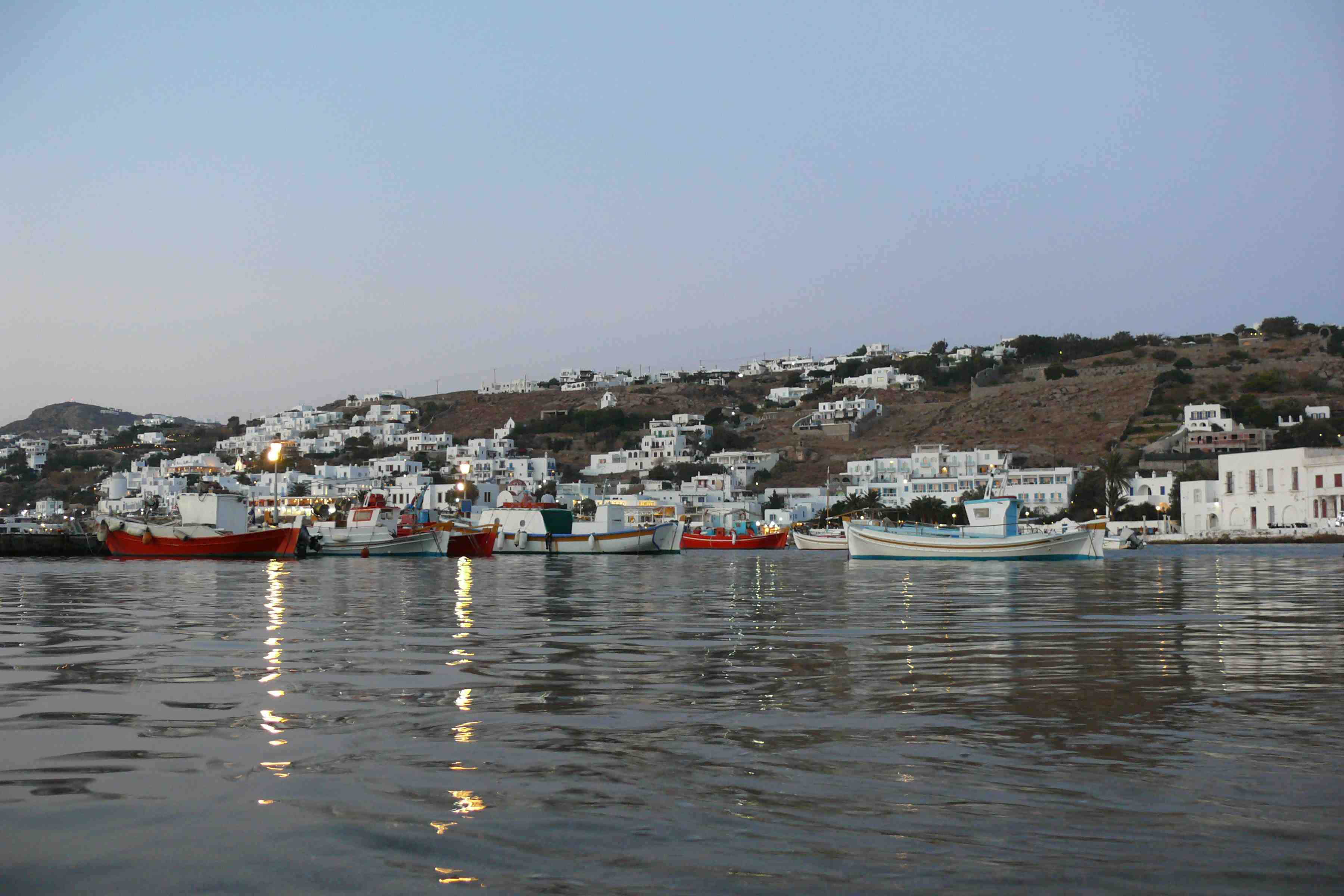
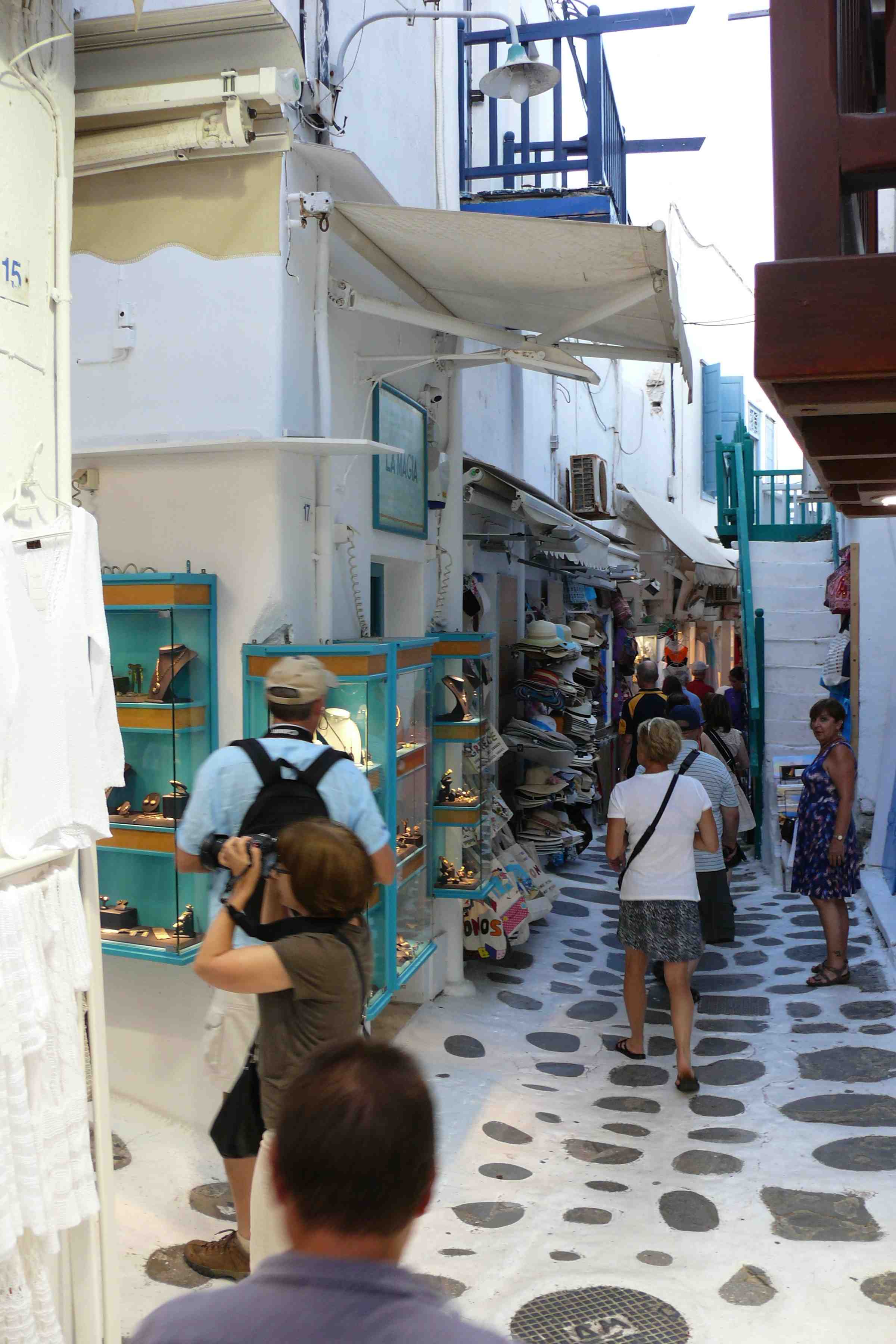 Our tour hostess on the ship, remarked that in all her 15 years of bringing people to Mykonos she had never seen the sea as calm as it was today. Mykonos is known for being a very windy place, which is why the windmills are a real feature of the island. Apparently the sea is normally quite rough and white caps are a familiar sight. Not today, and we really appreciated the beauty and calm of the sea.
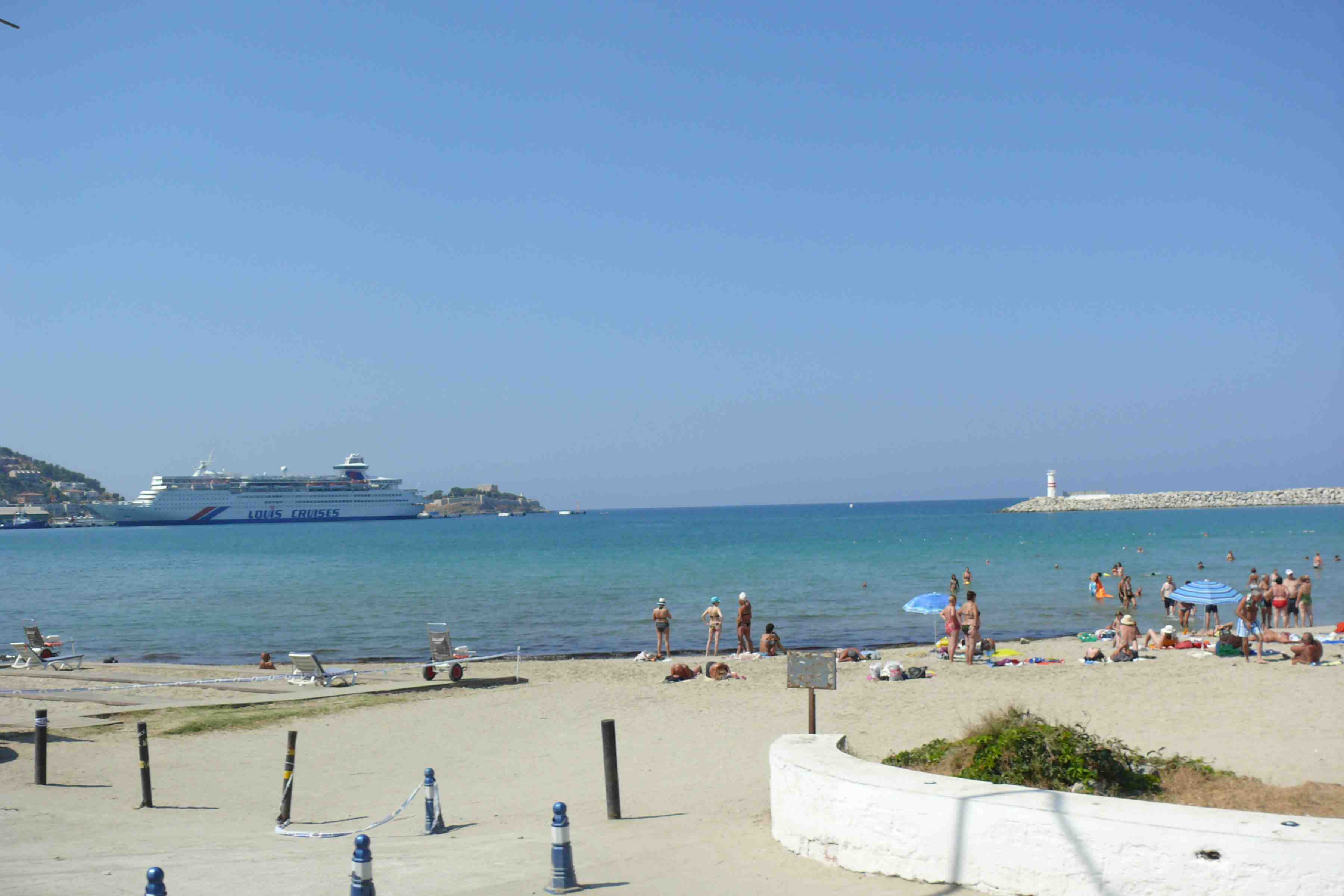
Saturday morning was a very early one for us venturing back to Ephesus. Having docked at Kusadasi at 6am, we were in the restaurant eating breakfast by then as the 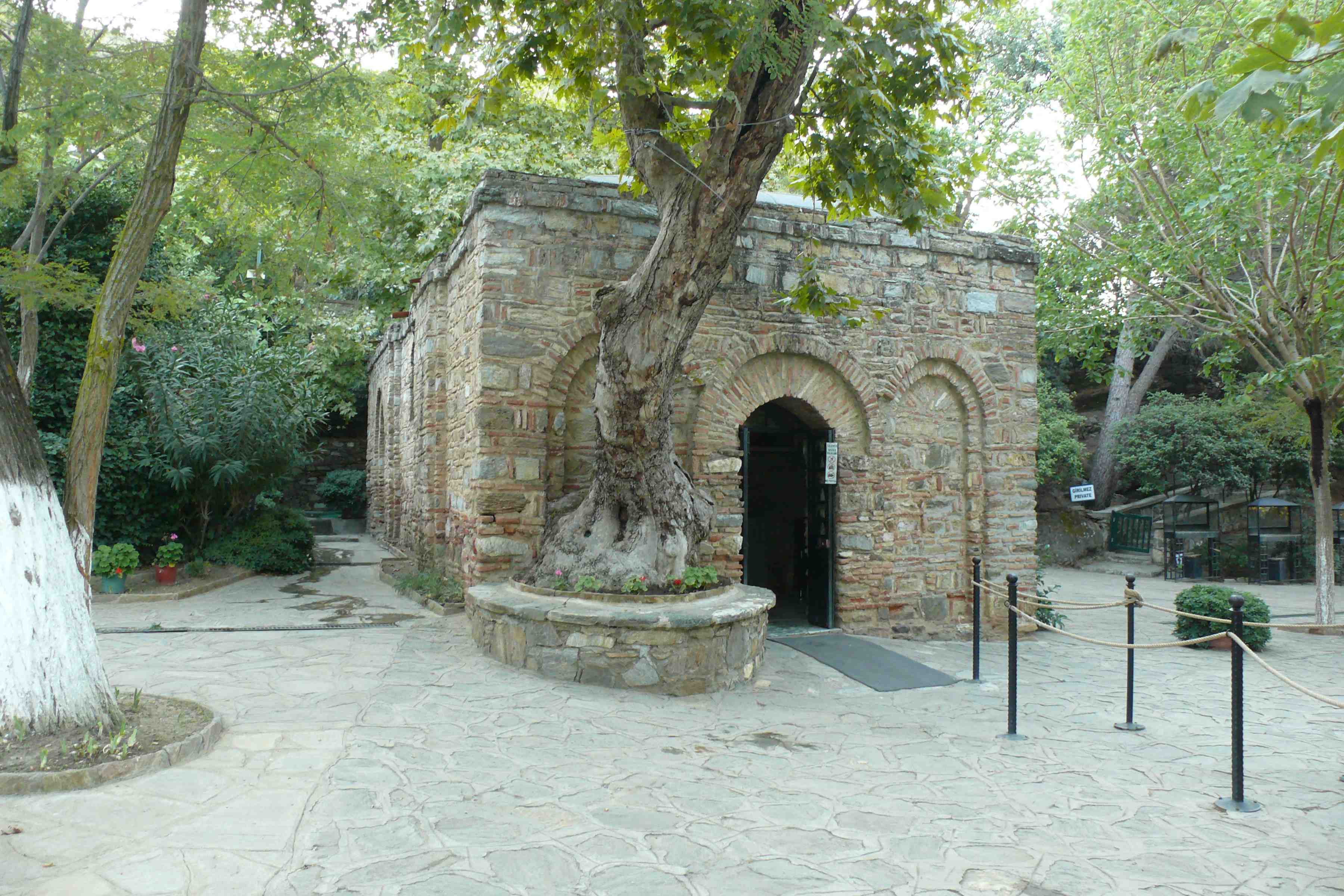 disembarking for our tour to the House of the Virgin Mary and Ephesus left at 7am. We were very excited to be going back to Ephesus as it was certainly one of the highlights of our tour of Turkey.
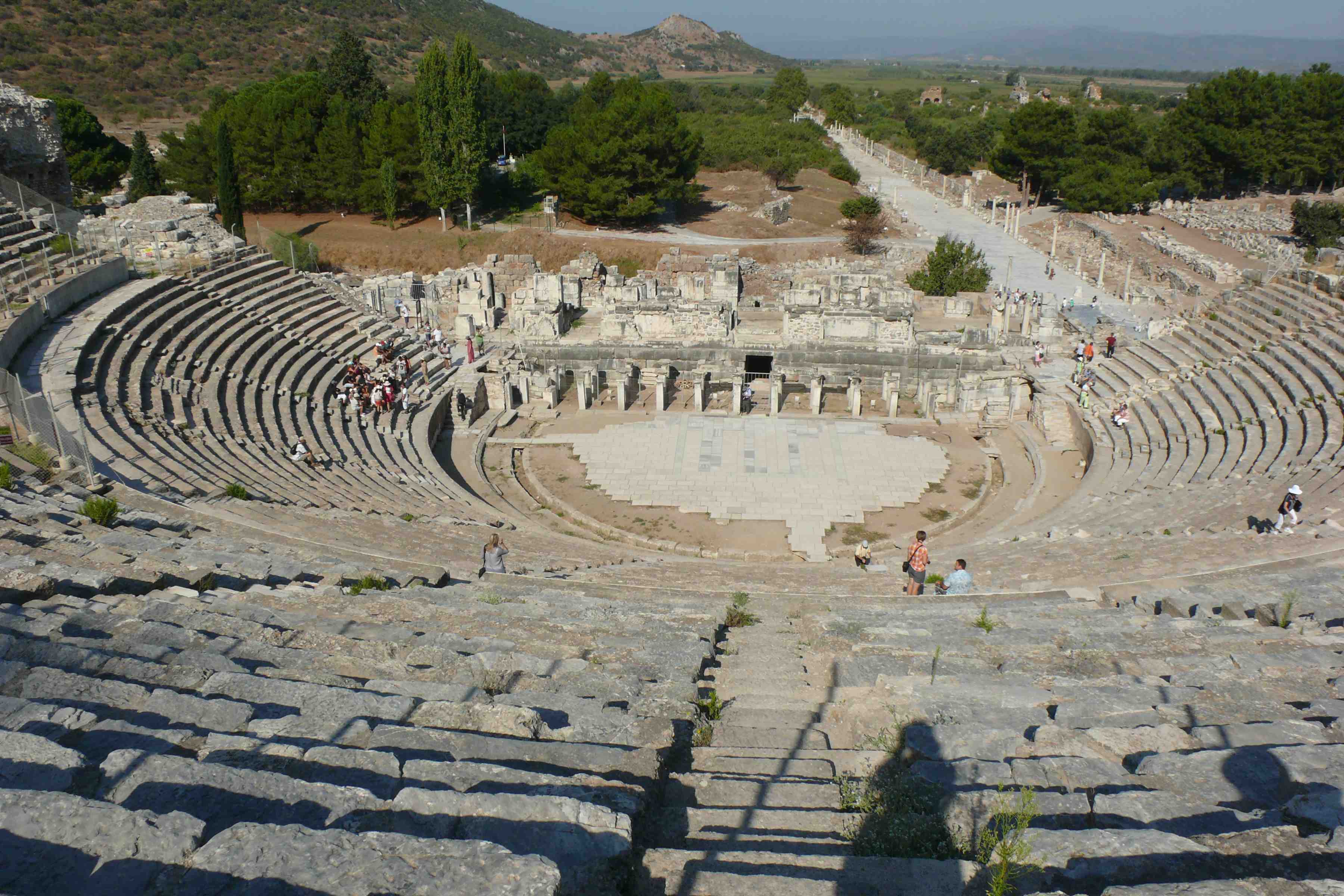
As it turned out, we were very glad to have been there before, as the tour this morning was about half the time and twice the speed of our previous one. However we did get some additional information from this guide to add to what we had already learnt.
The visit to the House of the Virgin Mary meant going high up a mountain to the remains of an old Christian village, where it was believed Mary and the apostle John lived in a Christian community. The views again were spectacular. What is thought to be Mary’s house has been reconstructed from the lower level ruins, and has been made into a shrine by the Roman Catholic Church.

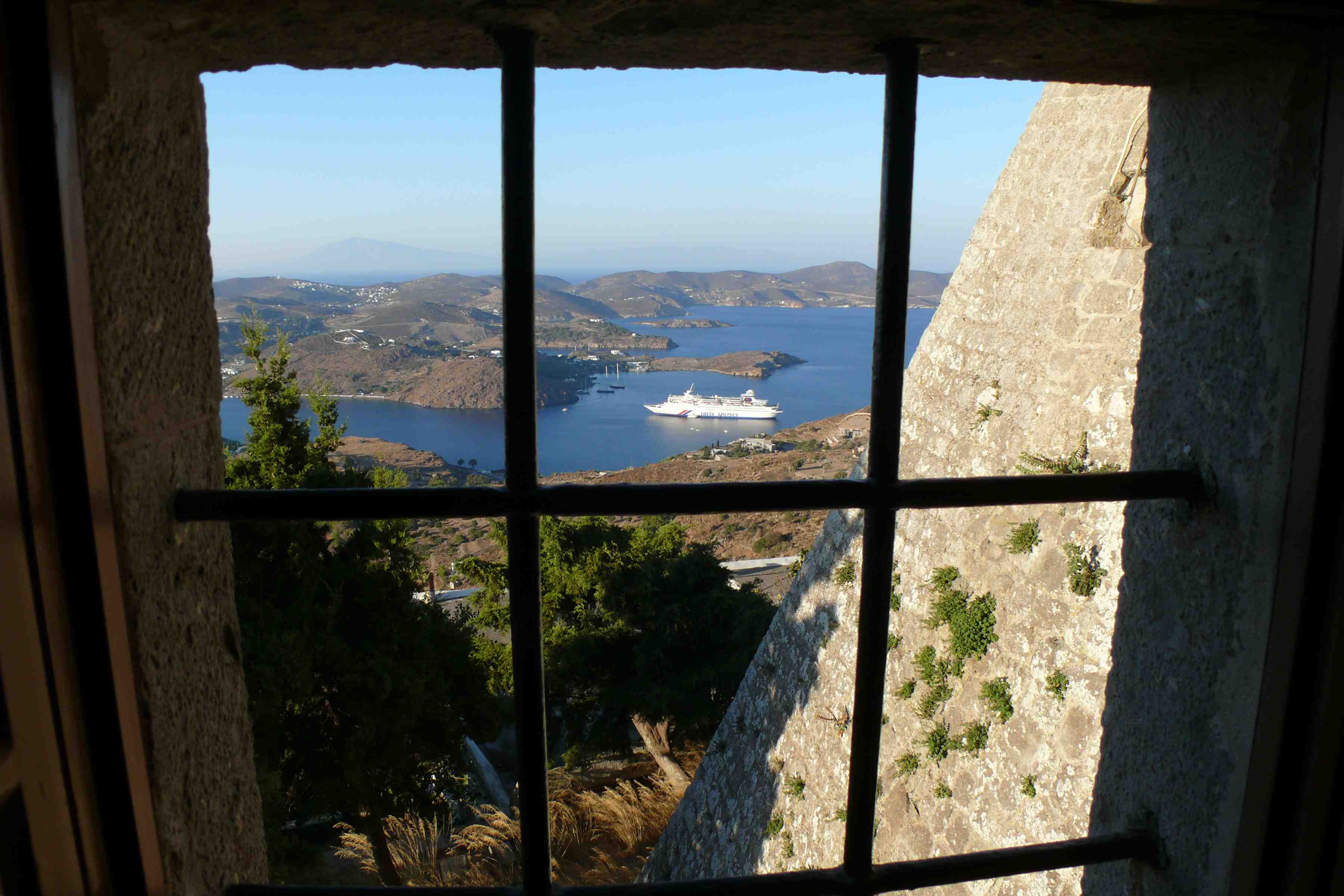
Saturday afternoon we weighed anchor at Patmos and used tender boats to get to the dock. Patmos harbour is too small for a ship the size of the Olympia to fully come in and dock.
We boarded a bus to see the grotto where it is believed the Apostle John saw his vision of Christ and was instructed to write Revelation. Again it has been made into a shrine by the Greek Orthodox and there are many buildings, including a church, built on top of the cave, and as you weave down the many stairs, it hardly seems to be the place for a cave, until of course, you get inside.
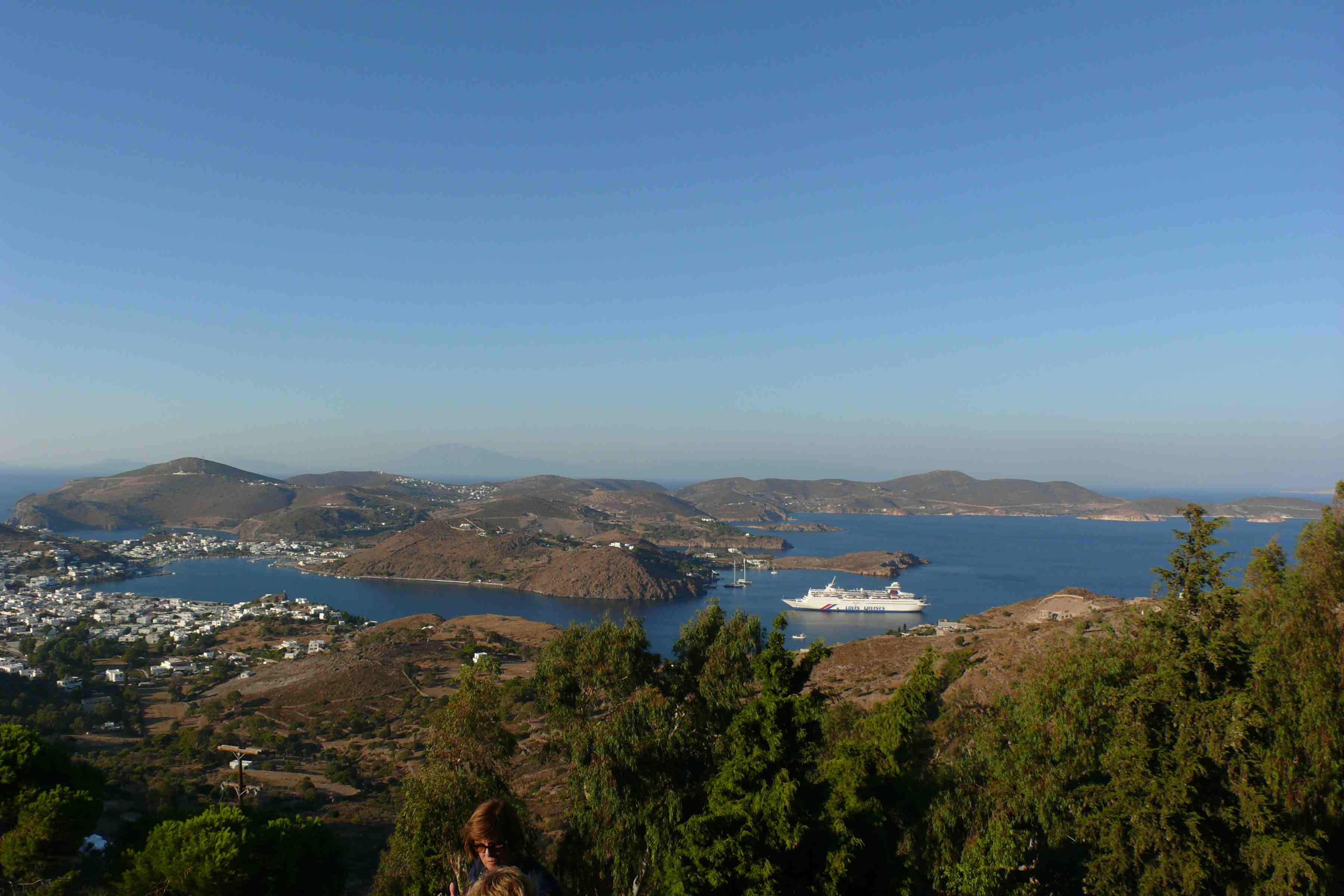 Patmos is a very small island in the shape of a seahorse, and has an interesting history. John arrived there around 95AD as an old man and seemed to have lived for a while in this cave towards the end of his life following his time in Ephesus.

About 1,000 years later in 1100, a monk, Khristodhoulos from Cappadocia knew about the cave in Patmos and wanted to build a monastery there dedicated to the Apostle John. He didn’t have the financial resources, but surprisingly the Byzantine Emperor at the time gifted him with the island of Patmos and gave him the money to build the monastery.
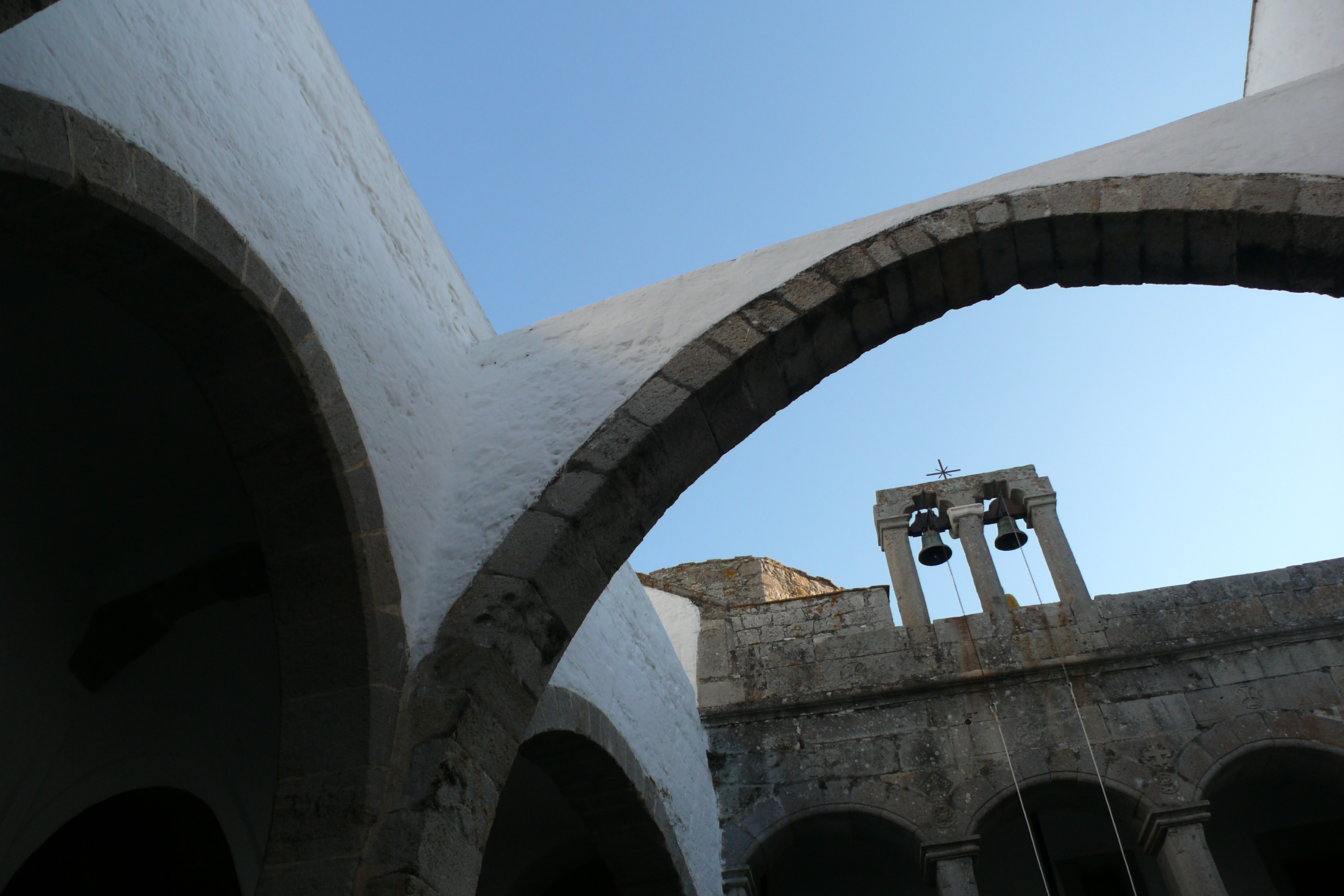
It was fascinating to see the actual long scroll of the deed of gift from the Sultan to the monk on display in the monastery museum. The monastery is built on the highest point of Patmos and the views down to the harbour can only be described as stunning. This has meant that historically the whole island has been dominated and influenced by this monastery. In modern times however, the whole island is no longer wholly owned by the monastery.
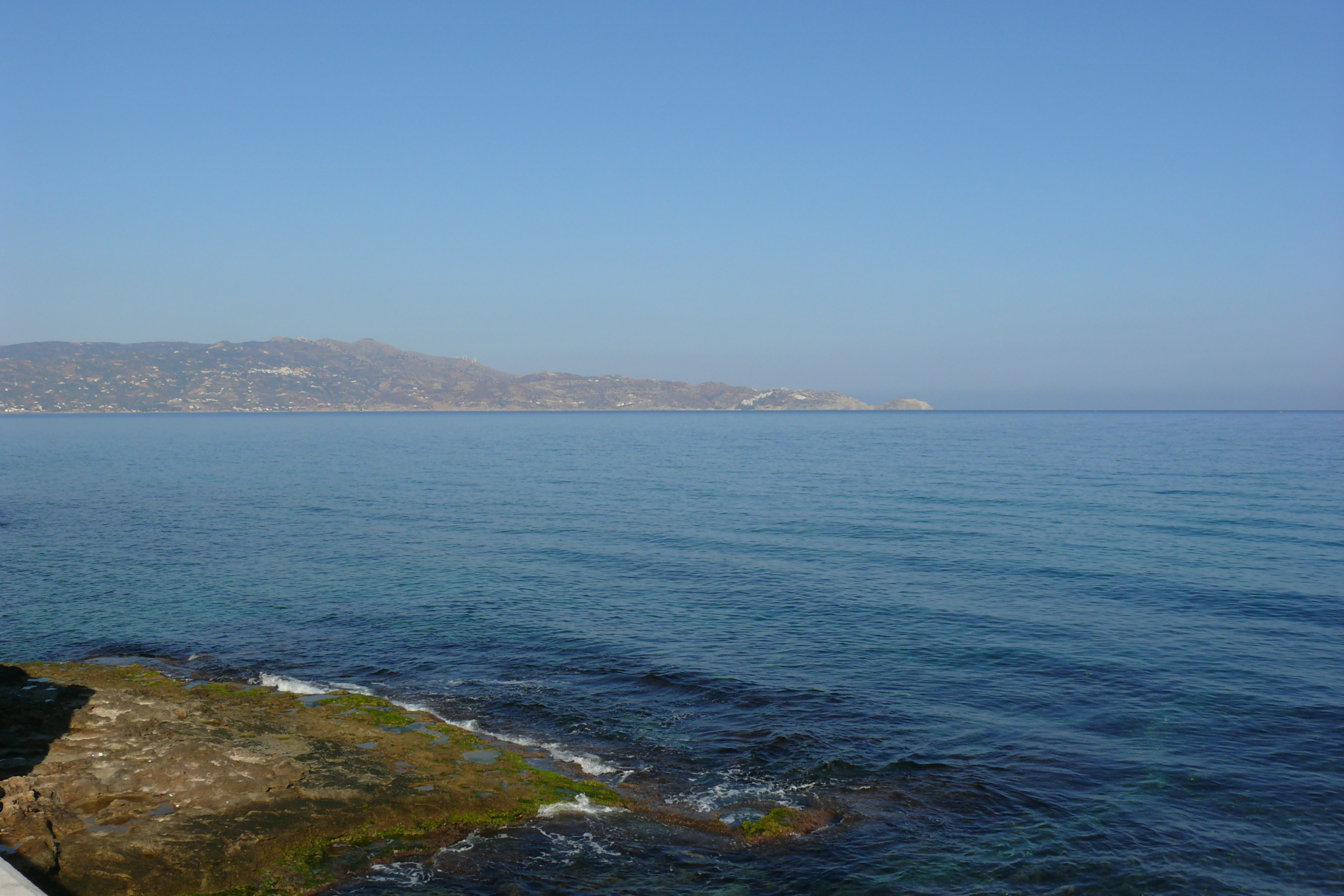 The following morning [Sunday] we docked at Heraklion, the capital of Crete. We chose not to do a specific excursion, but walked into the centre of town,
 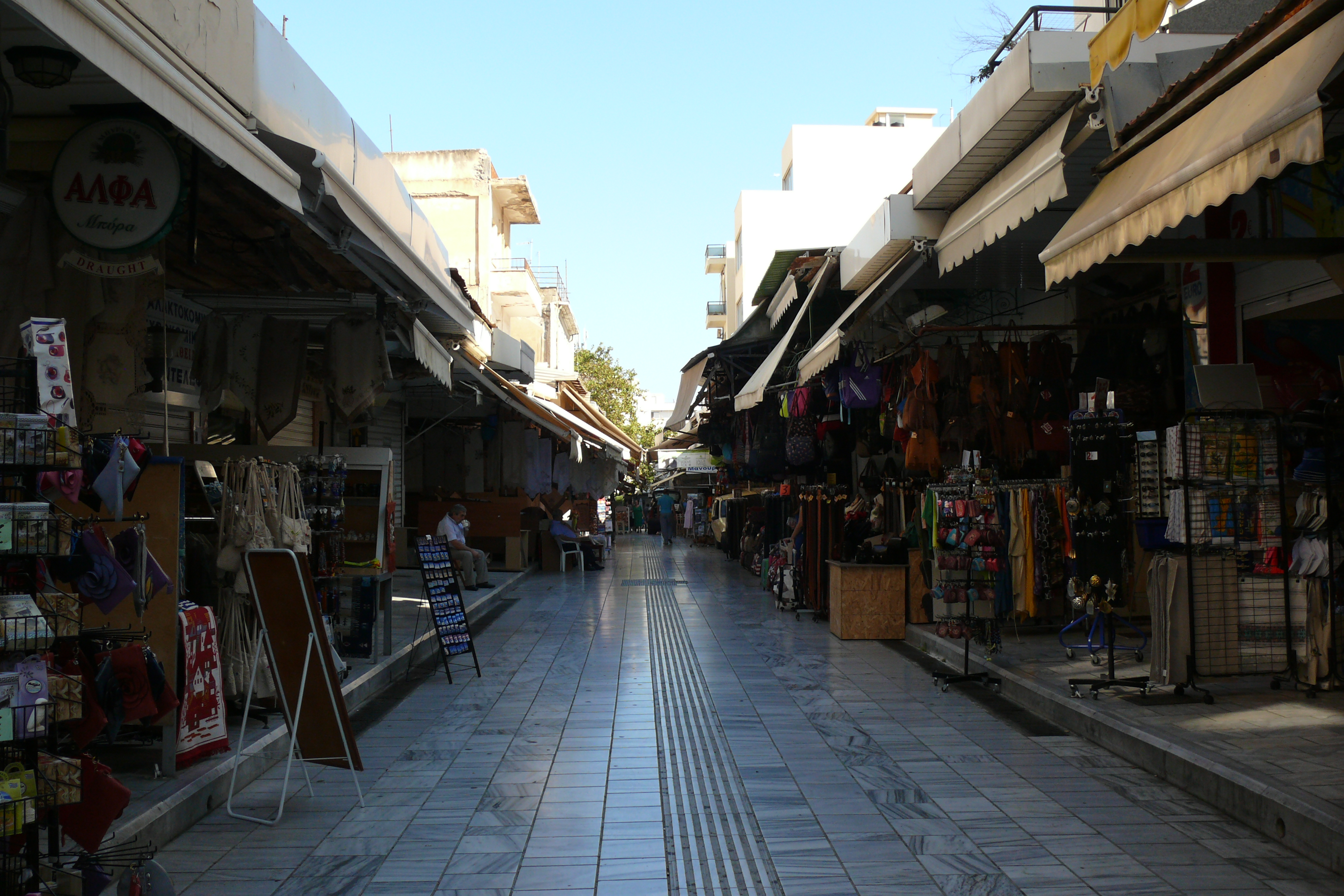 treated ourselves to a fish spa, and then enjoyed a delicious coffee in a beautiful cafe. A fish spa is a tank with a seat beside and as you sit and place your feet in the tank, the tiny fish eat away the dead cells on the feet and lower legs. [Aren’t you glad you know that!]
  We had missed the opportunity for a fish spa in Turkey, so we gladly took it up as we wandered around Heraklion. The centre of town is called Lion Square, but it was interesting to note that the fountain was round and the square was a triangle.
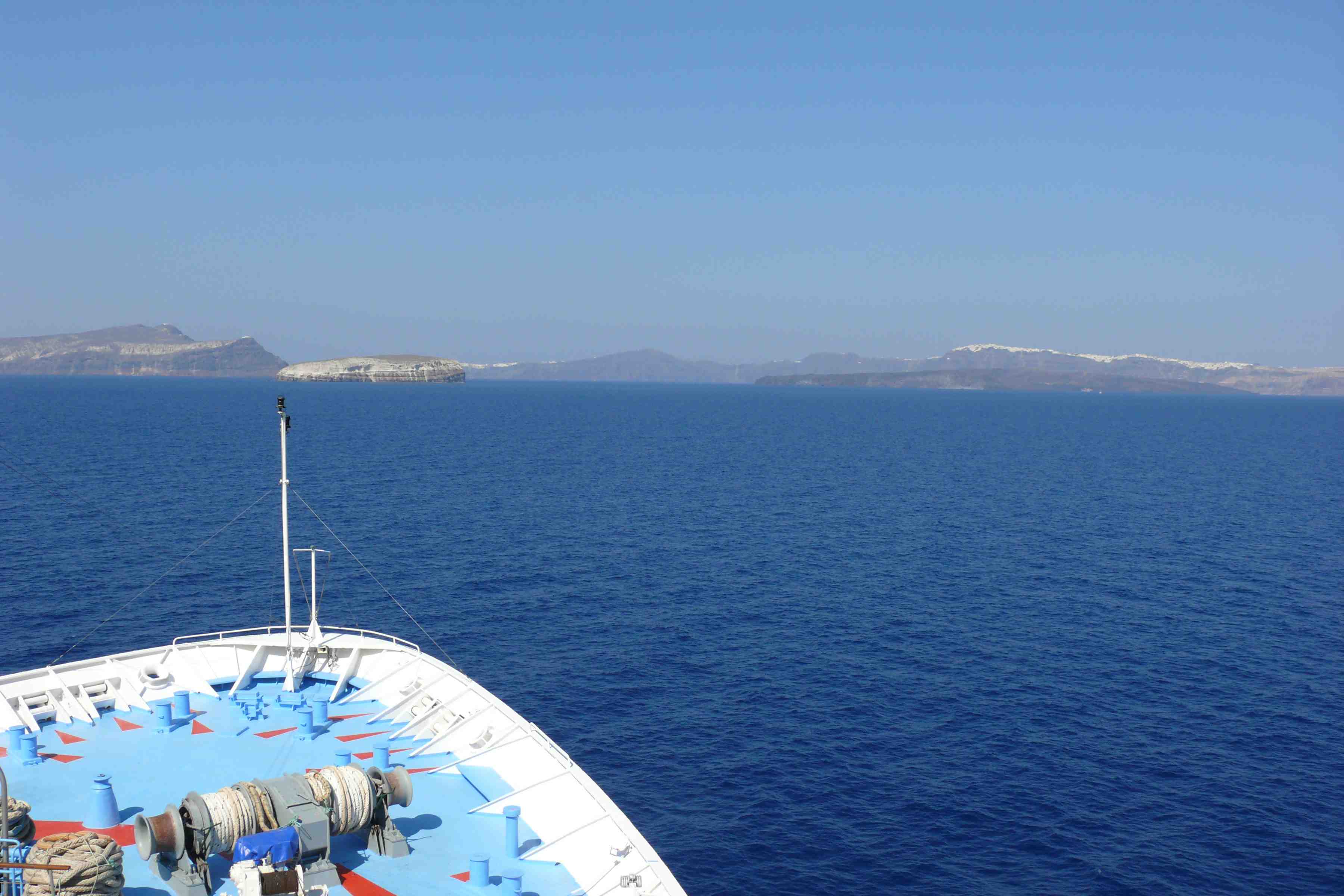
Santorini —- wow … Santorini’s geological story is a fiery one. The ‘island’ is actually five islands which are the result of volcanic eruptions and earthquakes. The largest island is curved around a body of water which is called the ‘caldera’, a Spanish word for cauldron. 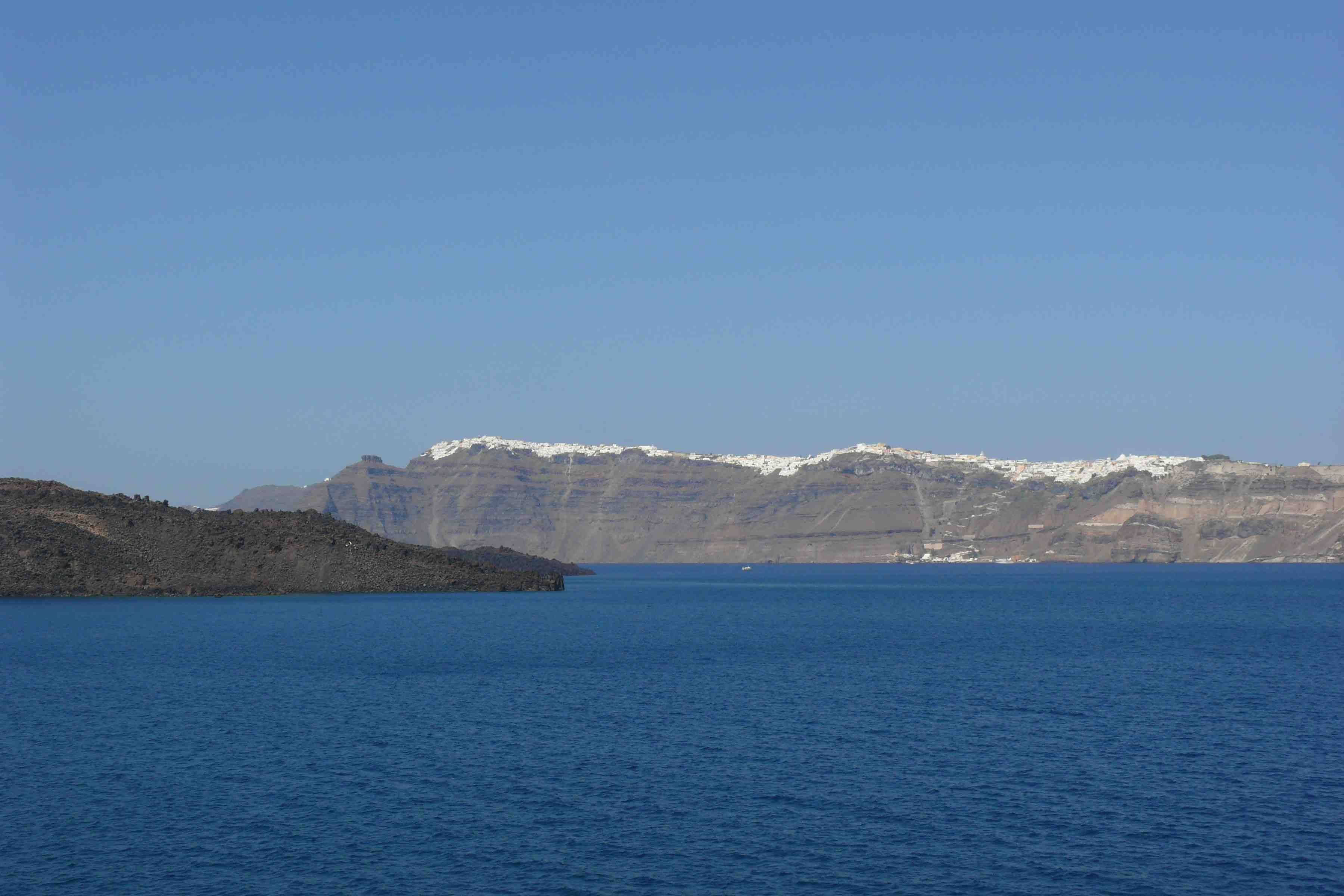 This of course, refers to the core of the volcano. Cruising into Santorini was very picturesque. The camera got a huge workout! Even seeing the whitewashed towns from the distance, they could easily have been mistaken for snow-caps, which we knew was impossible at this time of year.
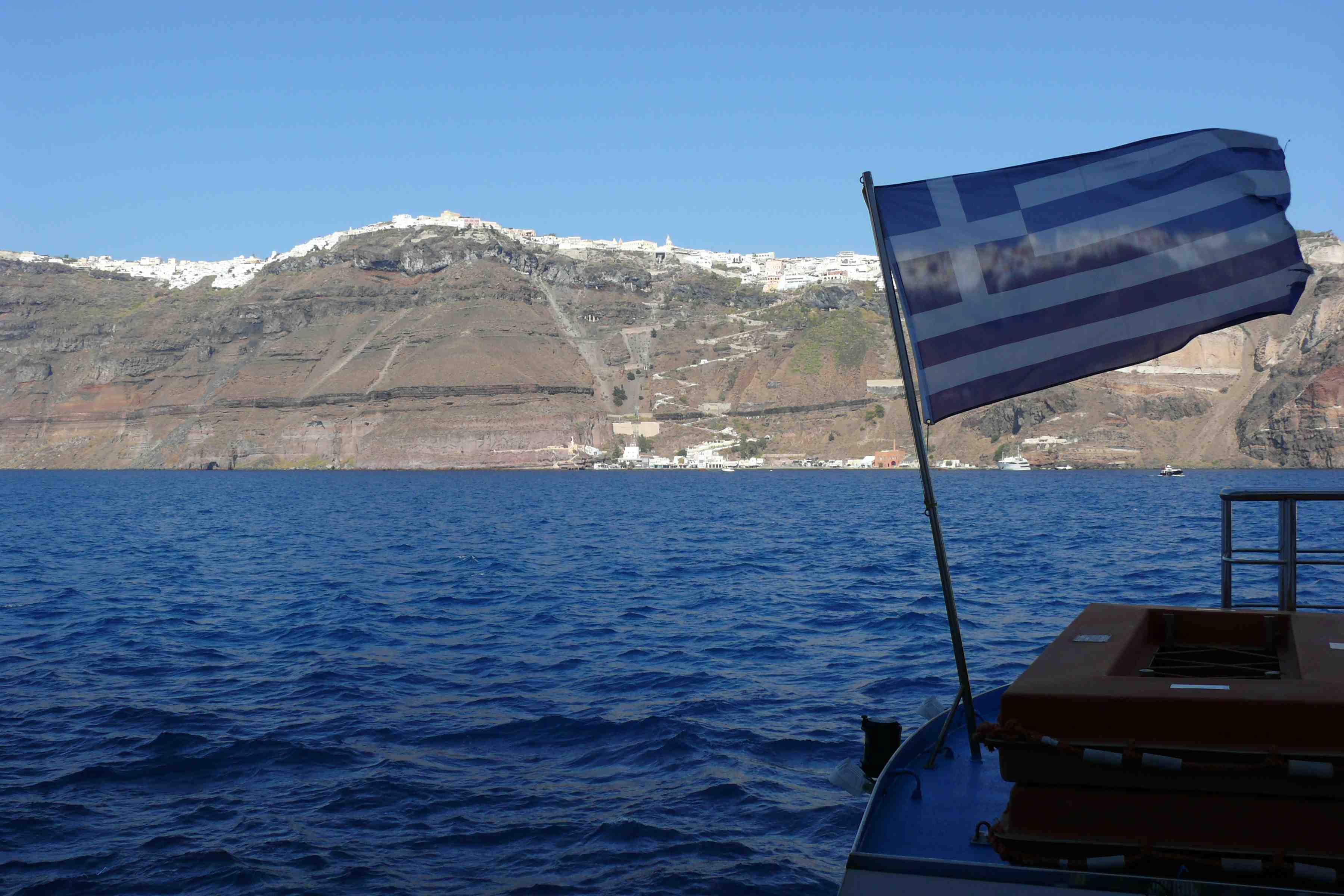 Again, it was impossible to dock at Santorini so tender boats were used to get us to land. We chose the shore excursion which took us to Oia [rhymes with ‘clear’].
 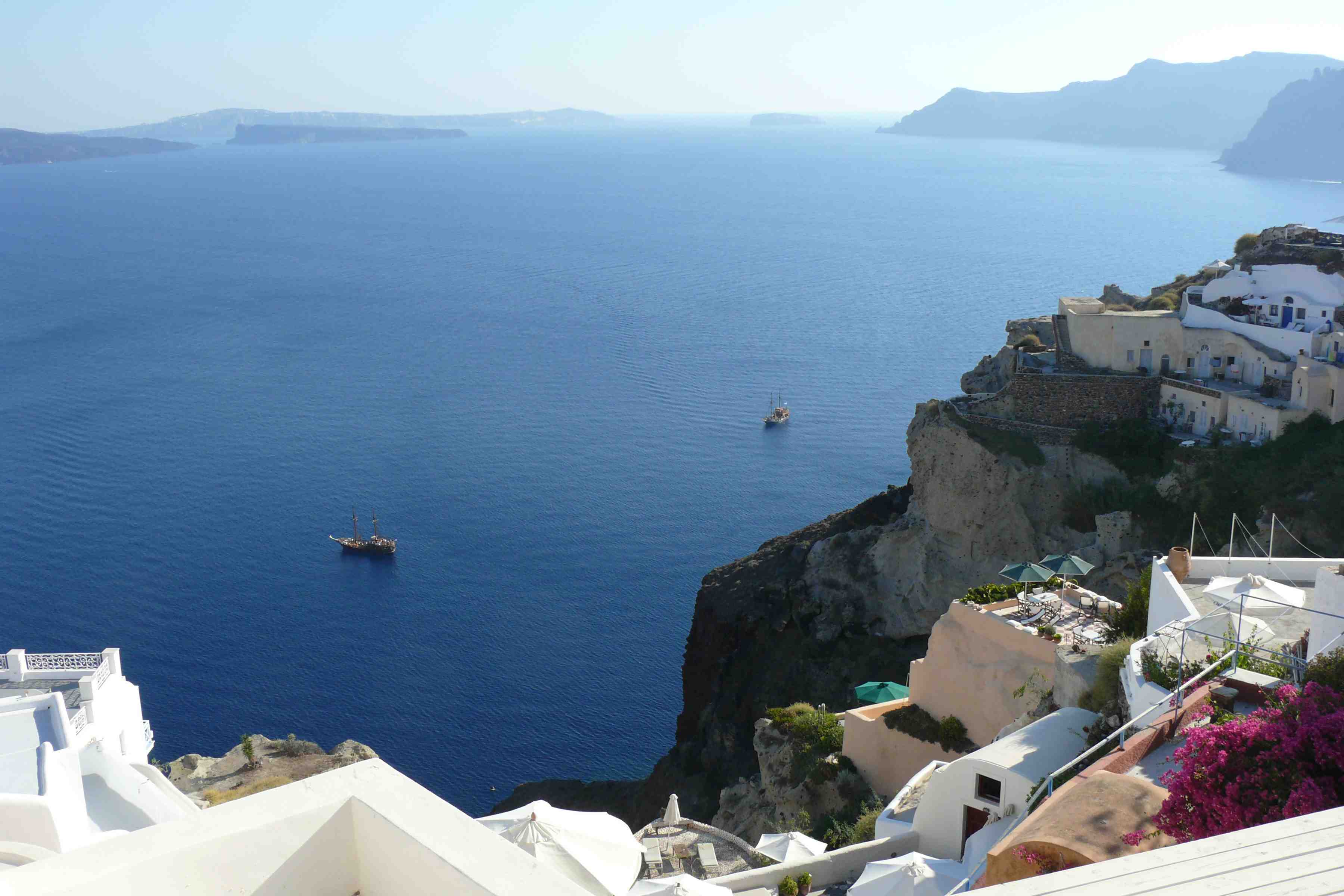 Around the Caldera are vertical cliff faces so the towns are at the top. As we boarded the bus and drove the zigzag road to get to the top the
 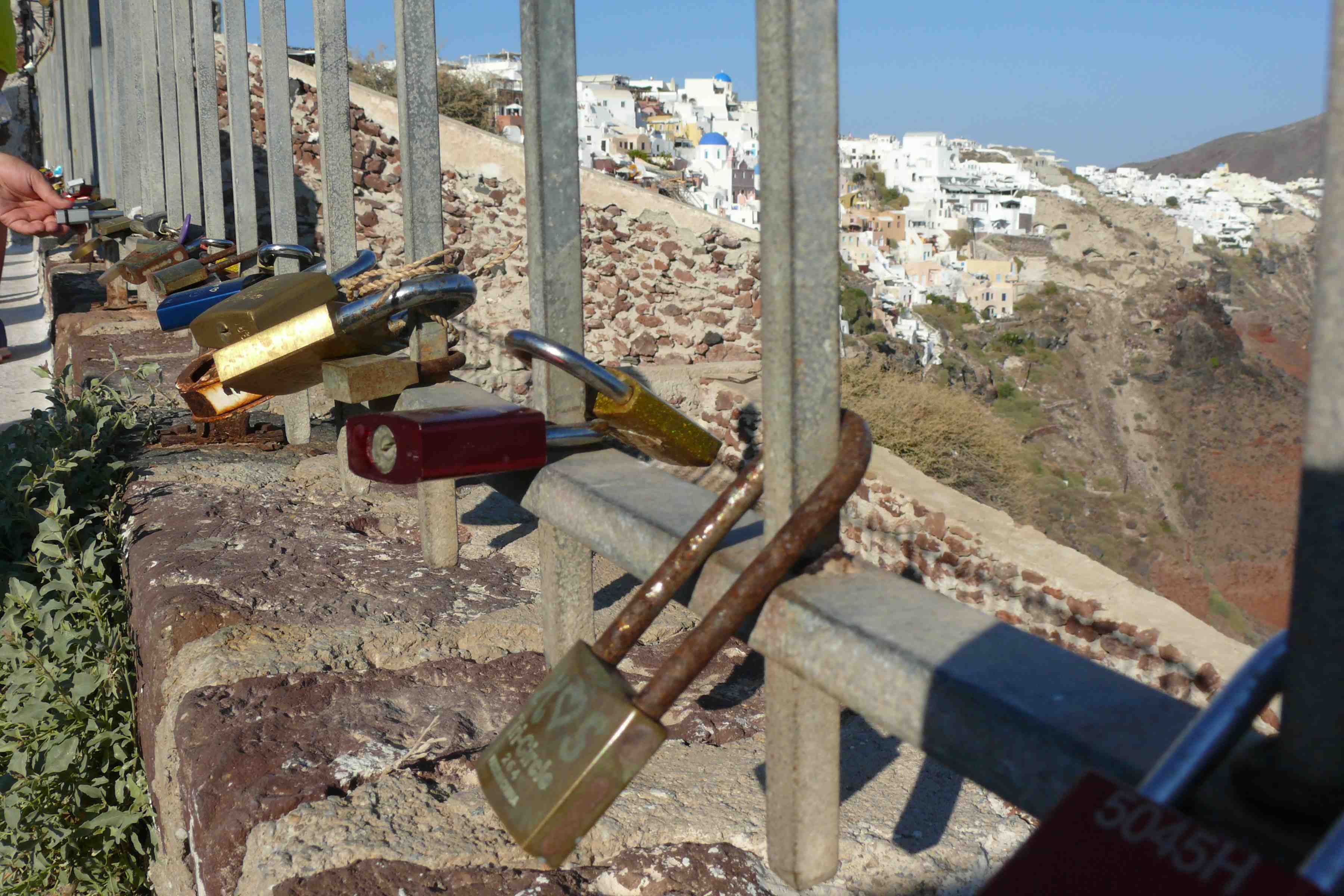 various rock strata were very clear, finishing with a huge layer of pumice on the top.
Travelling along the top of the cliff face gave some wonderful vistas, 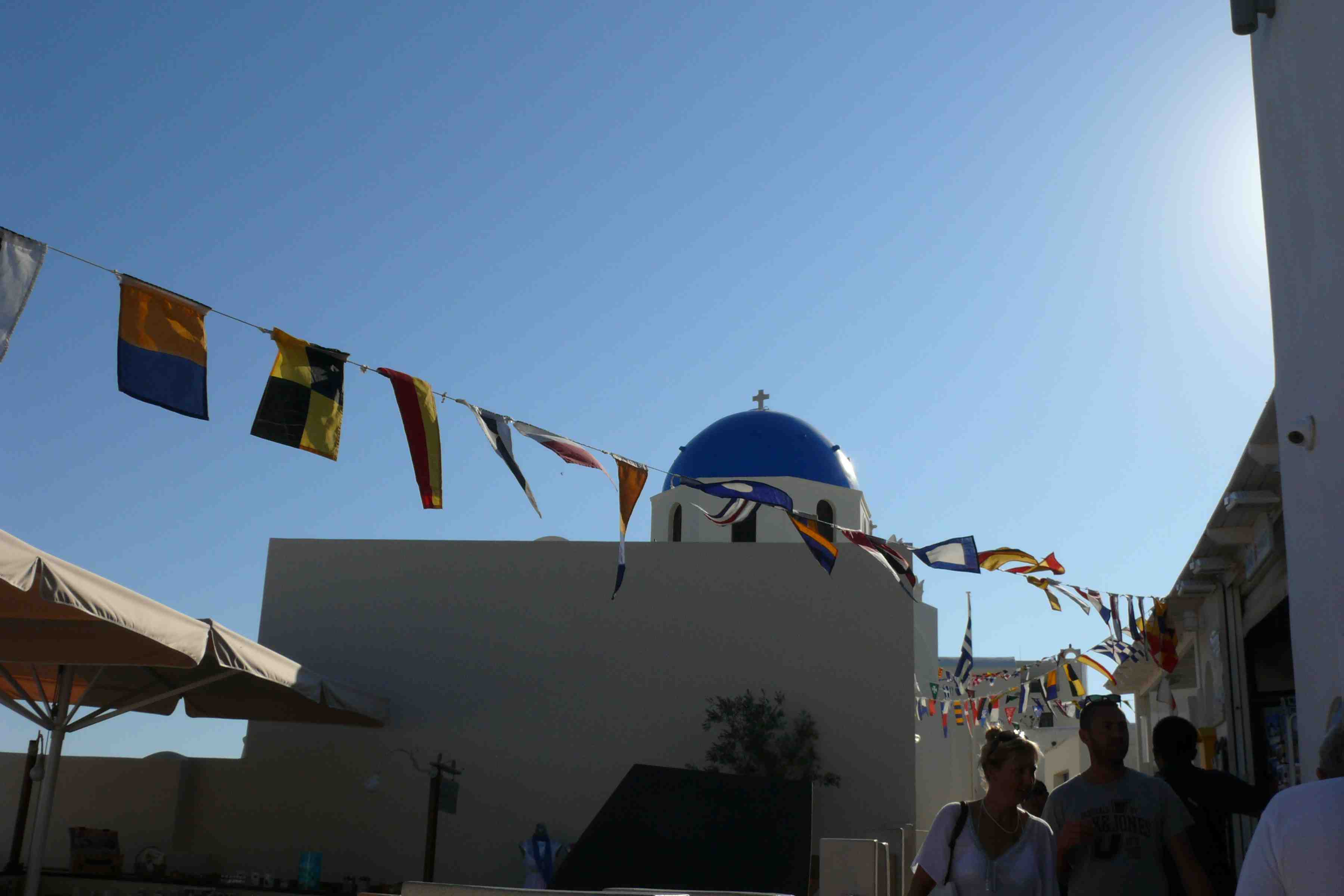 but getting to the little town of Oia was such a treat. The marble lanes are very narrow, the hotels and villas are built down the cliff face, the shop fronts, cafes and
 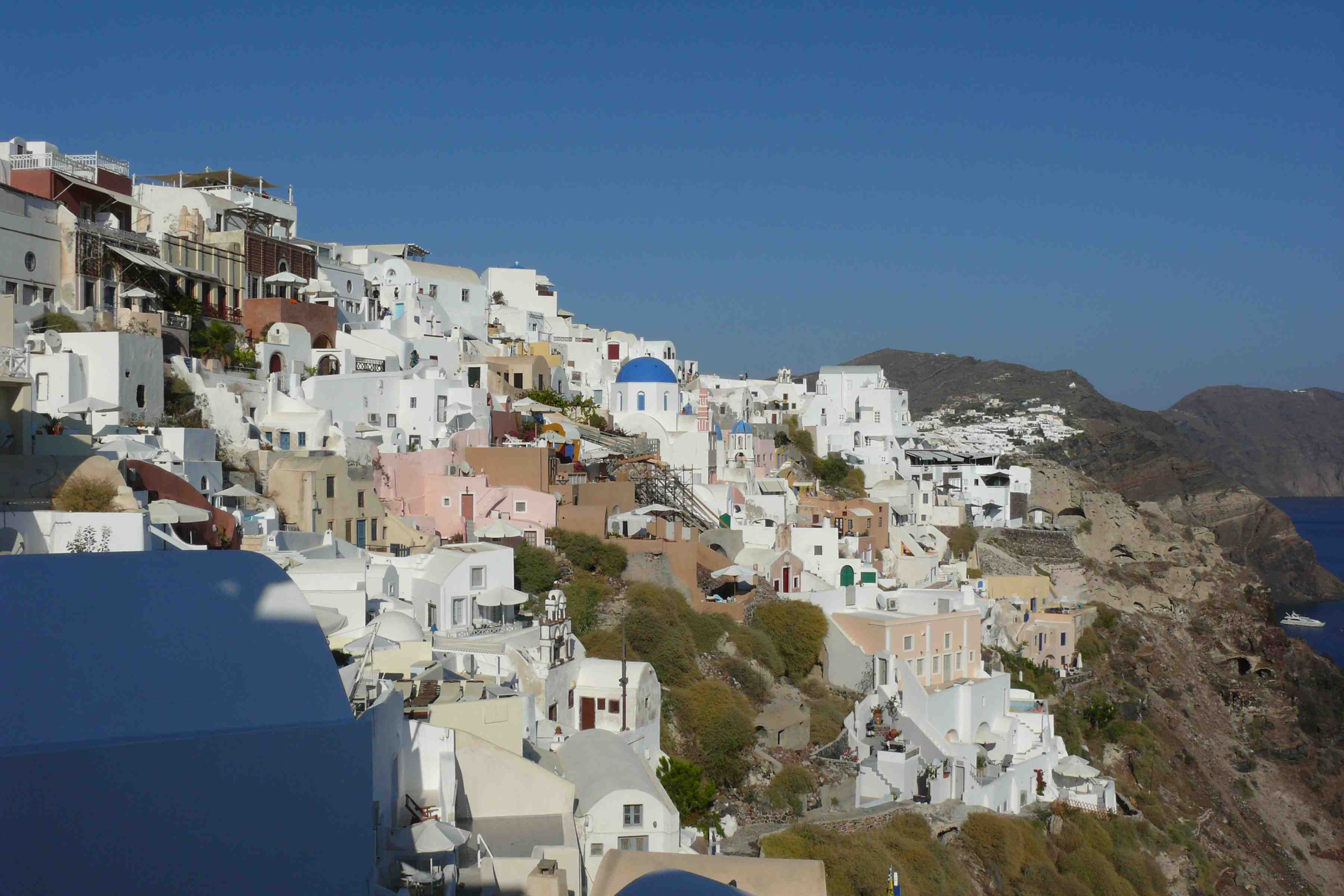 other speciality merchants were all worthy of photos, but the whitewashed churches with blue domes were the picture stealers.
 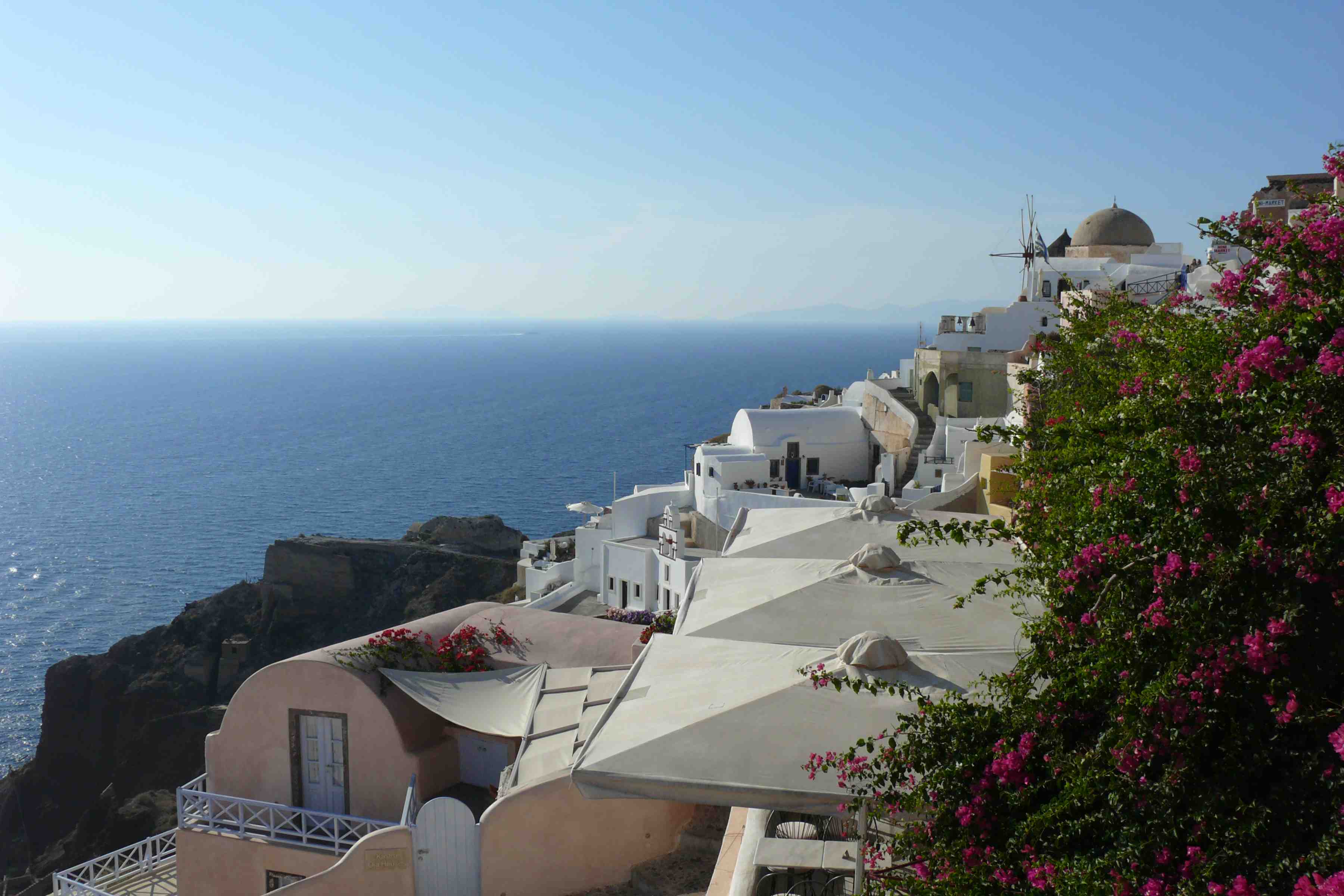 Again … quintessential Greek island is the only way to describe it. Again, the camera was screaming for a rest.
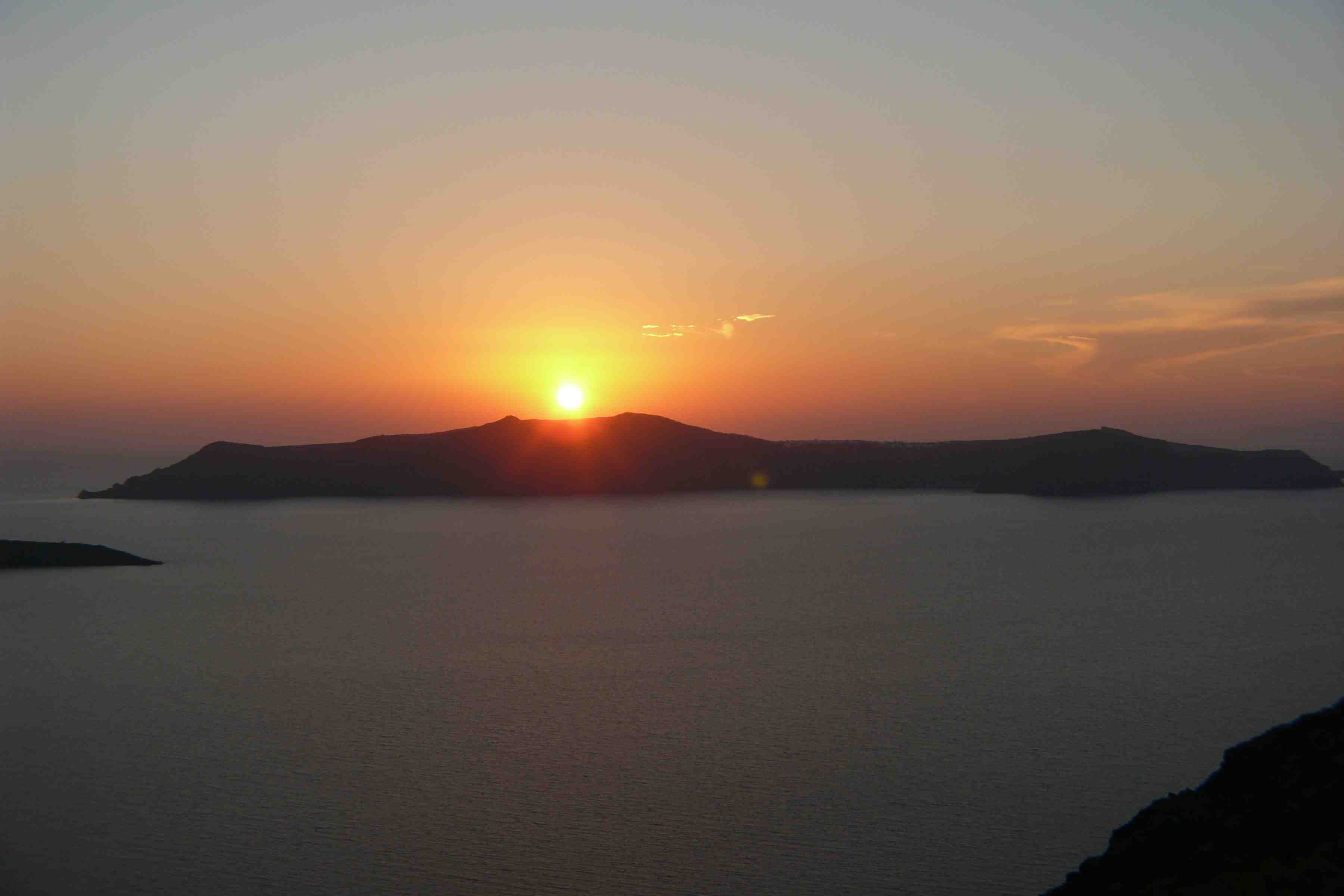 We finished by going to the main town of Santorina, Fira, for another spectacular sunset, before we joined the huge queue to go down the cable car to get back to the tender boats returning to the ship. A beautiful day.
As the Greek islands are very close to one another, there is hardly opportunity to actually take advantage of onboard life. Being in two ports per day means for a very full and tight schedule. However, our overall our first impressions of cruising on this short and very busy three days is a positive one, and we would love to have the opportunity for a longer and more restful cruise at some point in our lives.
 Chris and Lynda Johnson
So pleased you enjoyed your cruise. Everything that impressed you had done the same to me many years ago. So , so wonderful. We cruised for a week and danced and studied the nights away. Many moving sights. No wonder they call that colour Mediterranean blue. It is special.
Once again Chris and Lynda, thank you for your posts with such amazing commentary and photos!!! Sounds and looks like you are having an amazing journey!! Cruising the Greek Islands has been on Neville and my bucket list for over 20 years – your posts are definitely keeping that dream alive!!! Praying for continued safe journey and health for you both.
Elise xx