
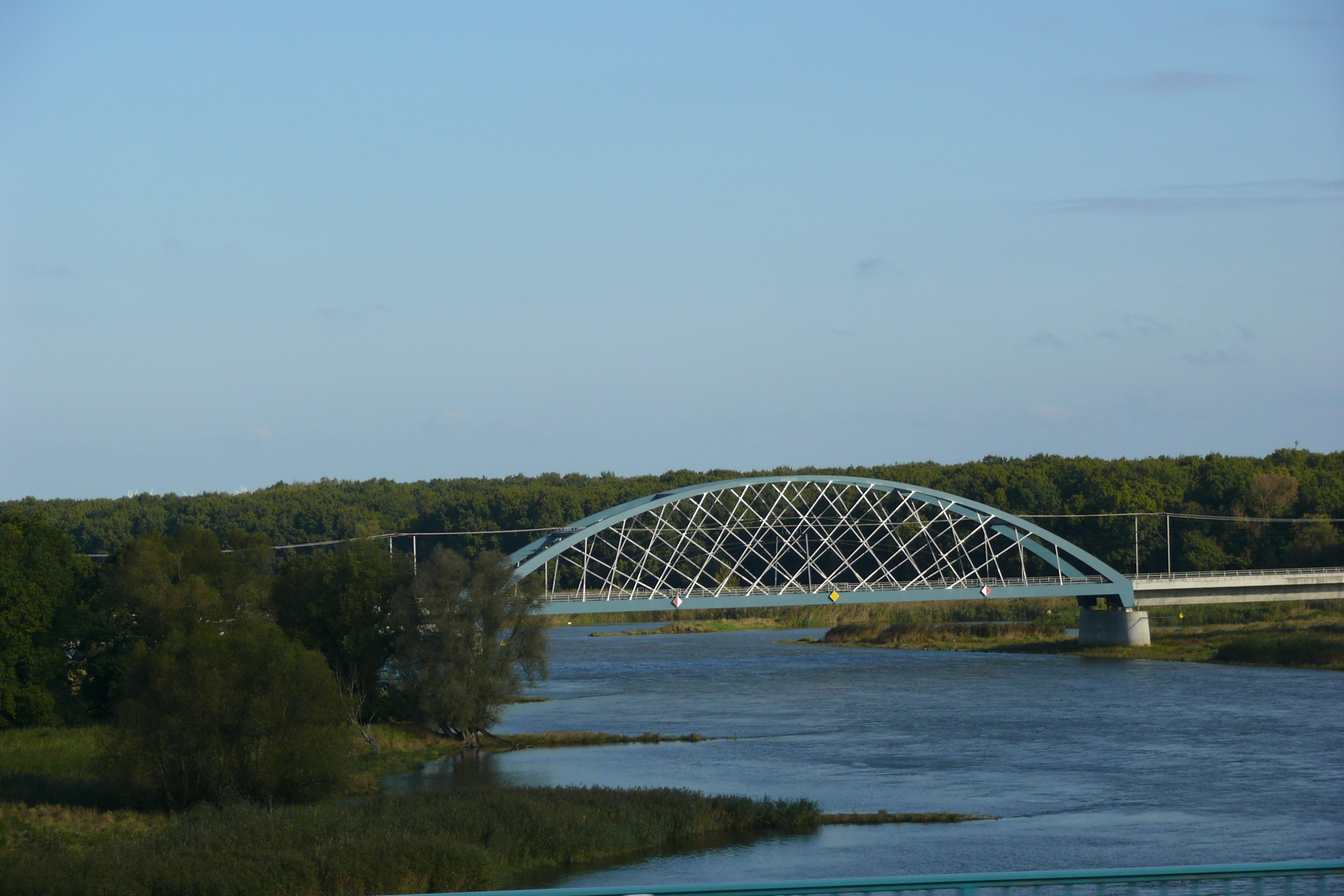
 We crossed the border over the Oder River into Poland, and had to change some euros into the local currency Polish Zloty. Poland, although part of the EU, is yet to convert to Euro currency as the economy is not strong enough.
With Roman Catholicism solidly entrenched here, the Polish people have a distinctive identity, character and determined nature. There are churches on every corner.
T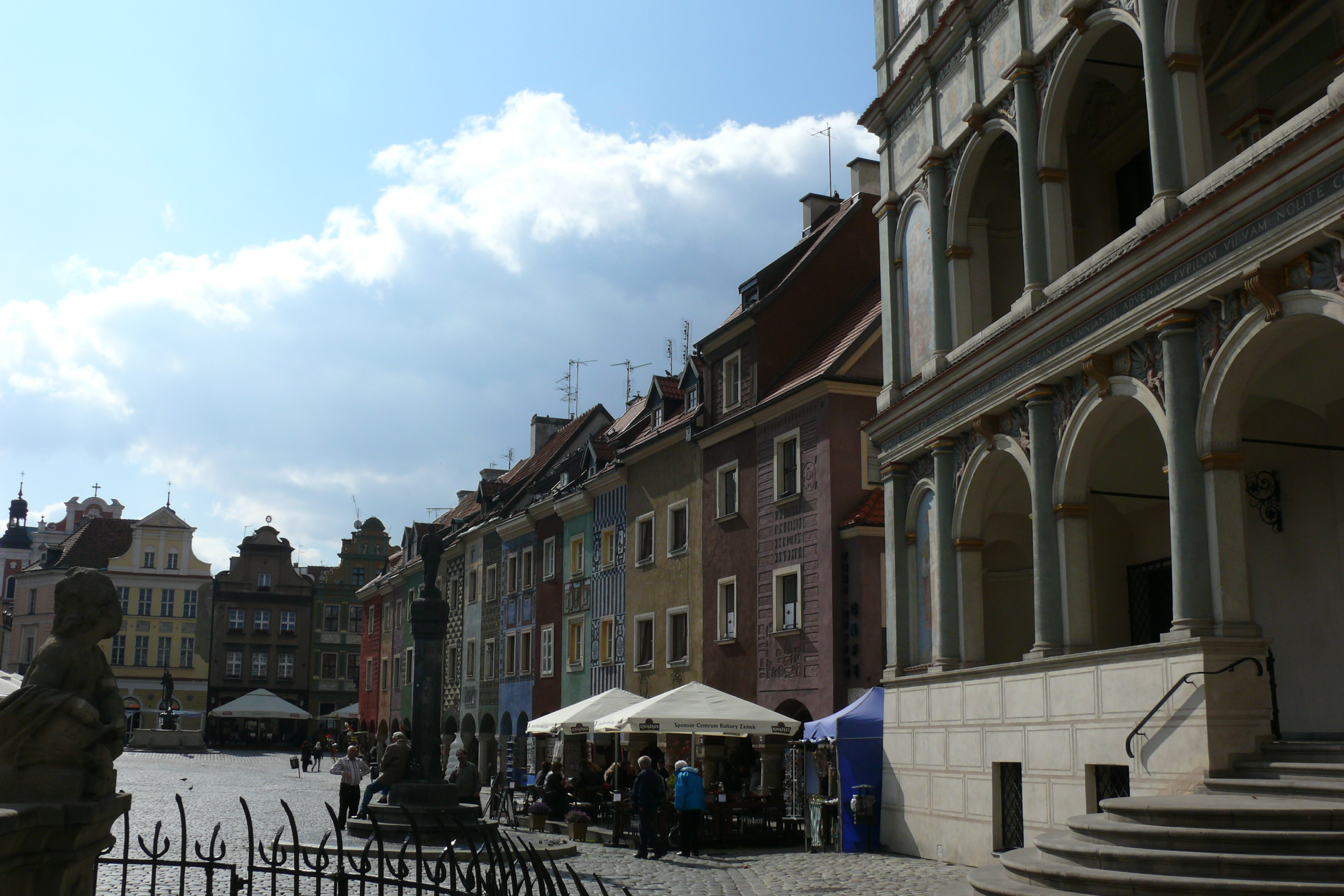 he north of the country is very flat, and we crossed lots of agricultural land. Our lunch stop was in the beautiful town of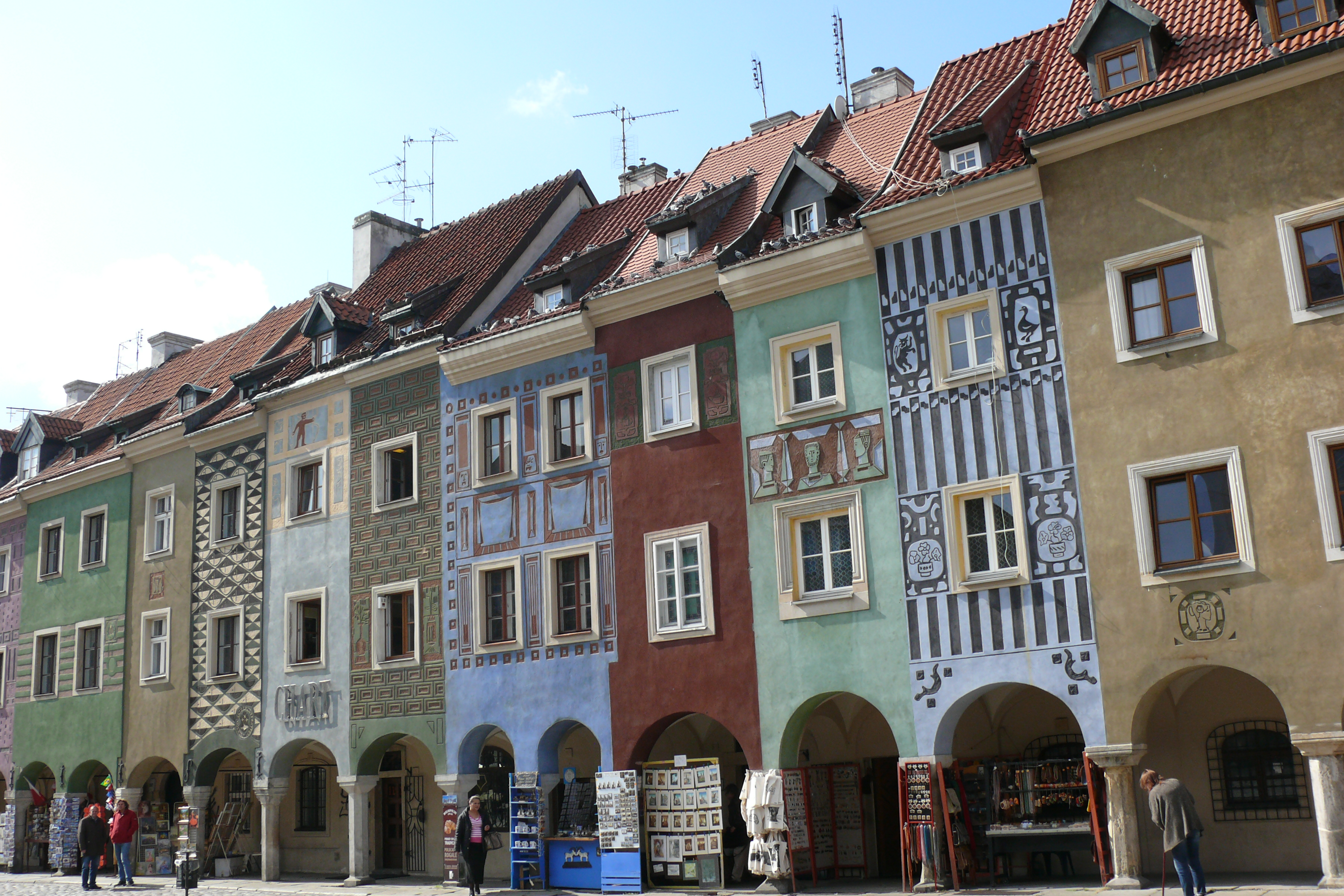
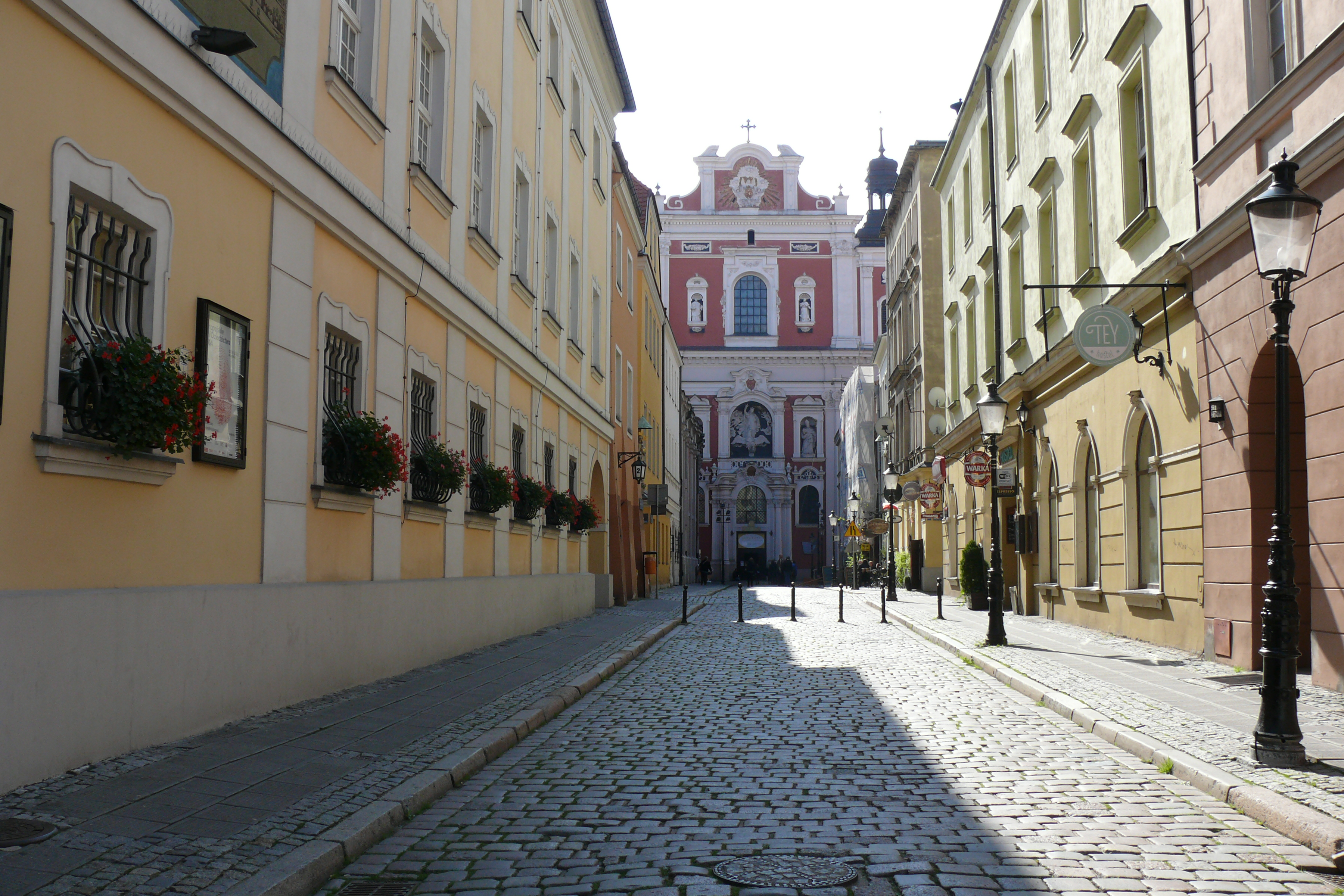
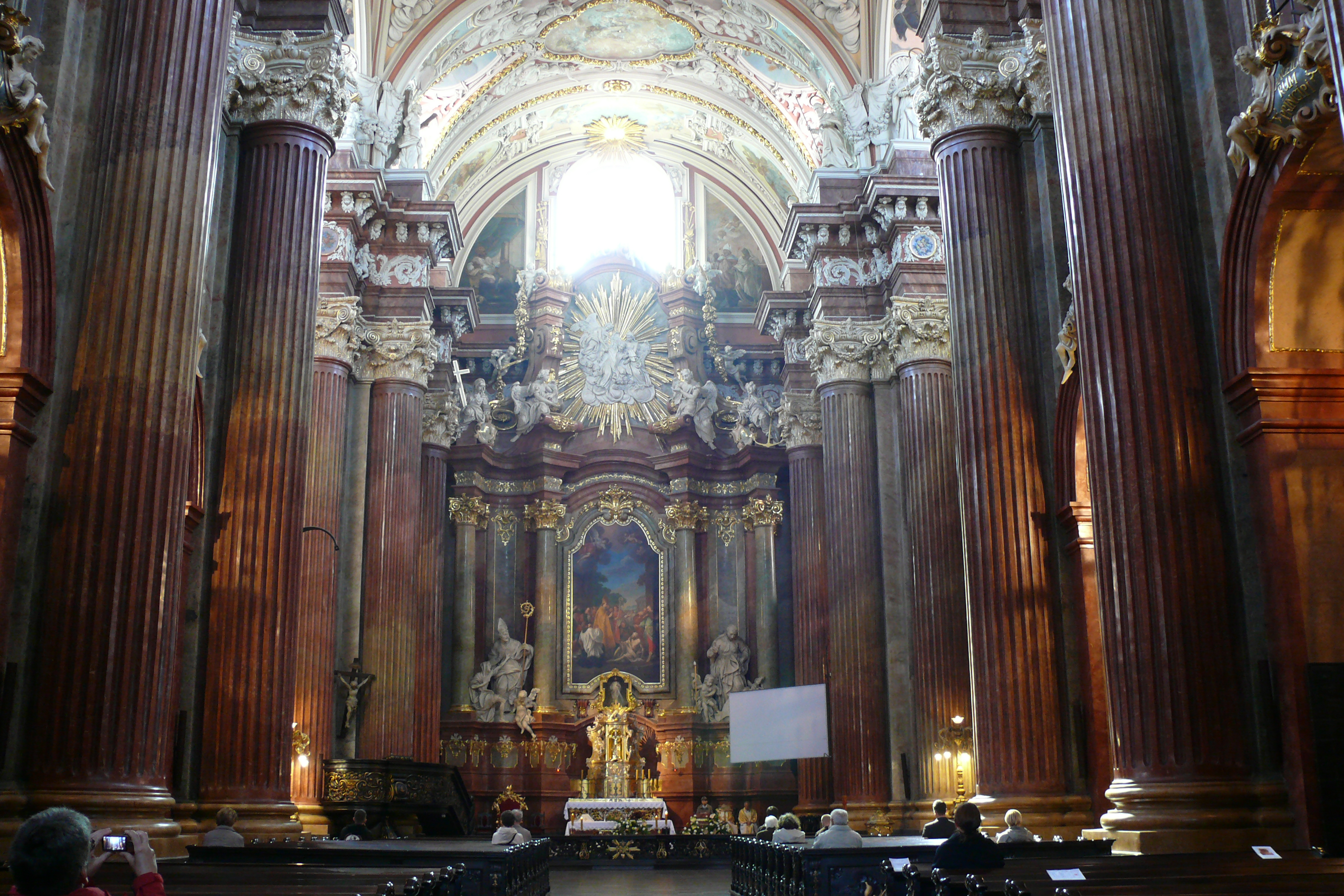
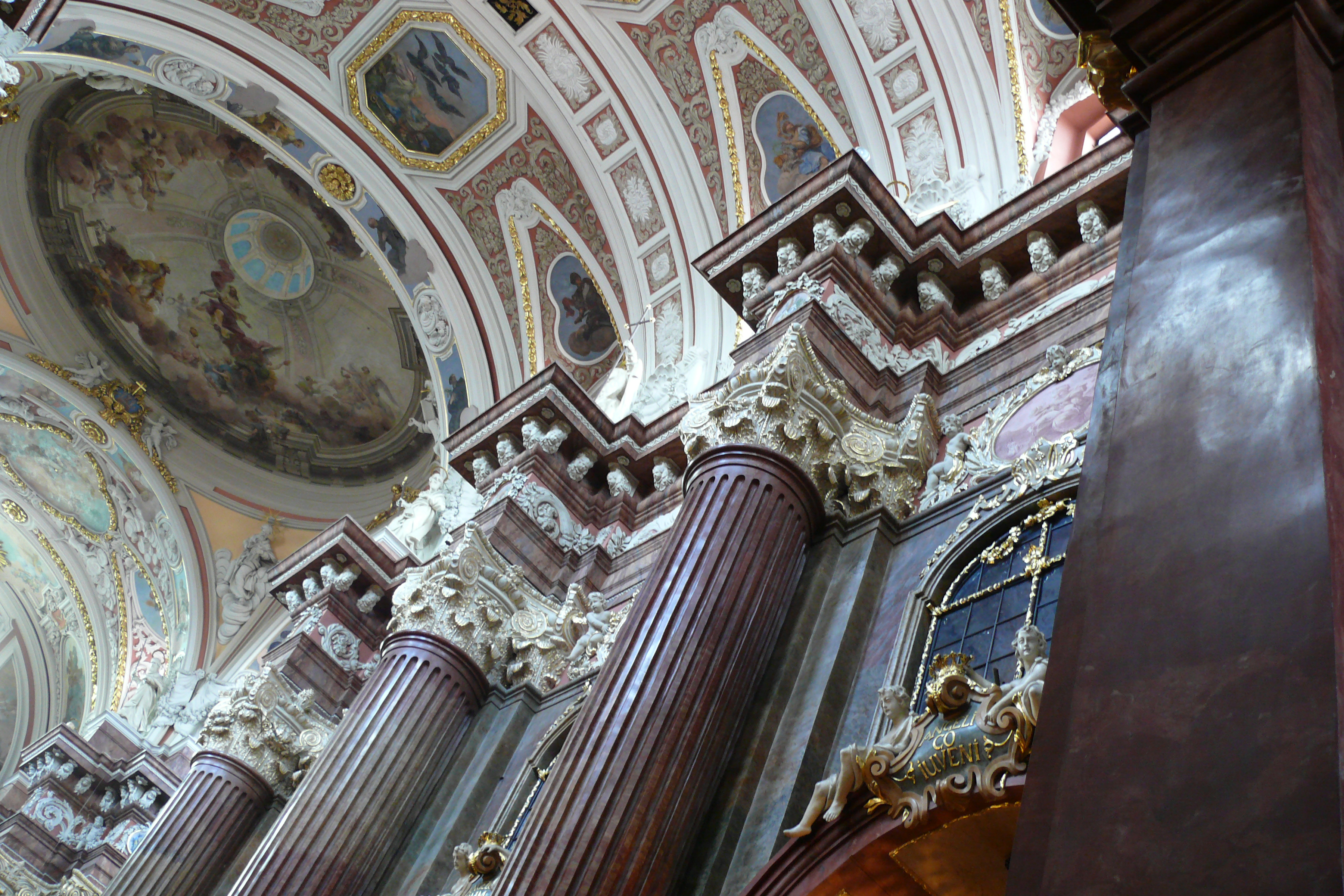

 Poznan, which was former capital of this northern section of Poland from 935-1038. This picturesque city has an old town within a newer centre. We wandered around and saw lovely cafes, beautiful terraced houses all painted differently, with flowering garden boxes on the windows. We went inside a pink painted church and found that a service was underway. We quickly picked up that we had walked in when a Bible reading was happening, followed by a sung introduction to the Gospel reading. Couldn’t understand a thing … and yet we could. We chose not to stay for the sermon, but then continued our beautiful walk through both the new and the old, including a coffee and cheesecake at a local cafe.
After a long drive we arrived into Warsaw about 6pm, and settled into our very central hotel.
WARSAW
Warsaw has been totally rebuilt since WWII. To hear about the long history of oppression and occupation over centuries in this land, yet to know that the Polish character and identity has survived through numerous border changes and attempts to crush their spirit, really impacted us.
It was also very evident that great pride is held in the fact that Pope John Paul II was Polish. It was very moving to hear about the life of this man, Karol Wojtyła, from losing his mother at age 9, then his older brother, growing up through the German invasion and then Russian occupation, his call to ministry and ministry life, and his direct involvement and influence in resistance, and the eventual fall of communism.
We toured the city in the morning, and saw monuments to famous Poles – Chopin, Copernicus, Madame Curie, as well as the old city wall, with the executioners house built into it, on its own, as no town members wanted to be his neighbour!
We went to a monument marking the Polish Jews who lost their lives during WWII and saw a relatively new museum with symbolic architecture to represent Moses parting the Red Sea, a sign of liberation. The external walls of this building, made out of glass panels, symbolically etched with both Polish and Jewish letters showing the solidarity of that relationship.
[click on a photo to see slideshow]


The afternoon was spent visiting Wilanow Palace now in the suburbs of Warsaw. It is a stately house, originally for the Kings of Poland [which were interestingly not dynastic, but elected], but then was bought by a wealthy Polish woman and new sections were built, and then came into the hands of the Potocki family. It is now state owned and open as a museum. Even though it was elaborately decorated inside, it was not a massive palace, and the individual room sizes were actually quite modest.


Saying farewell to Warsaw the next day, we drove south to visit Jasna Gora, a famous monastery, where the symbol of Poland, the Black Madonna icon, is situated. This monastery can have up to 50,000 visitors per day, and even though there were nowhere near that number the day we were there, it was still crowded. There are several services held every day and people come in their droves. We even noticed that on Polish TV the services from Jasna Gora are televised daily. It is believed by Polish Roman Catholics that the Black Madonna icon is miraculous and was the reason Poland still exists. People come to be healed and to make their requests. As we left, our protestant convictions remained in tact and we were very glad to have our reformed theology.


It seemed discontinuous, but we concluded our day of theological reflection with the afternoon spent visiting Birkenau and touring Auschwitz, the infamous death camp of the Nazis in World War II.
What can I say? This experience is one which will never be forgotten. I’m glad I’ve waited a couple of days to write this down, as my only response at the time was silence.
The madness of that place, and the evil which emanated from this and many other places is beyond description and yet must be described. The dehumanising of so many souls, followed by the meticulously well-thought out, purposeful, systematic, excruciating degradation of life with the sole purpose of bringing on death, was confrontational to say the least. If people didn’t die soon enough, their death was expedited by total starvation, sleep deprivation, torture, over work, freezing, shooting or ultimately the gas chamber. We saw the barracks, the toilets [for use at proscribed times twice a day], the isolation cells, the starvation cells, the standing cells, the shooting wall. We heard the stories of how people were herded onto train cars, up to 80 or 90 in each one, men, women, children all squeezed into a carriage, standing only, with no sanitary facilities, for maybe a 3-4 day train ride to Auschwitz. If they survived that, there was further degradation to endure.
The wrought iron sign on entry to Auschwitz reads “Work brings freedom”. Nothing was further from the truth for all who entered there. We saw a room full of human hair, a room full of named suitcases, a room full of children’s shoes, another of men’s shoes, and another of women’s shoes. We saw a room full of combs, toothbrushes, shaving brushes, shoe brushes and shoe polish, all confiscated from the detainees, to be re-used by the Nazis and/or given to German families. Even the human hair was not wasted as it was sold to textile companies to be made into cloth. Every aspect of dignity was removed.
We were surprised to find out that people went to Auschwitz even from as far away as Oslo, Rome, Paris, and from Athens and Thessaloniki in Greece – both places we had recently visited. The Nazis not only wanted to rid the world of Jews, but also of so many others races or groups.
Poland suffered so much through this time with the removal and killing of many priests, university professors and high ranking officials. The Nazi plan was to cut the society down at its knees, and try to remove its power to renew.
“Jews are a race that must be totally exterminated.” Hans Frank 1944 [Governor General in Nazi occupied Poland].
“We must free the German nation of Poles, Russians, Jews and Gypsies.” Otto Thierack [Nazi Minister].
These were the ethics and principles which guided the Nazi actions.
We saw the cell where Maximilian Kolbe, a Polish Priest, offered himself as replacement for a man destined for the isolation cell, who knew he would die and leave his wife and family. Kolbe sacrificed his life, and this man went on to survive the camp and return to his family after the war and lived for another 40 years.
It was at Auschwitz that the first use of Cyclone B gas was experimented with for mass extermination in the prison barracks, using 600 Russians and 250 infirmary patients. The ‘success’ of this experimentation meant that Auschwitz was then the first camp to have a gas chamber and crematorium. We walked through the same door so many thousands of people walked through after having been forced to strip naked outside, being lied to that they were entering a shower room. We walked the same path inside, and stood in the room where the Cyclone B was dropped through a small hole in the roof. The next room had the furnaces where the bodies were burned. The residents of the village nearby regularly commented that the stench of burning flesh was unbearable if the wind was in that direction. One small can of Cyclone B was enough to kill 2,000 people. The dreadful thing was that the Nazis were so pleased with the use of Cyclone B that this first gas chamber was not big enough to achieve all that they wanted, so they built much bigger ones on other sites.
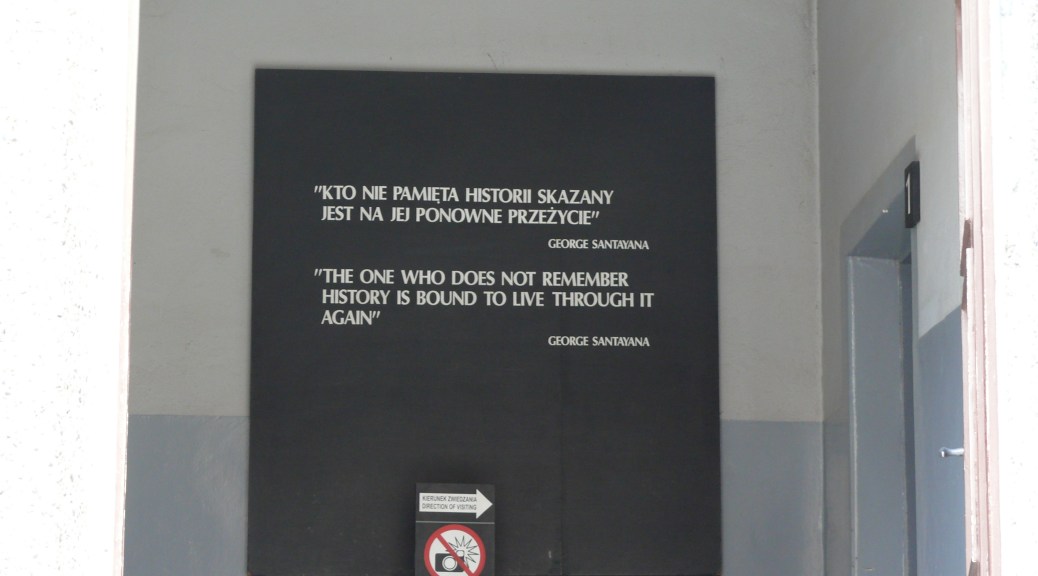
“The one who does not remember history, is bound to live through it again”, a quote by George Santayana was just inside the first barracks door we first entered.
We were able to walk out … so many did not. Our hearts were heavy.


KRAKOW
We had one more hour’s drive to reach Krakow, the former capital of Poland. Another beautiful city with more rich but tragic history. Krakow’s wonderful Jewish portion is unfortunately now only home to about 500 Jews, but the heritage is definitely still there. Famous Jewish people from Krakow include Helena Rubenstein, Roman Polanski, Billy Wilder [name changed of course] and Max Factor [name shortened] to name a few. Oskar Schindler is another name associated with the Krakow Jews. He came to Krakow from Germany to take over a local business when the Germans occupied Krakow, as was the German intention with the occupation of other nations. It was after a few years that he began aiding the Jews and we walked in the street where his influence had impact, and the site used in the shooting of the movie ‘Schindler’s List’. We saw memorials to Jews from that area who perished in WWII. It was also interesting to note that most of the Krakow Jews were not transported to Auschwitz but to places much further afield.
We walked up the Wawel hill in Krakow with the famous Cathedral where Karol Wojtyła was Bishop before becoming Pope John Paul II. On that same hill is Wawel Castle and many other fine buildings. We then walked down to the Old City and saw beautiful restaurants, one of which has been operating since 1364, and where the Kings of Poland ate on many occasions. In that market square there are so many delightful little shops around the cobbled streets and we thoroughly enjoyed simply wandering and looking. We had a coffee in the underground section of a cafe, which was from the medieval times of Krakow. We climbed down a very narrow spiral staircase through a small hole in the floor, and we wondered if Jews may have been secreted down there during WWII with just a piece of furniture used to cover the floor above. Just speculation on our part… but perhaps possible??


The afternoon was another jaw-dropping experience as we visited the UNESCO heritage site of the Wieliczska Salt Mines, in operation for 1,000 years. Millions of years ago this area was a sea which is where these salt deposits have come from. Over the centuries the workers have carved out huge caverns and created chapels some of which have amazing carvings of Bible stories. More visible evidence of the huge religious commitment of the Poles. There are also cavernous areas now used as meeting rooms and convention facilities. There are beautiful underground lakes, and beautifully carved salt statues. We had descended to a depth of 130 metres by the end of the tour which took 2 hours.


One interesting thing we discovered by this tour was that salt used to be used as currency in medieval times, and the root word of salary comes from ‘salt’.
Having the opportunity to visit Poland, even if only for 4 days, has not only been enlightening and educational, but also has helped me revisit some theological convictions in both belief and practice, as well as increasing within me the sense of despair about the common human condition of sin and how it reveals itself in so many forms. I am thankful that God has provided a way of dealing with this condition and through grace invites us to partake and participate in the world’s renewal. My prayer is that I might grow in fulfilling my part in His mission.
 Chris and Lynda Johnson