The journey from Austria to Italy took us through more beautiful terrain as we drove from the mountains on to the plains. Anticipating Venice, after hearing about it for years, did not prepare me for the reality. Crossing the low bridge as we approached the Venice lagoon, it was an incredible sight to see the shallow water which just seemed to gradually emanate from the mainland. The only access to the Venetian islands is by boat, so we boarded our water bus. The Queen Elizabeth cruise ship was docked as well, which we quietly greeted and smiled, as we did when we saw it in the Port of Piraeus in Greece. The sky was a little hazy so our views were not as great as they could have been, but it was quite surreal to pass the iconic landmarks so often photographed.
The uniqueness of this ancient city is unparalleled, and our walk around was breathtaking at every corner. We did the obligatory gondola ride from which you could see that ‘ordinary’ life, of a sort, with washing hanging out from the windows above the canals. We walked past glass-blowing shops, clothes shops and leather shops, as well as hardware stores, kitchenware shops and hairdressers. ‘Ordinary’ life it is, and ordinary life it isn’t.
After two nights and one absolutely supreme day in London with perfect Autumn weather, we began another tour, this one definitely to be a whirlwind time. With mostly one night stops, this tour is only a taster for us rather than thorough.
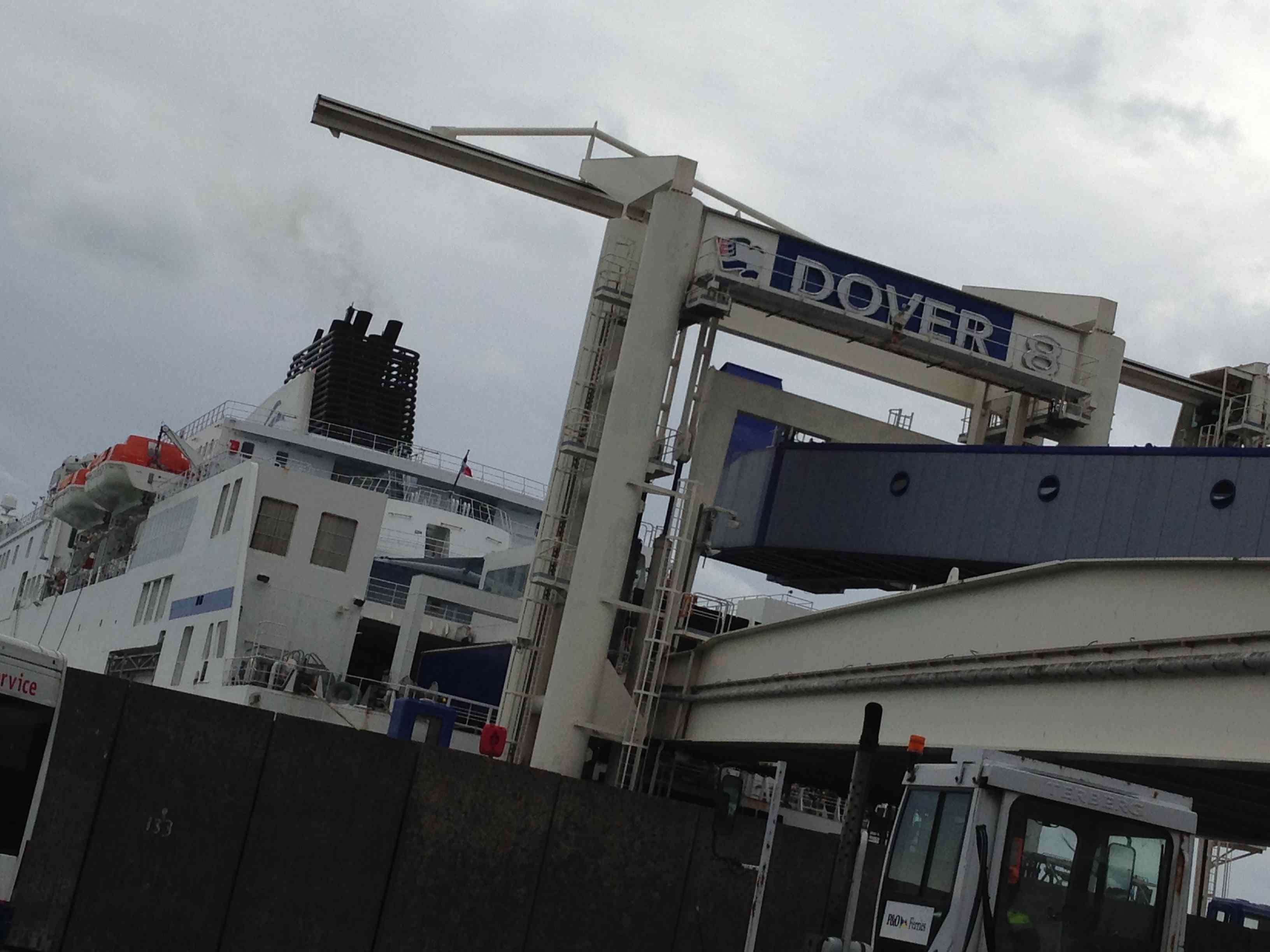
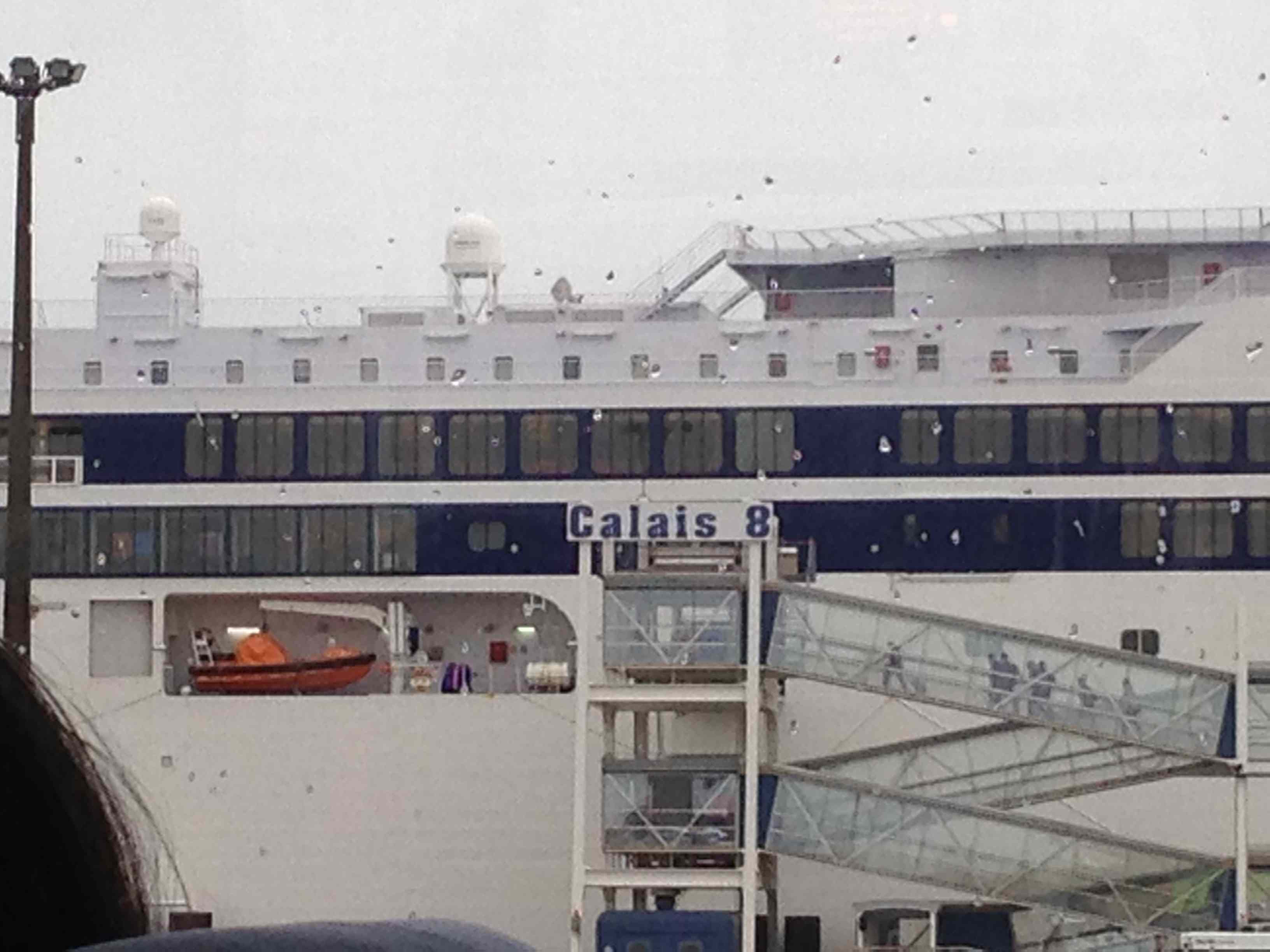
We drove from London to Dover to catch the ferry across the Channel to Calais. It was a coolish day with a bit of wind, but the journey was quite comfortable. We left the white cliffs of Dover and arrived to similar looking cliffs in France. But France was fleeting as we boarded another bus and were whisked across the countryside, quickly getting to the border with Belgium. Belgium was a founding member of the European Union and Brussels is where the EU has its parliament. Continue reading BRUSSELS | LUCERNE | INNSBRUCK→
The Czech Republic came into existence in 1993 when it and Slovakia parted company from the previous Czechoslovakia. Prague, the capital, is a very old and beautiful city on the Vltava River, gracefully inhabited by magnificent white swans.
Similar to Budapest, one side of the river is flat and the other side is hilly, with the castle precinct on the top. The famous Charles Bridge is stunning with its towers on each end and 30 statues along the sides. It is now purely a pedestrian bridge, with various musicians along the way, portrait painters, jewellery sellers and beggars. As we walked the city we saw the Jewish ghetto with the old Staranova Synagogue. From this area 80,000 Jews perished in the holocaust. The narrow cobble-stoned streets wound their way through medieval houses, shops and halls, all at interesting angles which at times block the pedestrian view of one from the other. The small square in front of the Town Hall is surrounded by so many other grand buildings including a church.
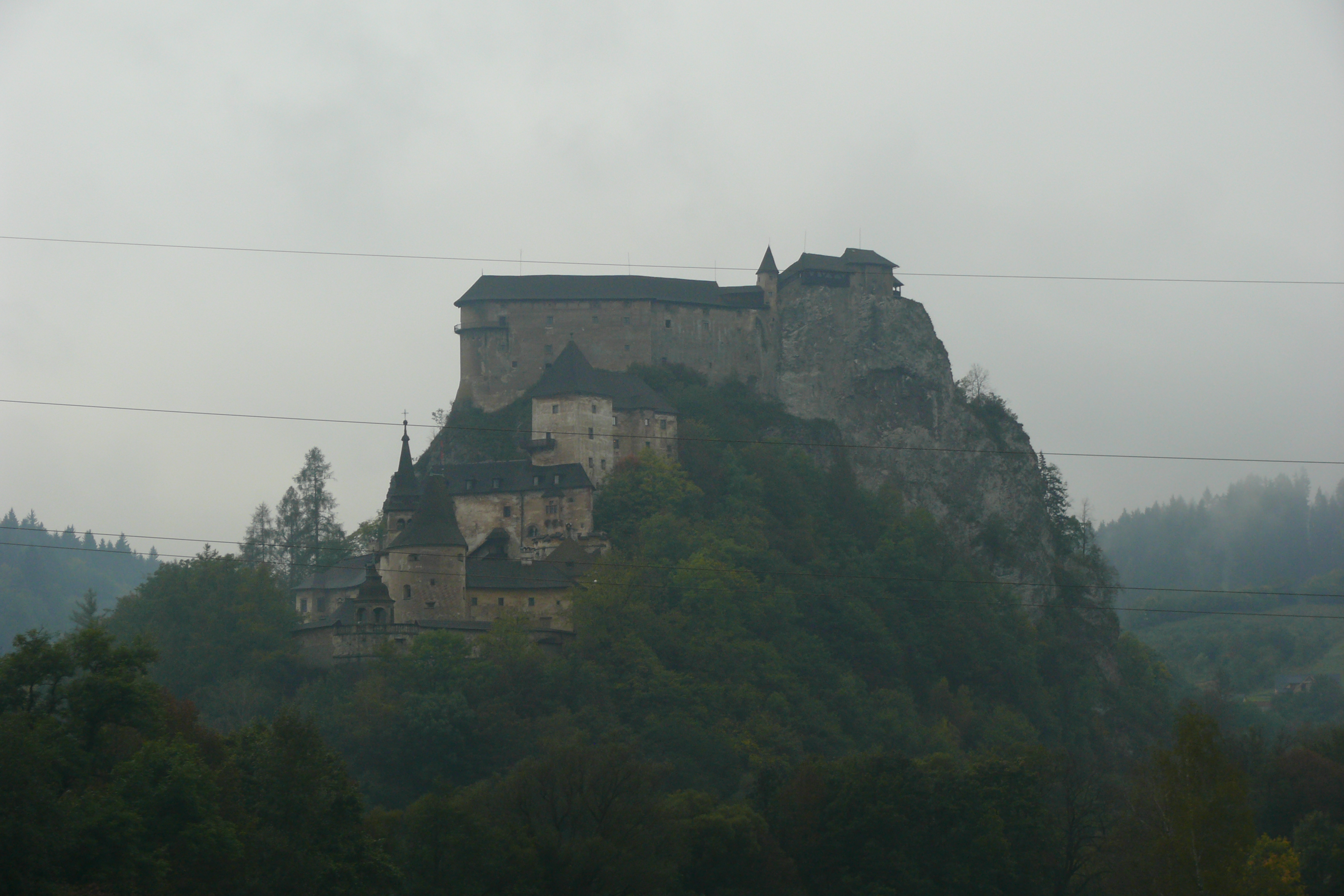
Leaving Krakow in the pouring rain we drove through very scenic country as the weather fined up to be a beautiful day. Ascending the Tatra Mountains we encountered magnificent steep hillsides rising from the road with impressive pine trees and fast flowing streams beside the road. We passed a castle used in the Dracula movie as well as pretty Polish villages.
Donovaly
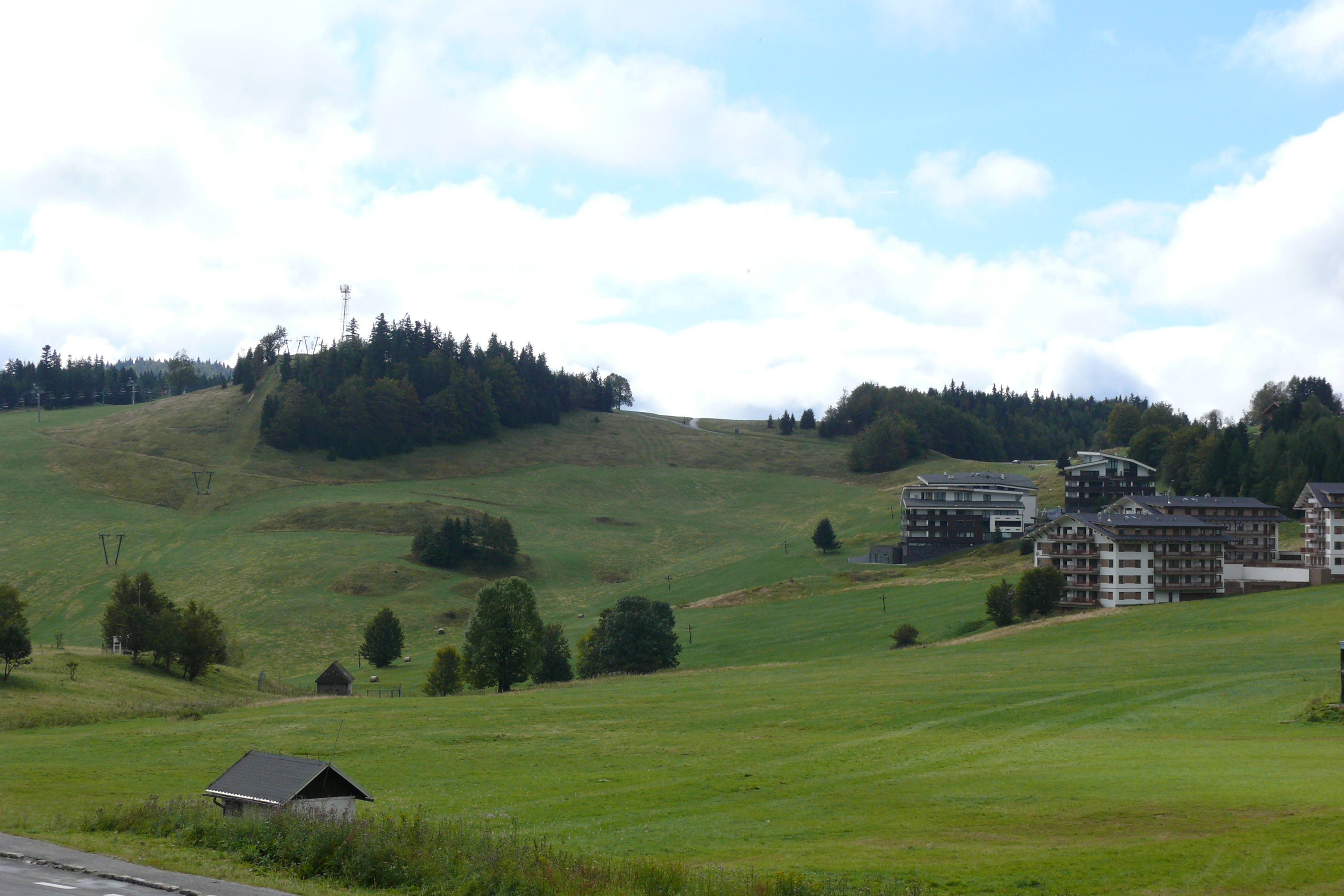
Crossing the border into Slovakia we soon reached our lunch destination, Donovaly, a ski resort which in the coming weeks will look vastly different to what we saw. There was a slight chill in the air as we wandered round, but it was very refreshing. We also managed to find a very reasonably priced latte! Continue reading BUDAPEST | VIENNA→
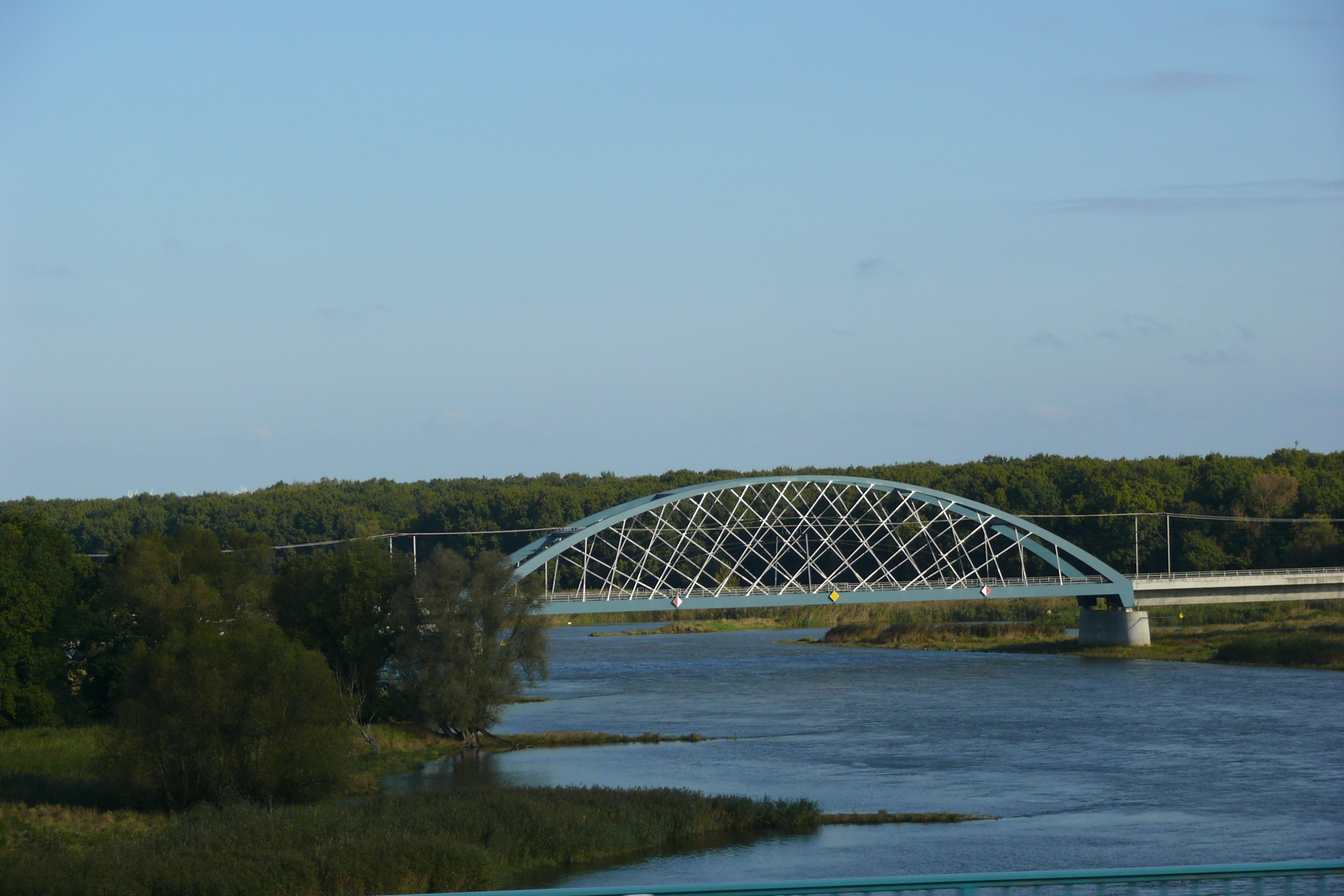
We crossed the border over the Oder River into Poland, and had to change some euros into the local currency Polish Zloty. Poland, although part of the EU, is yet to convert to Euro currency as the economy is not strong enough.
With Roman Catholicism solidly entrenched here, the Polish people have a distinctive identity, character and determined nature. There are churches on every corner.
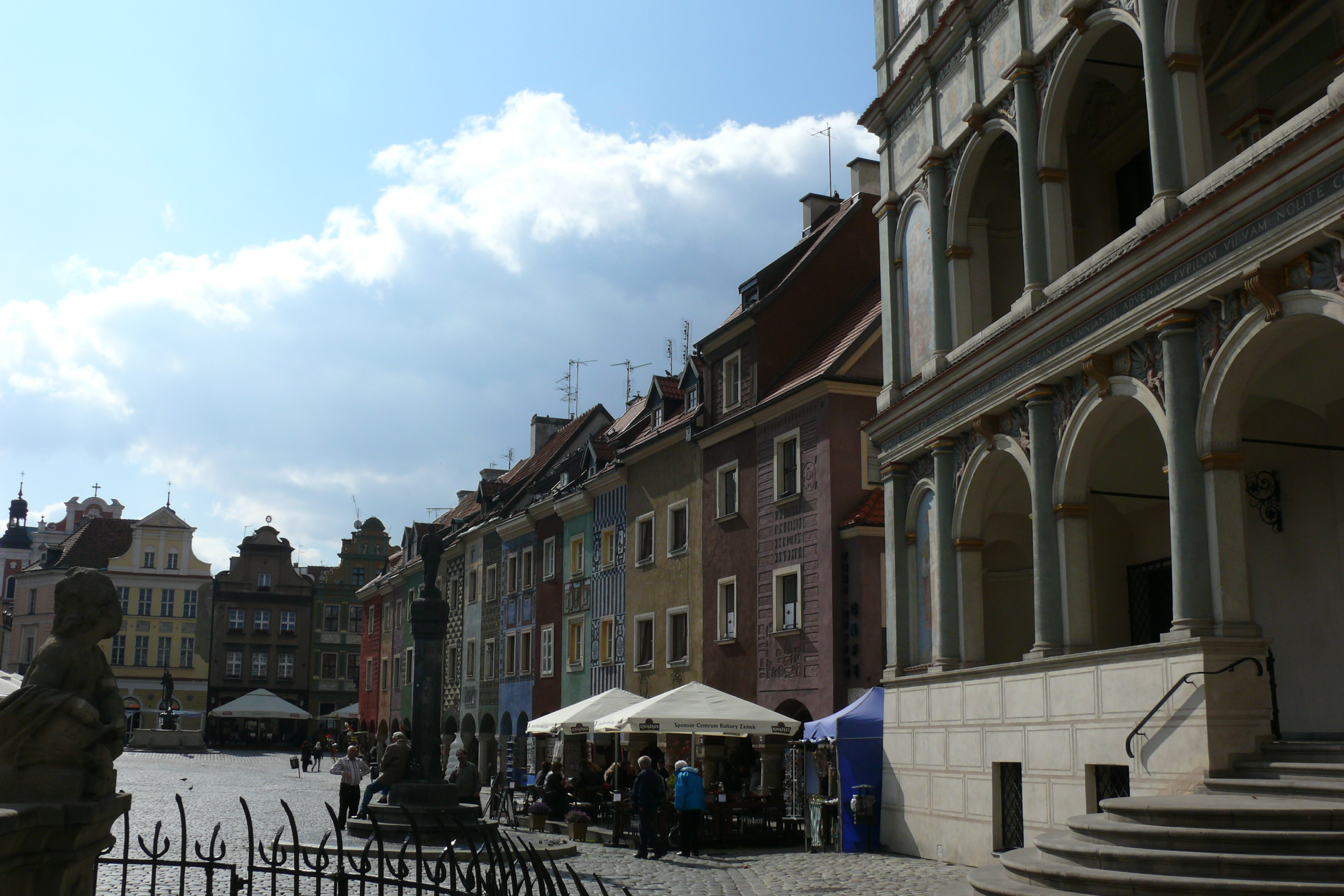
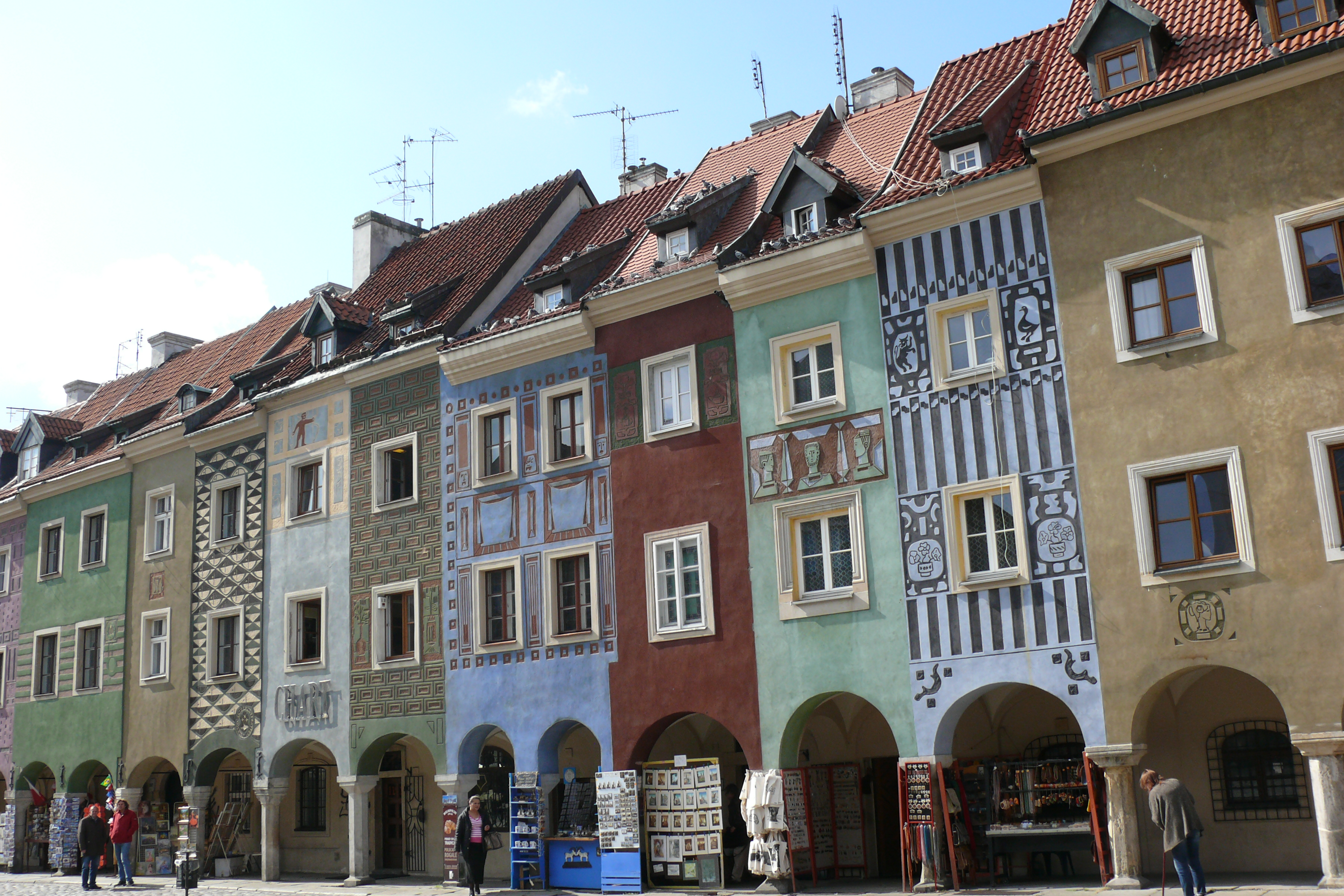
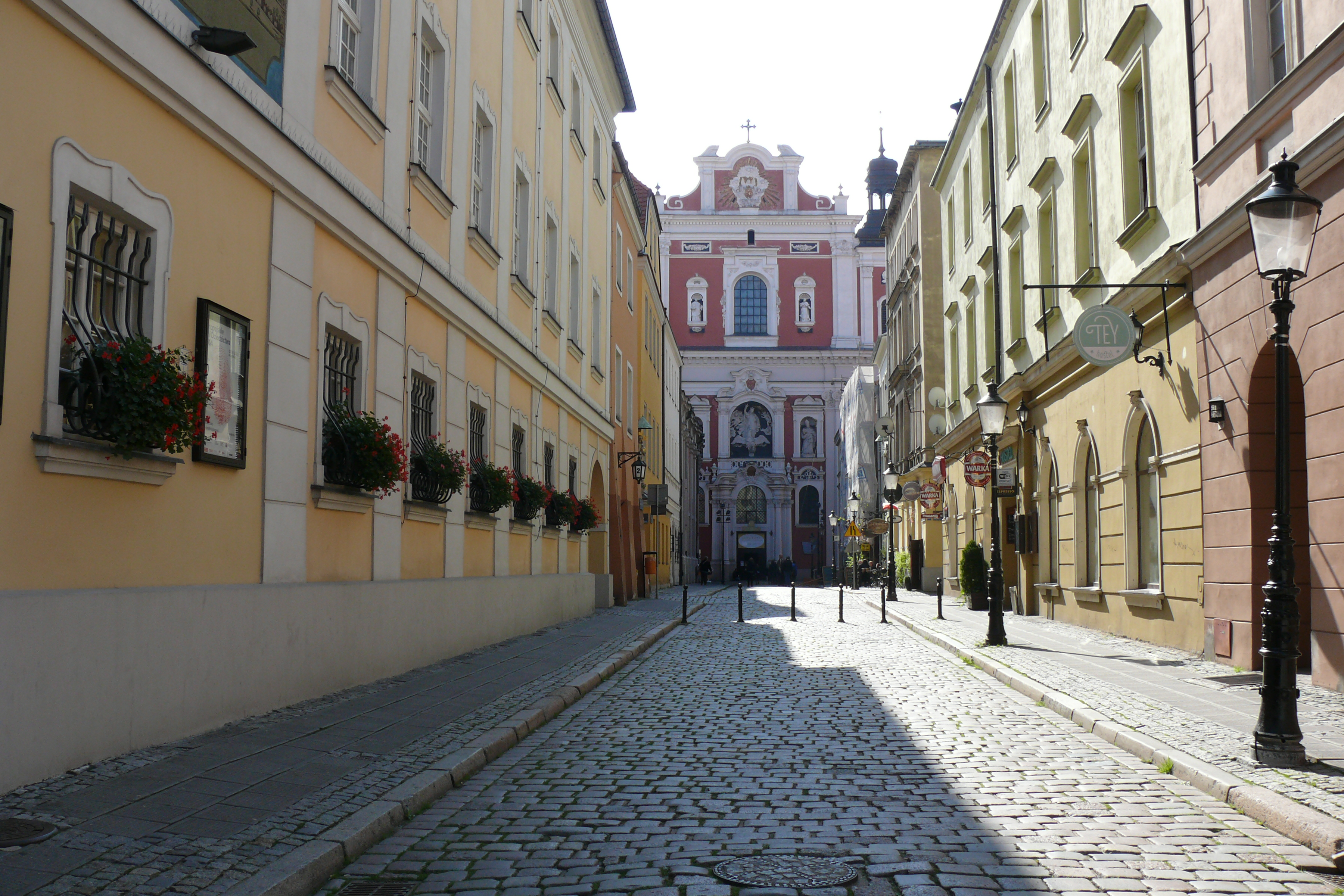
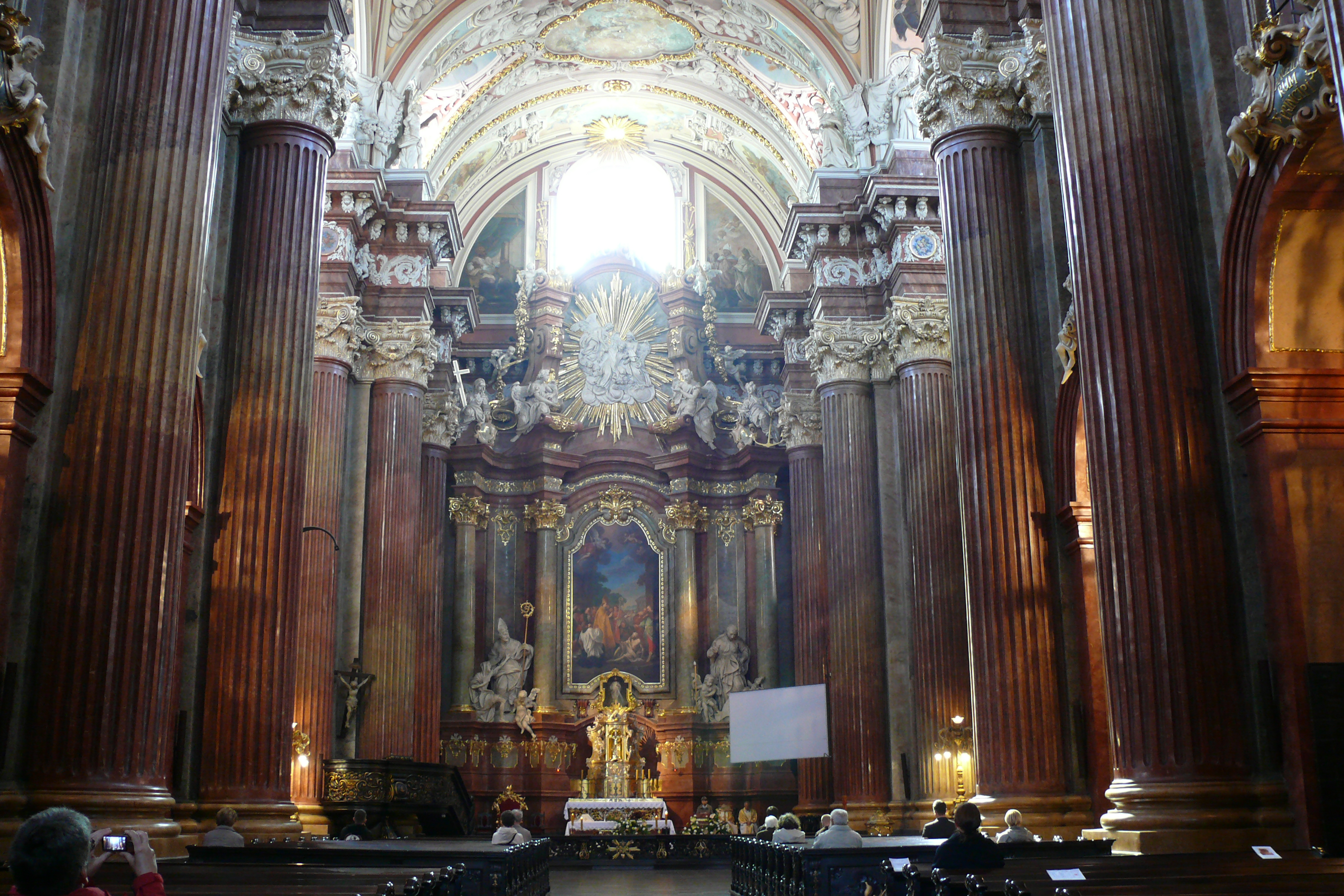
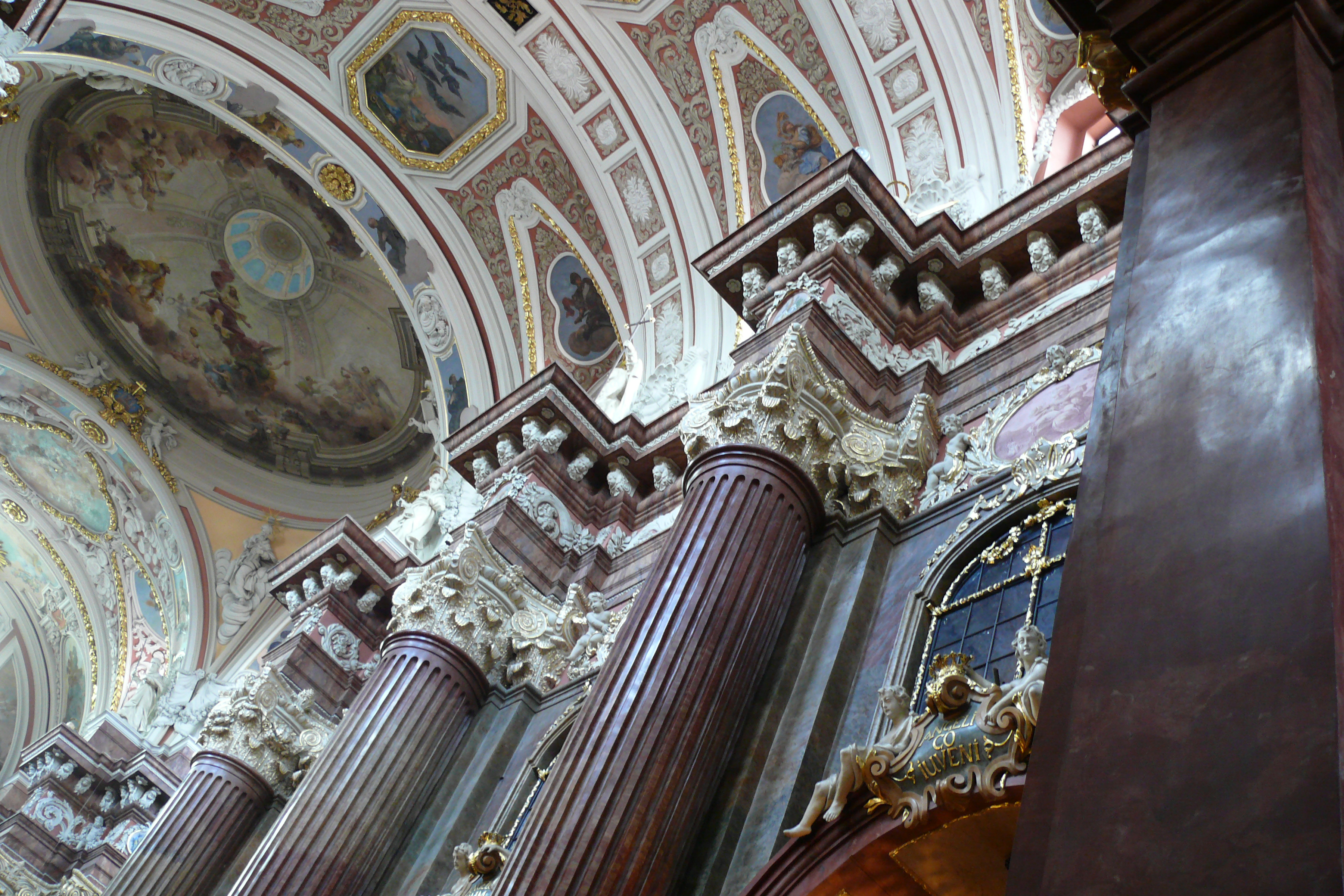
The north of the country is very flat, and we crossed lots of agricultural land. Our lunch stop was in the beautiful town ofPoznan, which was former capital of this northern section of Poland from 935-1038. This picturesque city has an old town within a newer centre. We wandered around and saw lovely cafes, beautiful terraced houses all painted differently, with flowering garden boxes on the windows. We went inside a pink painted church and found that a service was underway. We quickly picked up that we had walked in when a Bible reading was happening, followed by a sung introduction to the Gospel reading. Couldn’t understand a thing … and yet we could. We chose not to stay for the sermon, but then continued our beautiful walk through both the new and the old, including a coffee and cheesecake at a local cafe.
After a long drive we arrived into Warsaw about 6pm, and settled into our very central hotel.
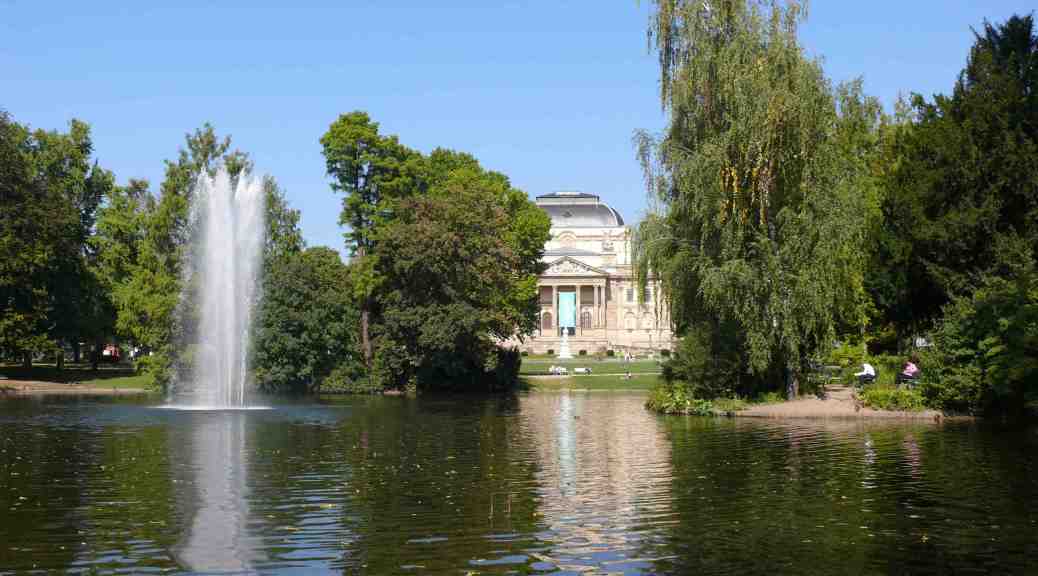
We flew into Frankfurt from Athens after a wonderful time in Greece, but very much looking forward to having a long held dream to visit Germany fulfilled. Having studied High School German I have had a fascination, not only with the language, but also with the geography, the culture and the people. My late older brother, Malcolm, also studied German at school, but unlike me, became fluent as he lived and worked in Germany for several years. My nephew, Mark, has also married a beautiful German lady, so I have felt various connections over the years. Our decision to stay in Wiesbaden came about basically because the accommodation prices in Frankfurt were very inflated due to an Automechanika Fair being held on the exact dates we were in the area. Wiesbaden, being about 30 km from Frankfurt seemed a viable alternative. And then we found out that my niece-in-law was actually born in Wiesbaden!
Disembarking from the Louis Olympia, and boarding a bus immediately was a bit like a slap in the face so early in the morning. But we were off to Corinth.
On the way we had a photo stop at the Corinth Canal, a 6.3km canal joining the Ionian and Aegean seas between the Athens area and the Peloponnese. Construction took 11 yrs, begun by the same company that built the Suez Canal, but finalised by a Greek company after the first one ran out of money. The canal can accommodate small to medium size craft, and is 79 metres high, 24 metres wide with a water depth of 8 metres. It was lovely to see a couple of craft proceeding through.
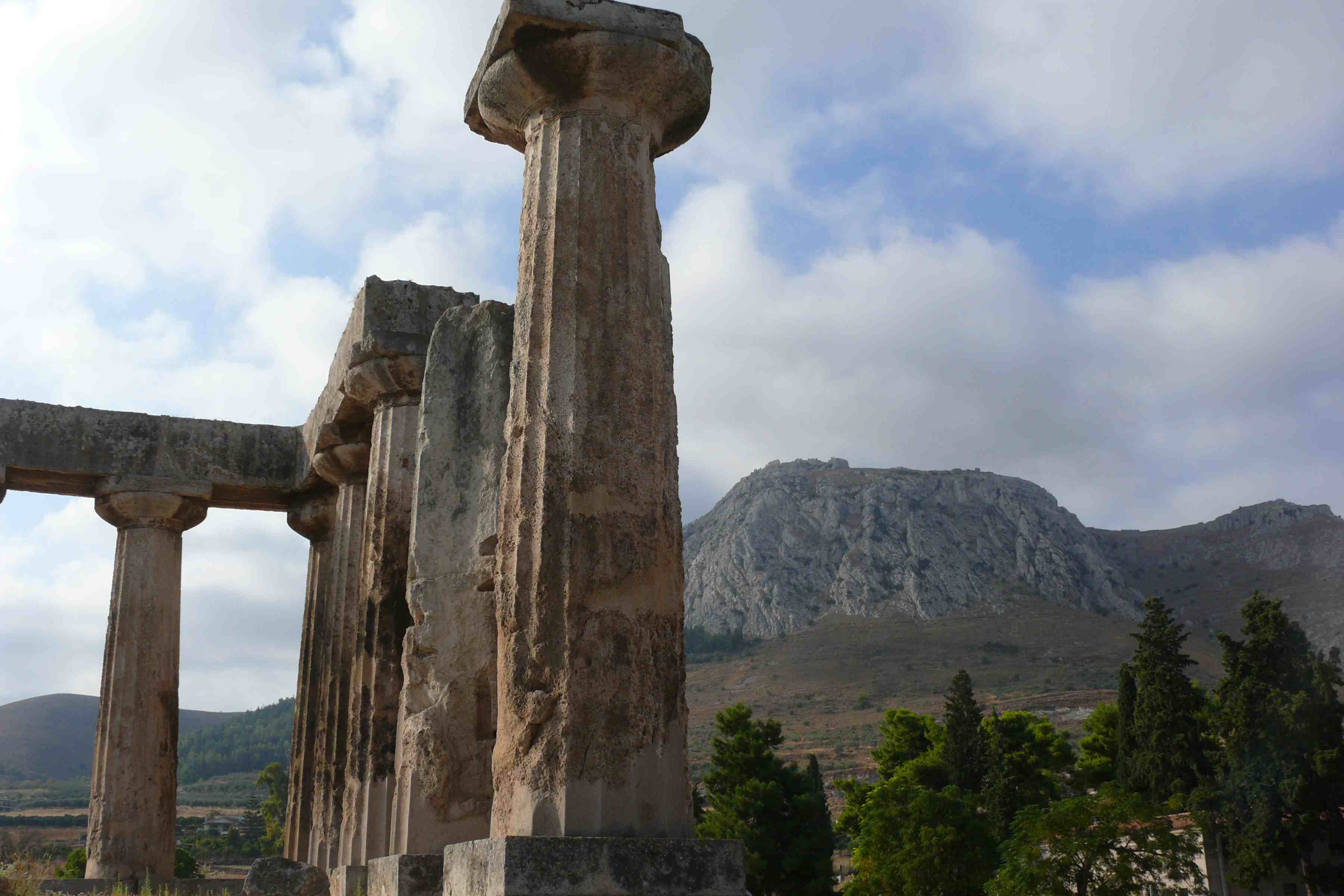
Acropolis of Corinth
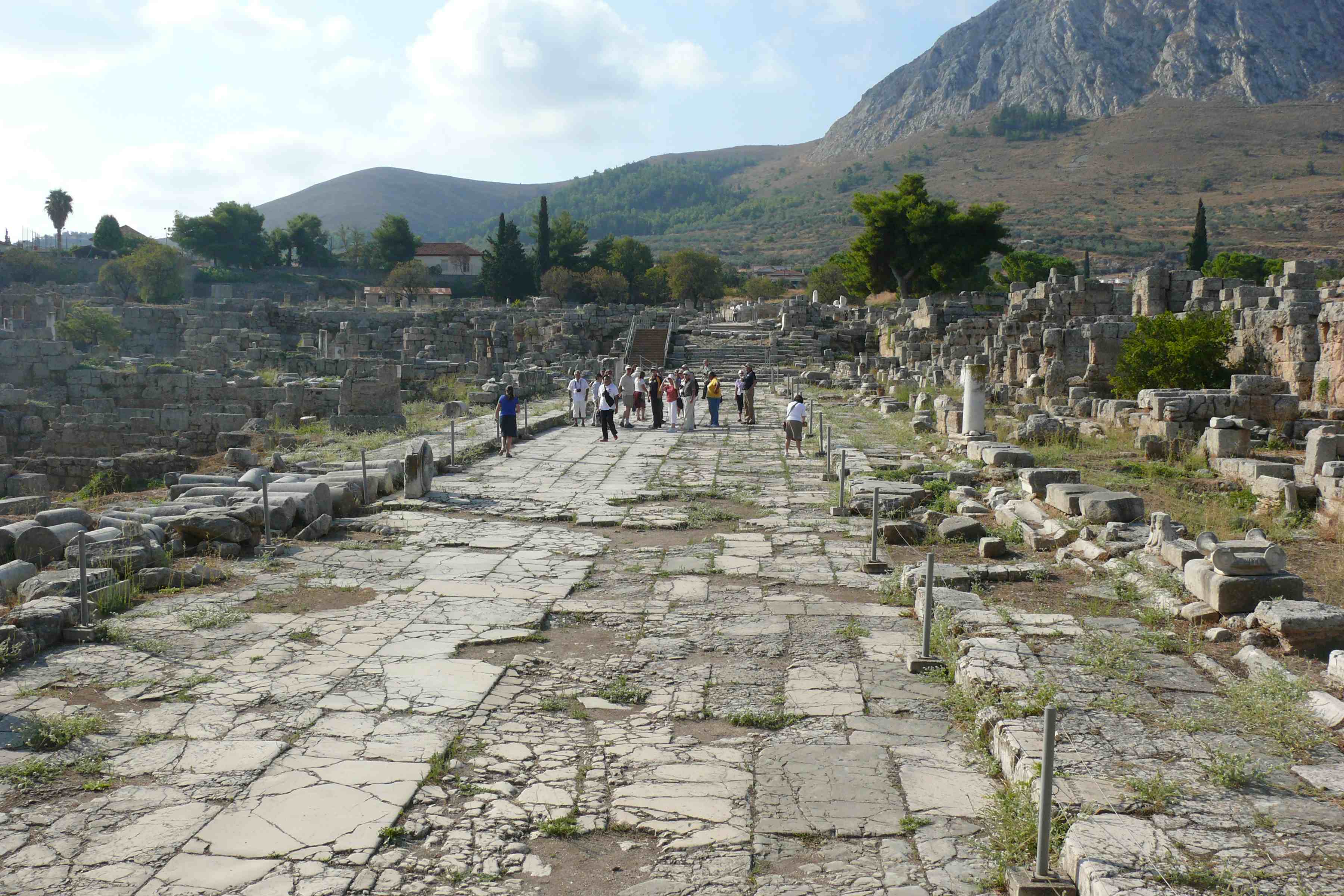
We were then on to another fantastic opportunity to see a place where Paul had such influence. Like all ancient Greek towns there was an acropolis [high edge place of the city] which has various eras of construction. Unfortunately we didn’t have time to go up to the acropolis so photos from the base had to suffice. In the first century Corinth was a very cosmopolitan city with philosophy and the pursuit of wisdom as paramount.
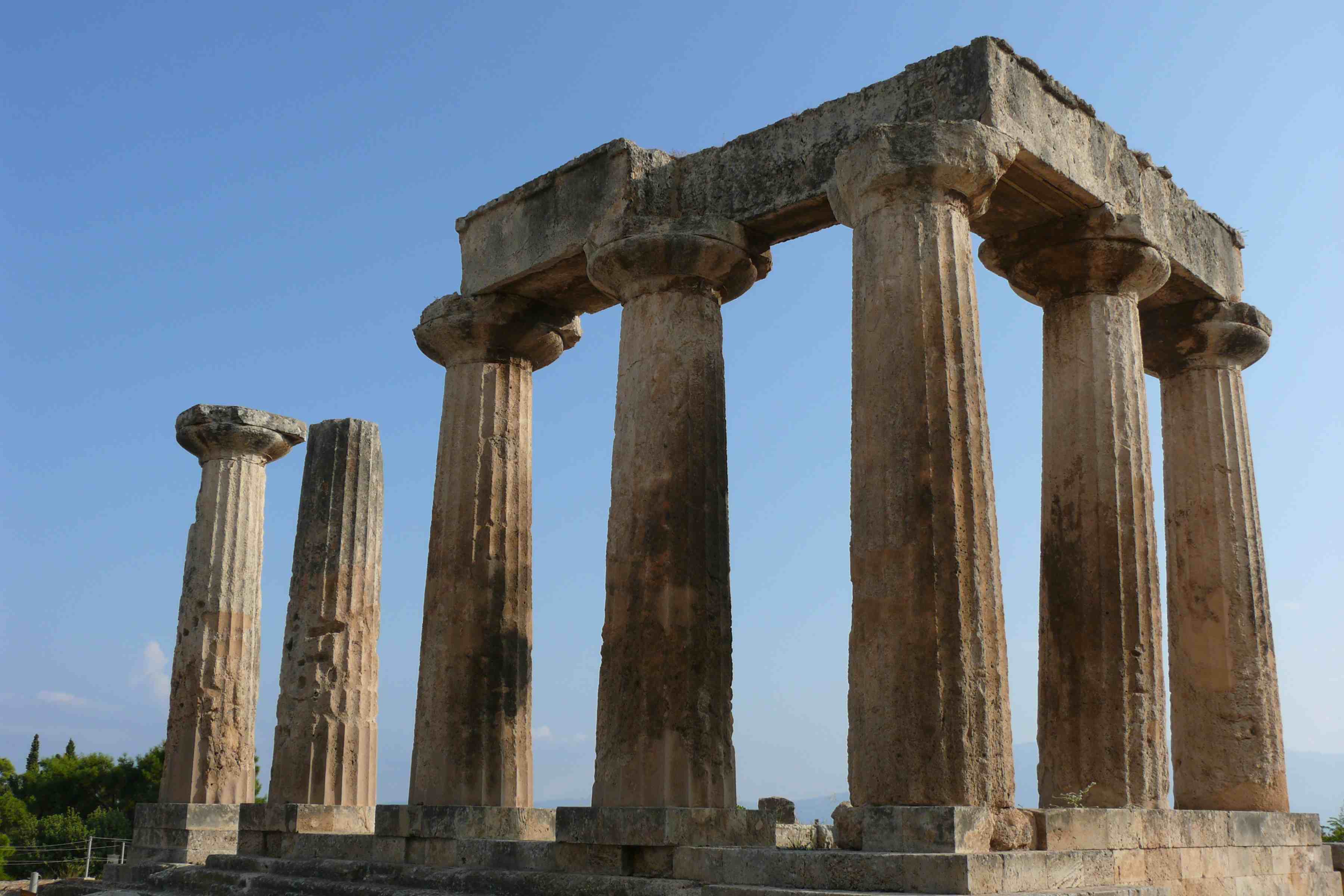
Corinth had a long history before Paul went there, and we were amazed to see substantial columns from the Archaic era, about six centuries before Christ, still standing.
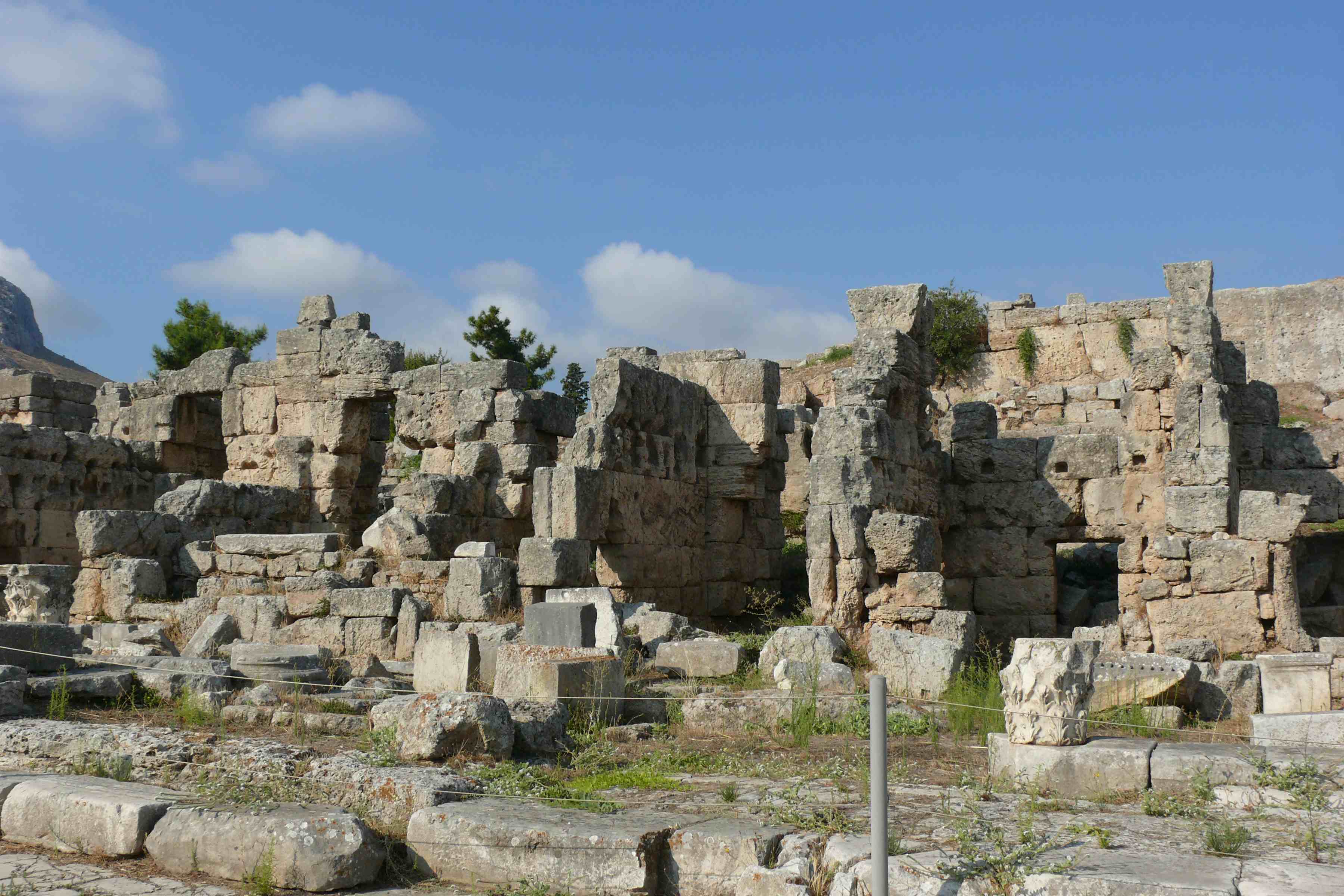
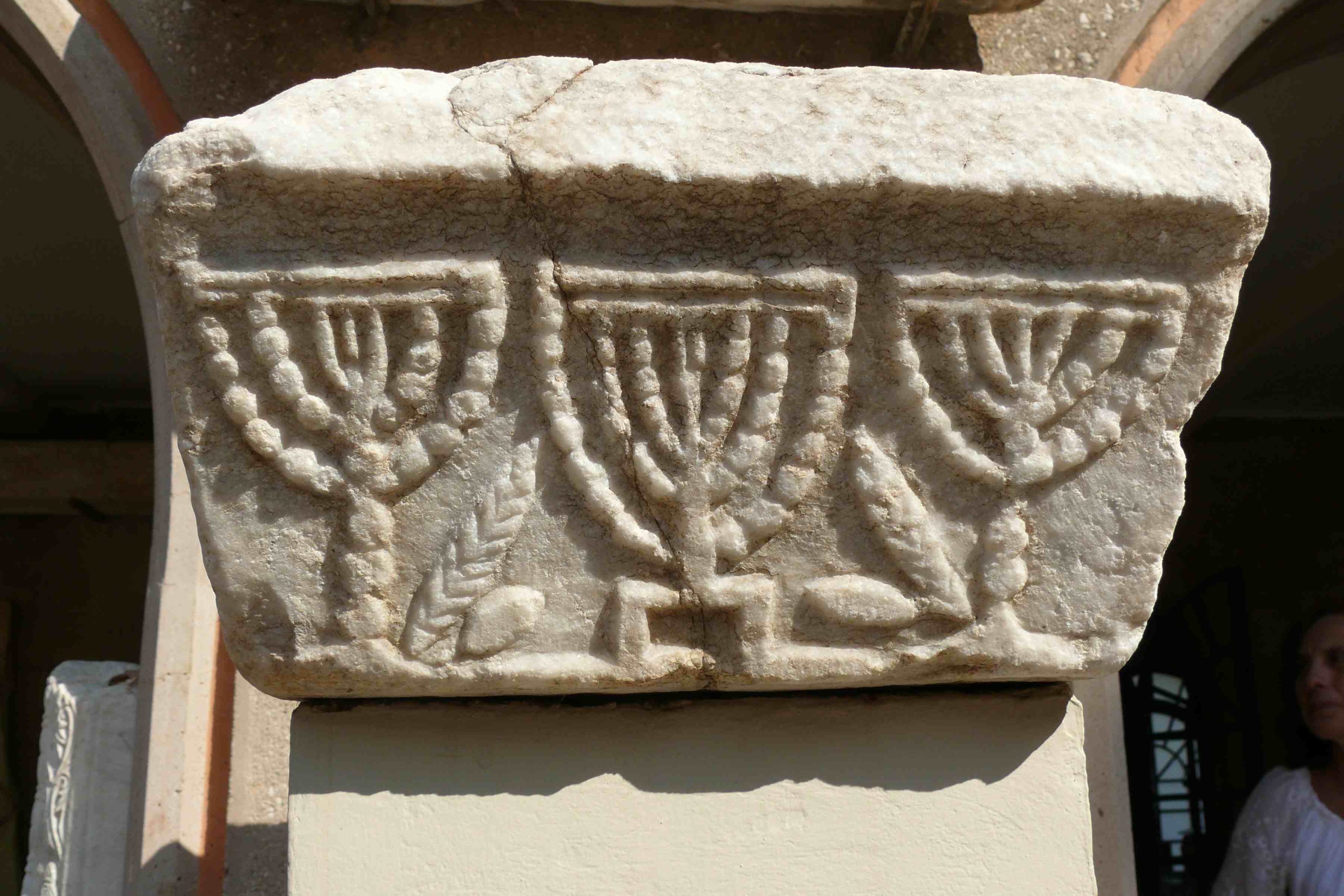
Paul stayed in Corinth about 18 months and had massive influence across the town. We saw the place where it is likely that he worked as a tent-maker with Priscilla and Aquila in the line of shops leading up to the main gate. The ruins are inconclusive as to where the Jewish synagogue may have been, but in the museum there is a stone with carving of three menorah, showing that somewhere in the area there was a synagogue, where Acts tells us that Paul was every Sabbath, reasoning with both Jews and Greeks.
As a tour group we sat in this beautiful location, with the acropolis behind and the ruins in front. Chris read from 1 Corinthians 1:18-25; other tour members read a few verses from Acts 18 & I Corinthians 13, several shared various reflections on our tour and on Paul and what we have learned, and we prayed together. A very special time as our tour was drawing to a close.
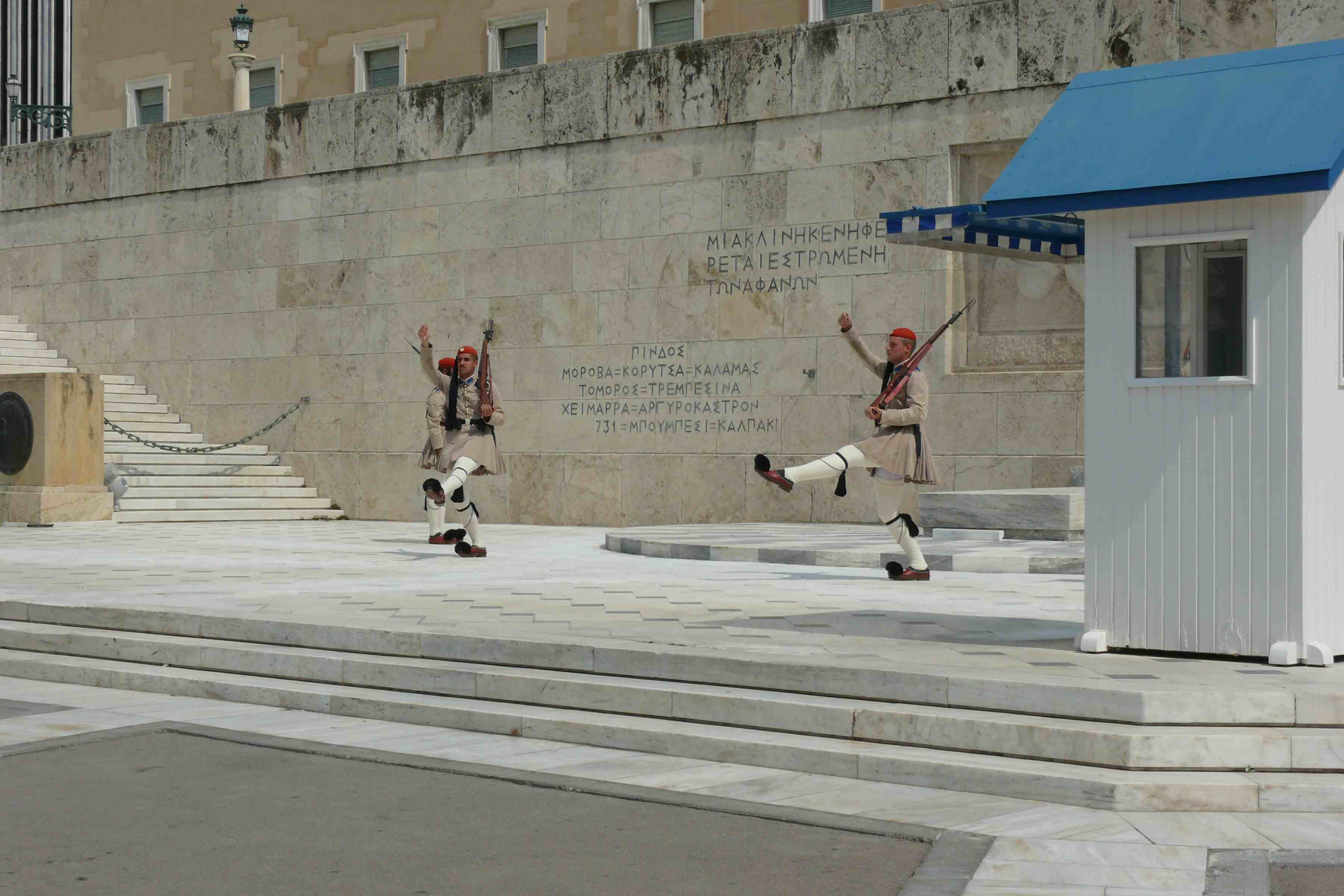
Driving back to Athens our final afternoon was spent on the great Acropolis of Athens, but on the way through the city centre we saw the hourly changing of the guard outside the Greek Parliament. A very impressive sight, with a certain unique marching method.
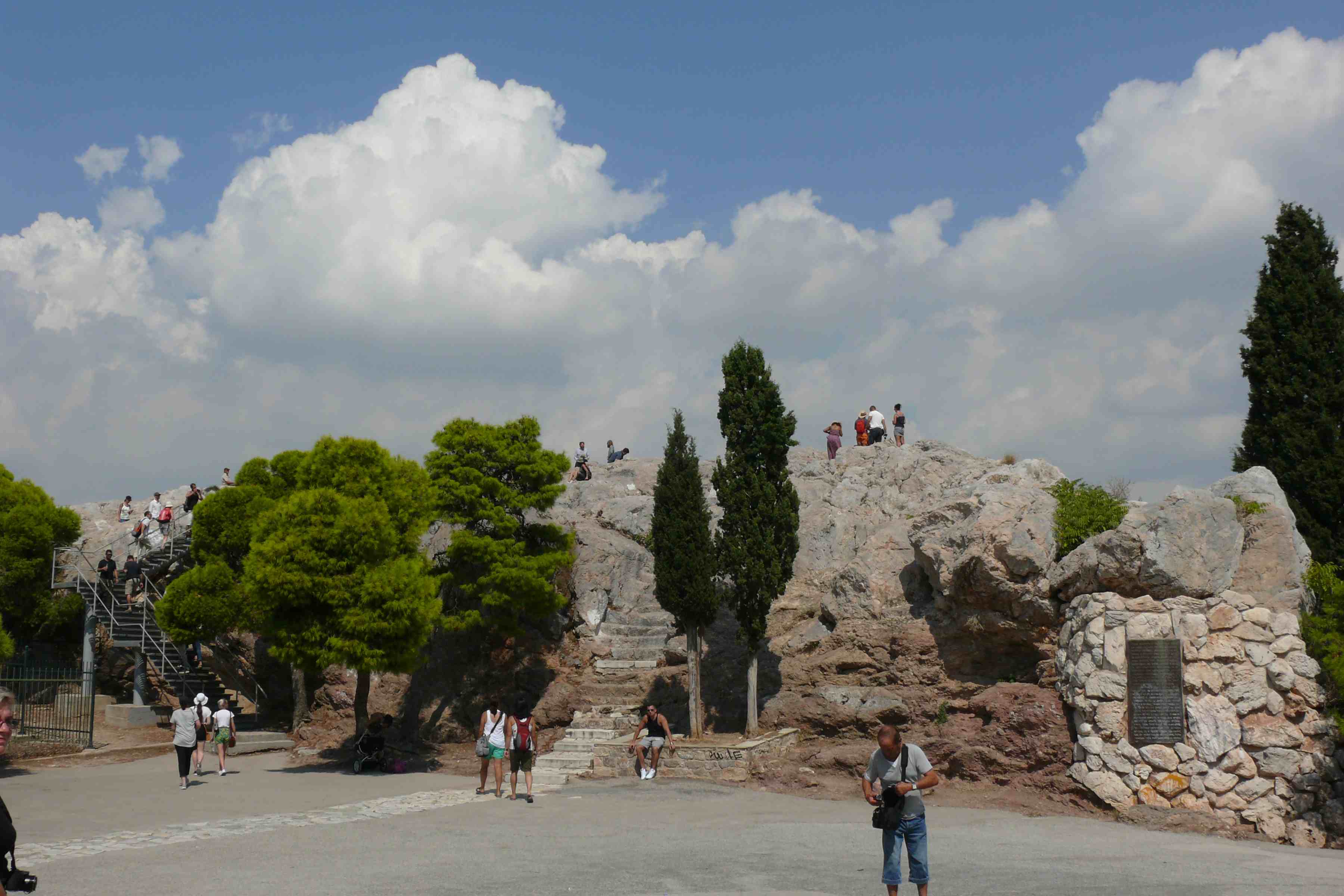
Arriving at the Acropolis, we first climbed Mars Hill [the Areopagus] where Paul preached to the people of Athens:
Acts17:22 So Paul, standing in the midst of the Areopagus, said: “Men of Athens, I perceive that in every way you are very religious. 23 For as I passed along and observed the objects of your worship, I found also an altar with this inscription, ‘To the unknown god.’ What therefore you worship as unknown, this I proclaim to you. 24 The God who made the world and everything in it, being Lord of heaven and earth, does not live in temples made by man, 25 nor is he served by human hands, as though he needed anything, since he himself gives to all mankind life and breath and everything. 26 And he made from one man every nation of mankind to live on all the face of the earth, having determined allotted periods and the boundaries of their dwelling place, 27 that they should seek God, and perhaps feel their way toward him and find him. Yet he is actually not far from each one of us, 28 for
“‘In him we live and move and have our being’
as even some of your own poets have said,
“‘For we are indeed his offspring.’
29 Being then God’s offspring, we ought not to think that the divine being is like gold or silver or stone, an image formed by the art and imagination of man. 30 The times of ignorance God overlooked, but know he commands all people everywhere to repent, 31 because he has fixed a day on which he will judge the world in righteousness by a man whom he has appointed; and of this he has given assurance to all by raising him from the dead.”
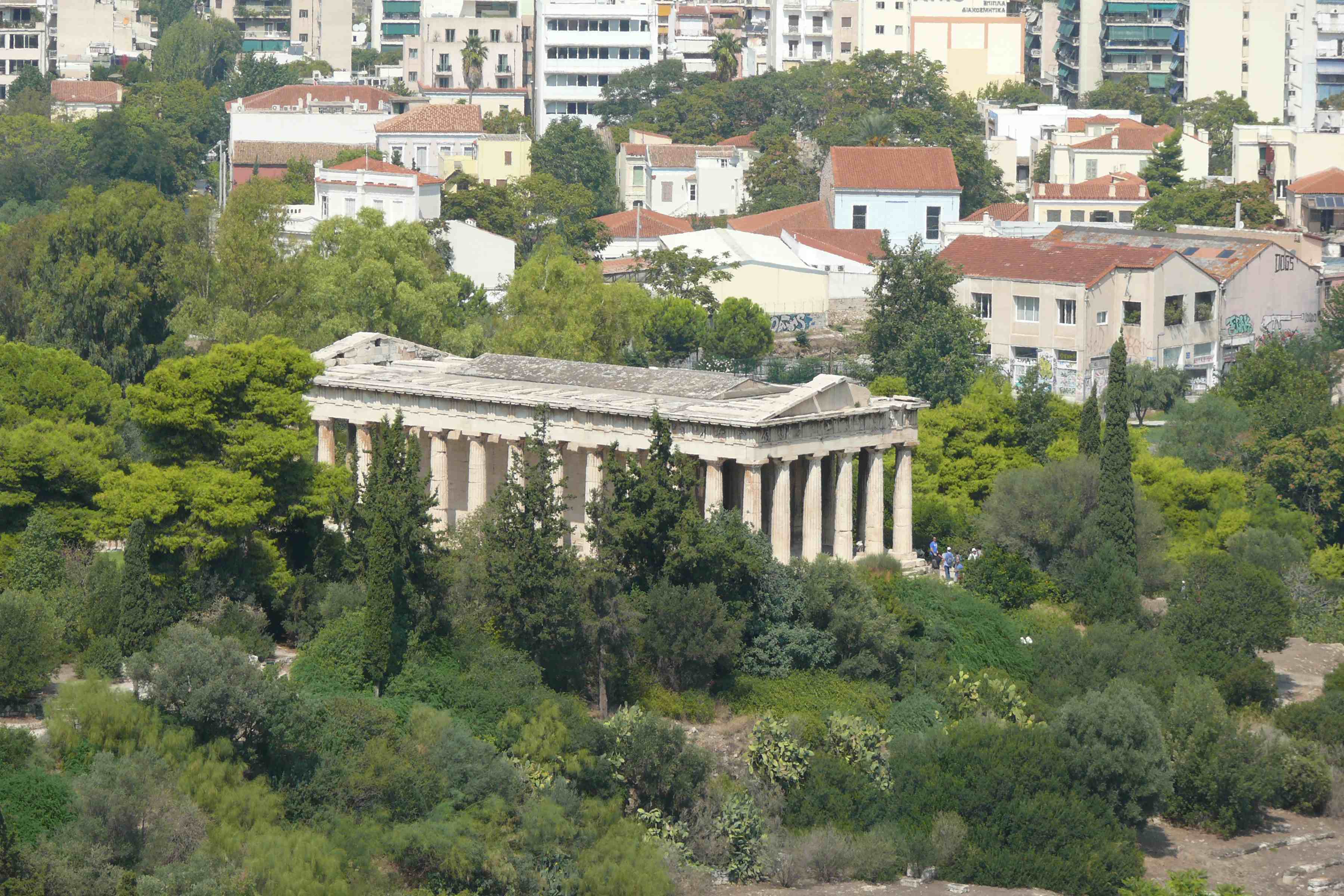
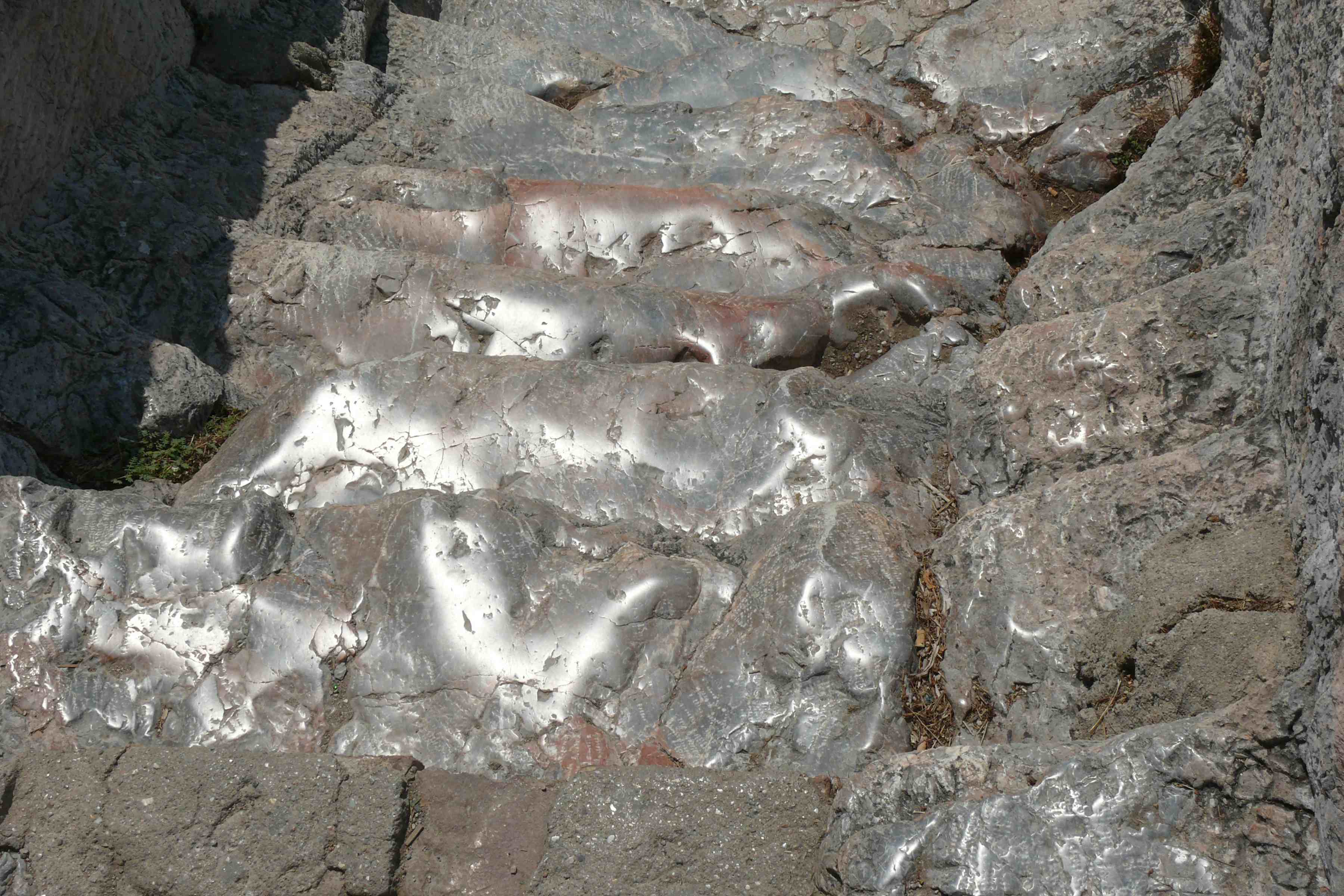
The AgoraThe Temple of HepheastusSteps on Mars Hill
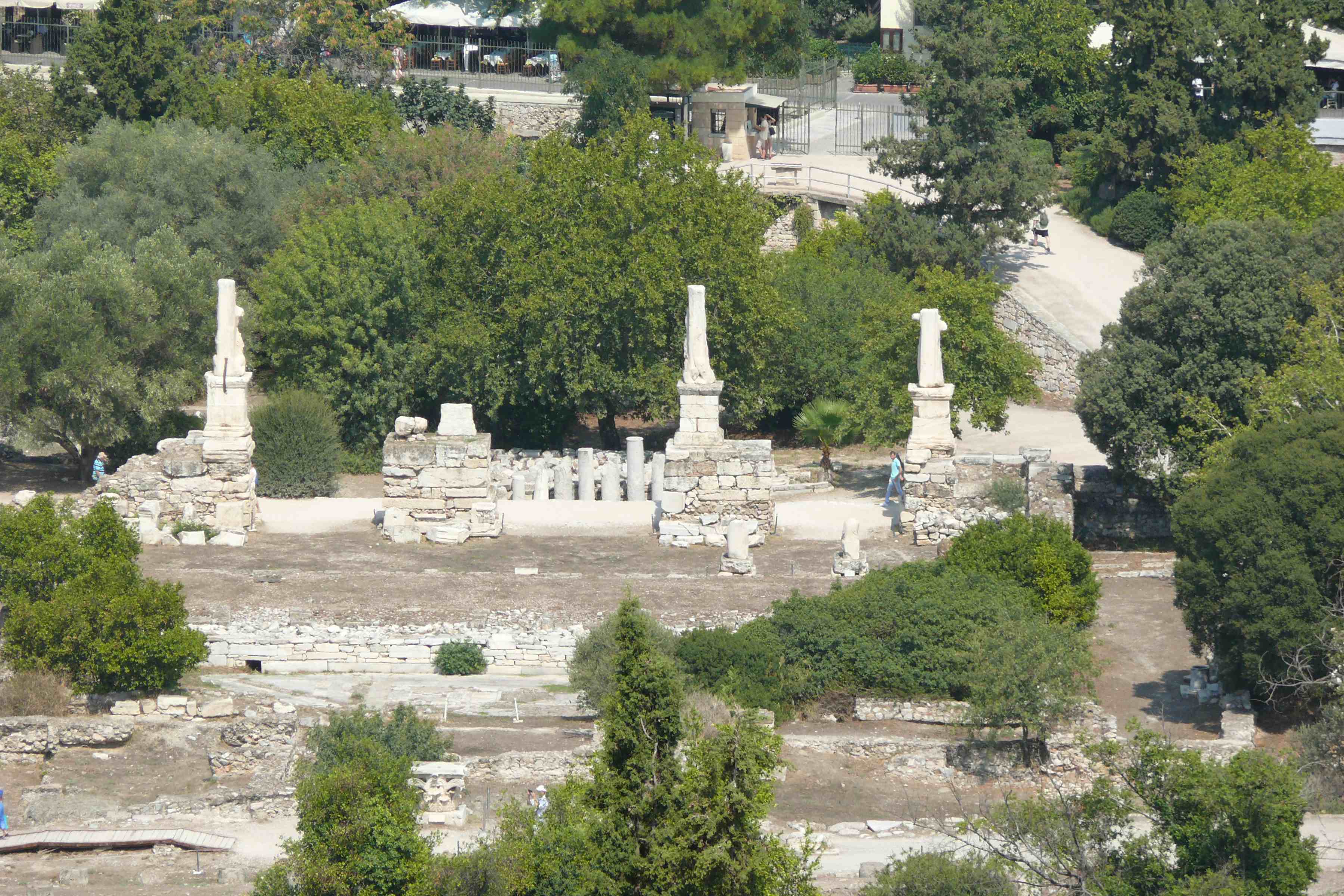
What a magnificent marble outcrop this is with a view across all Athens. This was the place where the ancient city had its court of justice. Climbing up it was actually very dangerous, as the thousands of years of use has smoothed out the marble to be extremely slippery. None of these ancient sites in Greece have protective barriers nor warning signs, which is very different to bush walks and lookouts in Australia. And rightly so, as to put up precautionary safety measures would detract from the antiquity. We were extremely careful as we clambered over the rocks to fantastic views across Athens, looking down on an ancient agora [the public or market place], the Temple of Hepheastus, as well as modern Athens.
As we stood on the ancient marble on the top of Mars Hill, we considered all the centuries of wisdom that have been proclaimed there, but most of all to know that the truth about
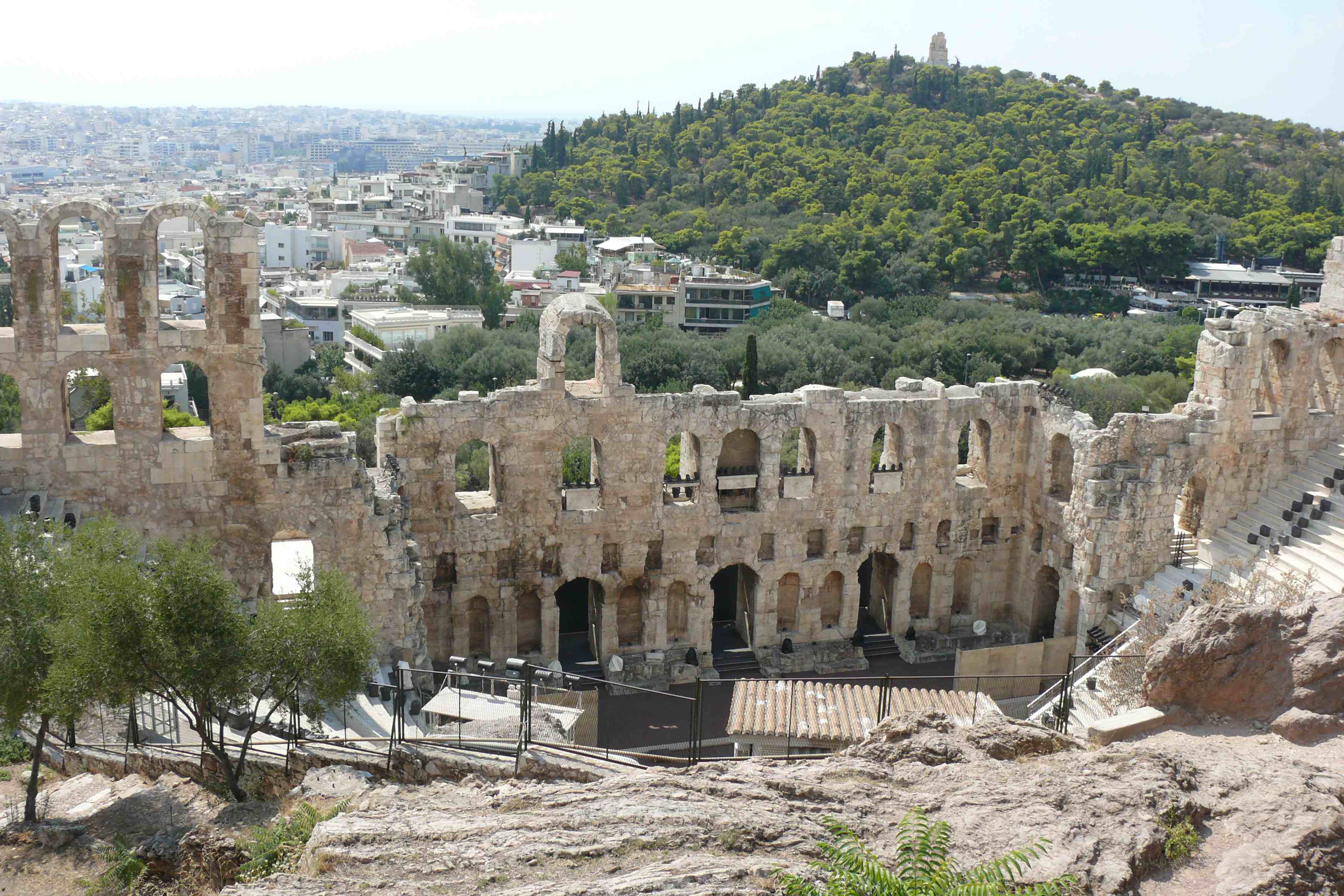
Odeon of Herodes
Christ was declared through the mouth of Paul was truly amazing.
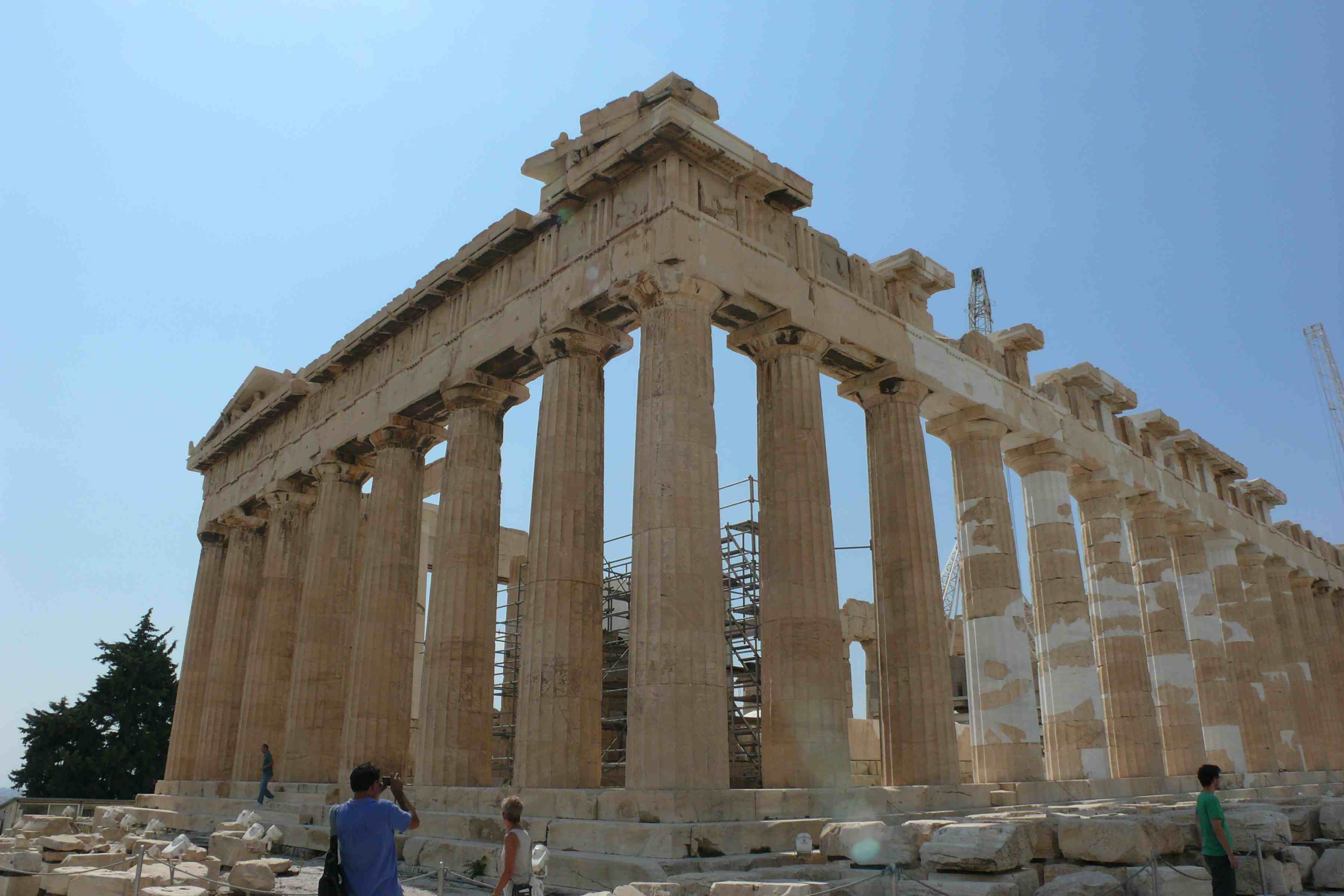
Propylaea – grand entryway to ParthenonTemple of AthenaParthenon
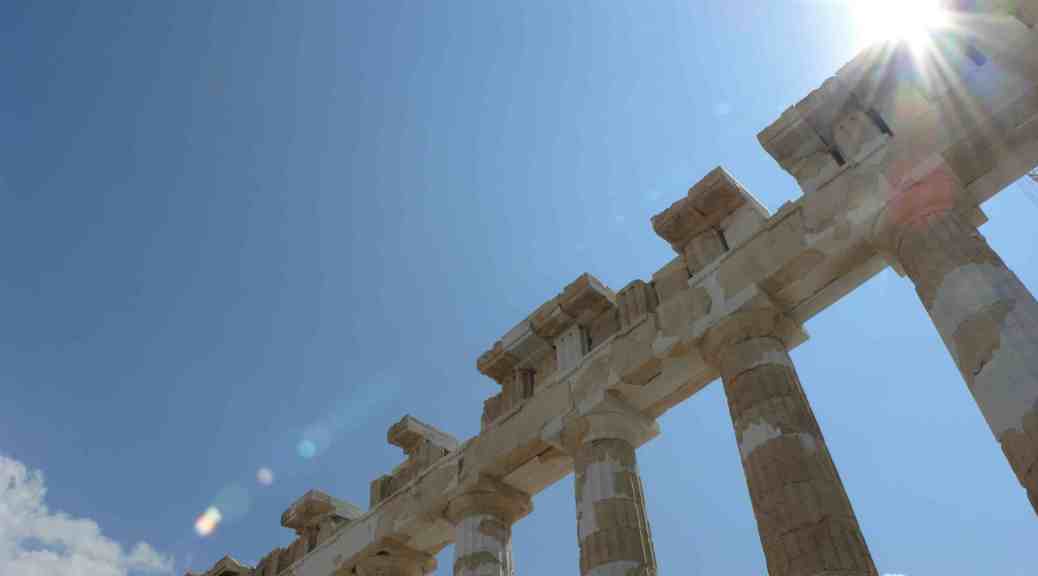
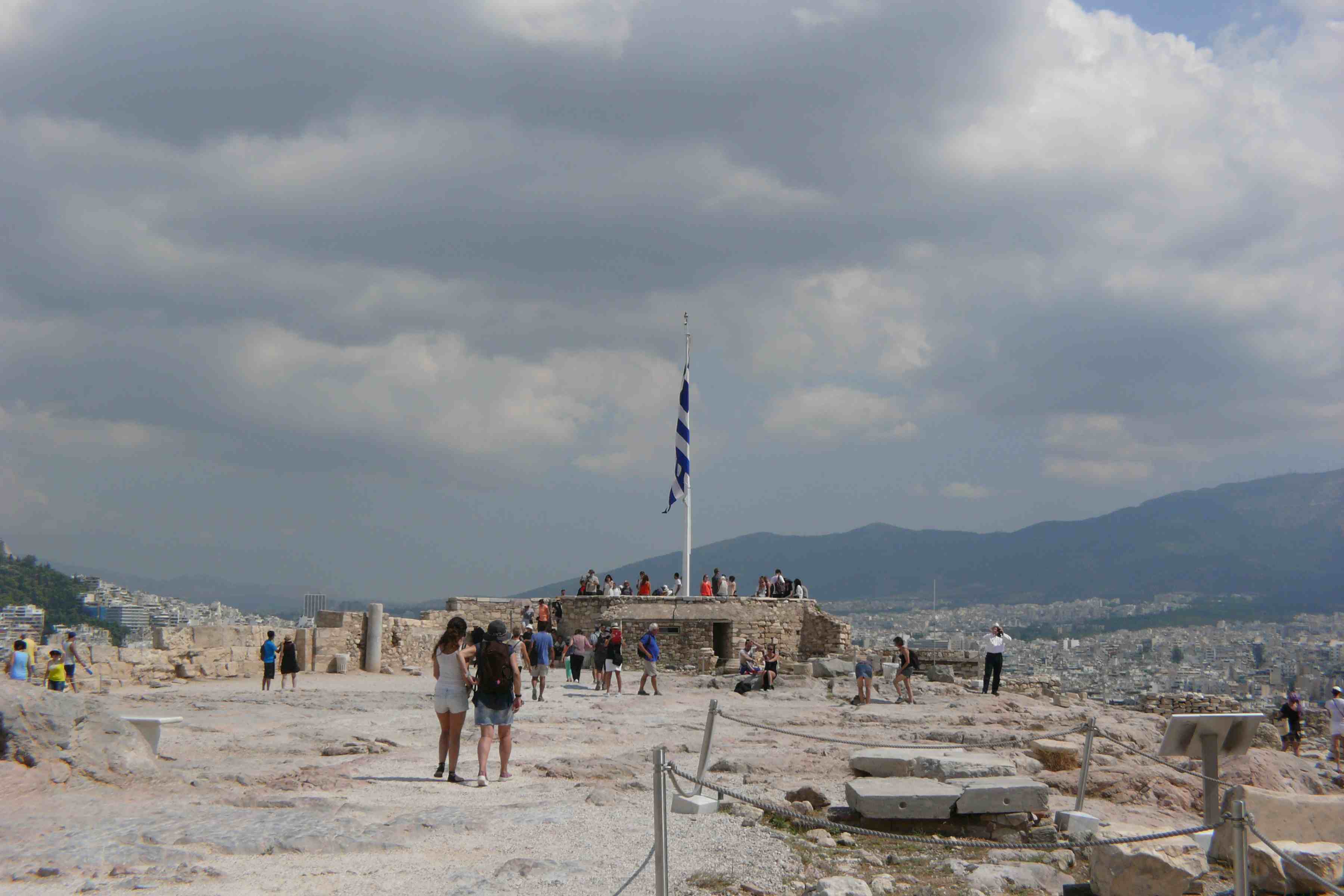
We then continued to the top of the Acropolis and on the way viewed the Odeon of Herodes, which is still regularly used for operas and concerts, then climbed the very slippery steps and walked through the Propylaea [along with crowds of others] to see the Parthenon in all its splendour, undergoing a long standing and painstaking process of restoration. The attempts to find and replace the ruins, as well as do appropriate works of restoration is a costly and interesting process to witness. To the west of the Parthenon is the Temple of Athena, with a beautiful restoration completed in 2010.
We saw the sanctuary of Pandeon, which now proudly holds a Greek flag. On our way back down we looked out across the amazing theatre of Dionysus.
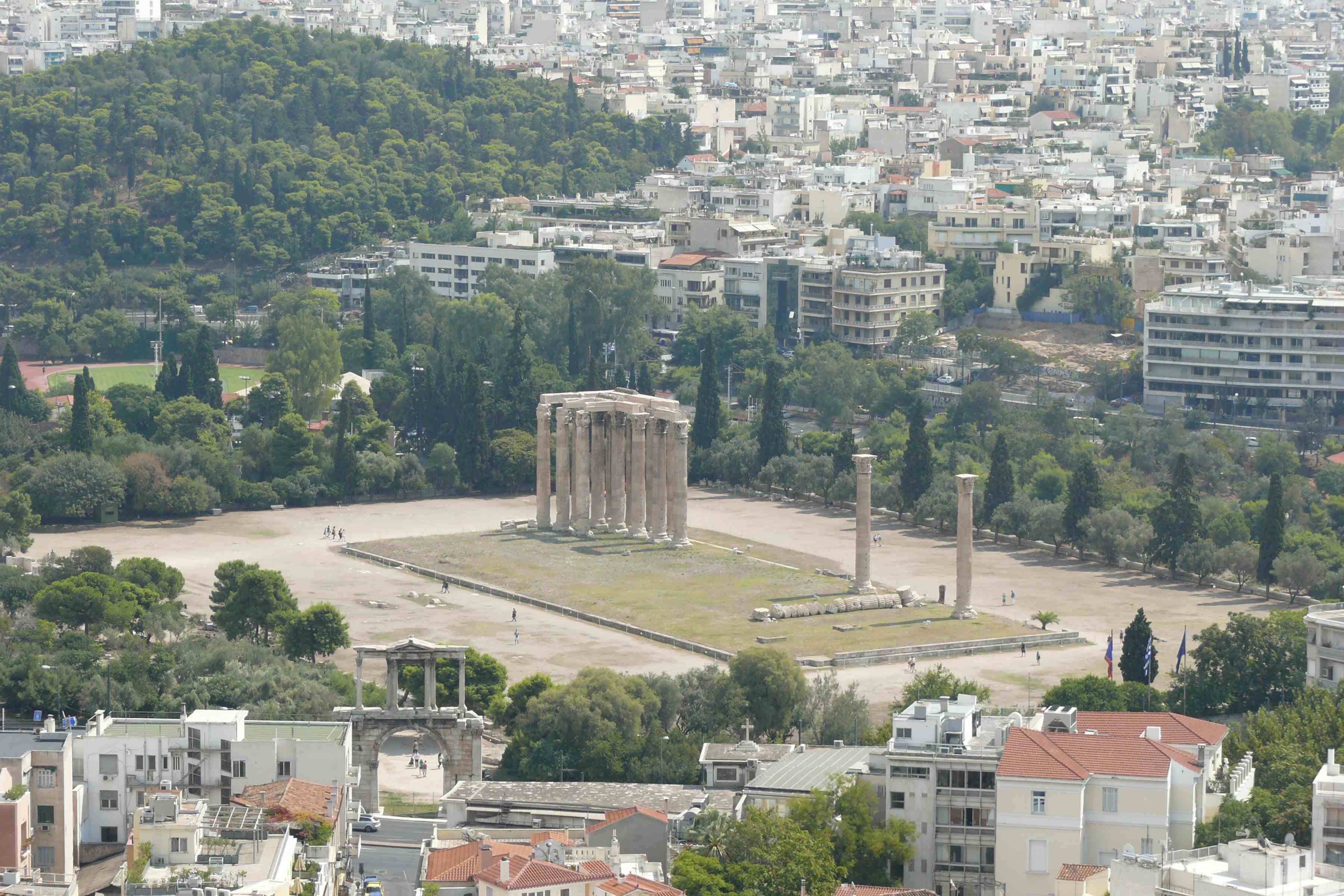
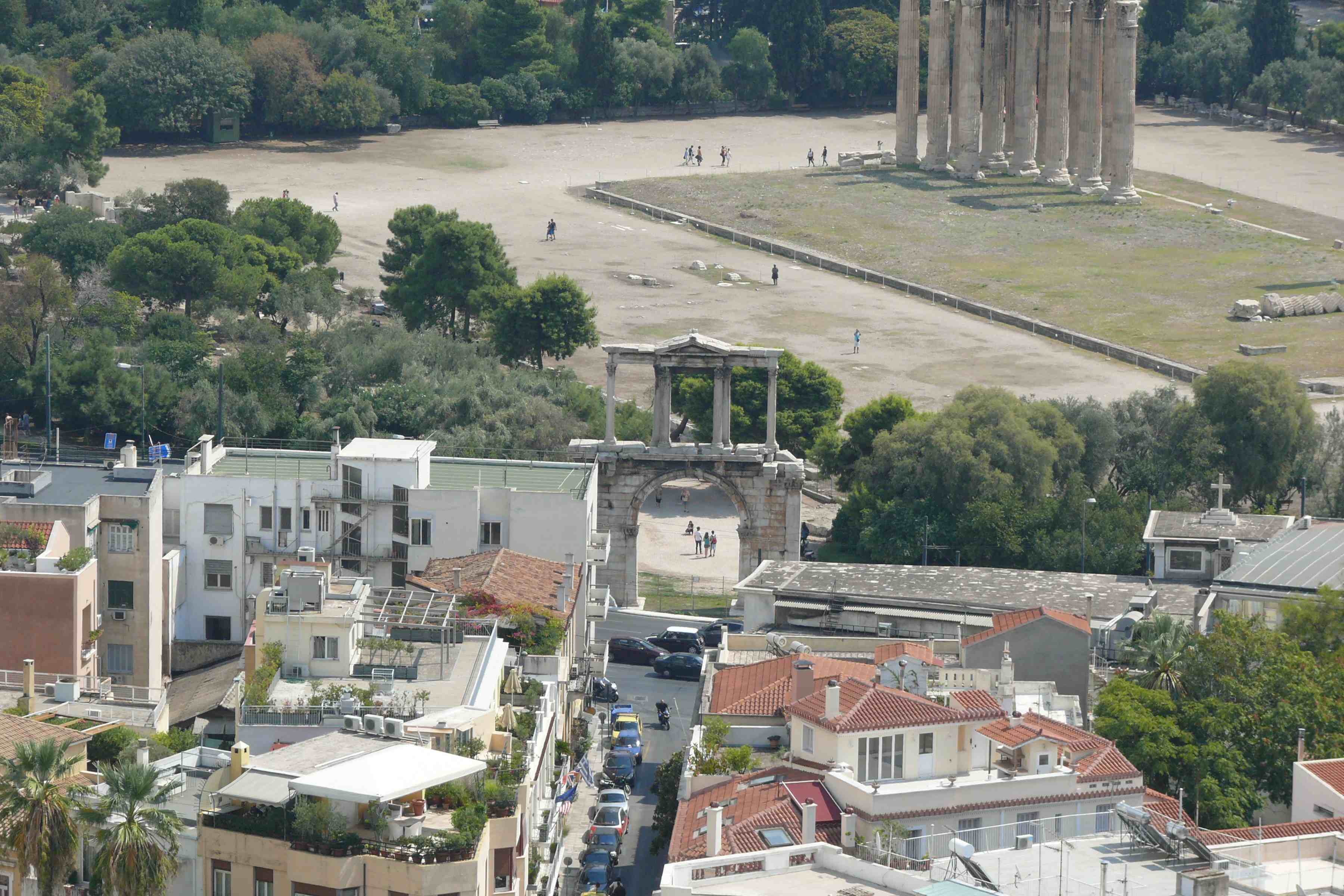
Temple of ZeusHadrian’s Arch in the centre
Being able to see the whole vista of Athens from the acropolis, meant we got a great view of the Temple of Zeus, which originally had 104 columns and now only 16 are left. It was also great to have a bird’s eye view of Hadrian’s Arch, built in honour of the Roman Emperor.
Seeing such stunning architectural feats was truly a privilege we will not forget.
Our tour concluded with a lovely dinner together as a group and we thanked God for new friends, new experiences and again, more understanding and knowledge of the Bible and an increased conviction regarding our Christ-centred faith.
We boarded our cruise ship for three days visiting Mykonos, Kusadasi [mainland Turkey], Patmos, Crete and Santorini.
Never having cruised before, we were thoroughly looking forward to this portion of our tour of Greece, and there’s certainly something special about cruising this part of the world.
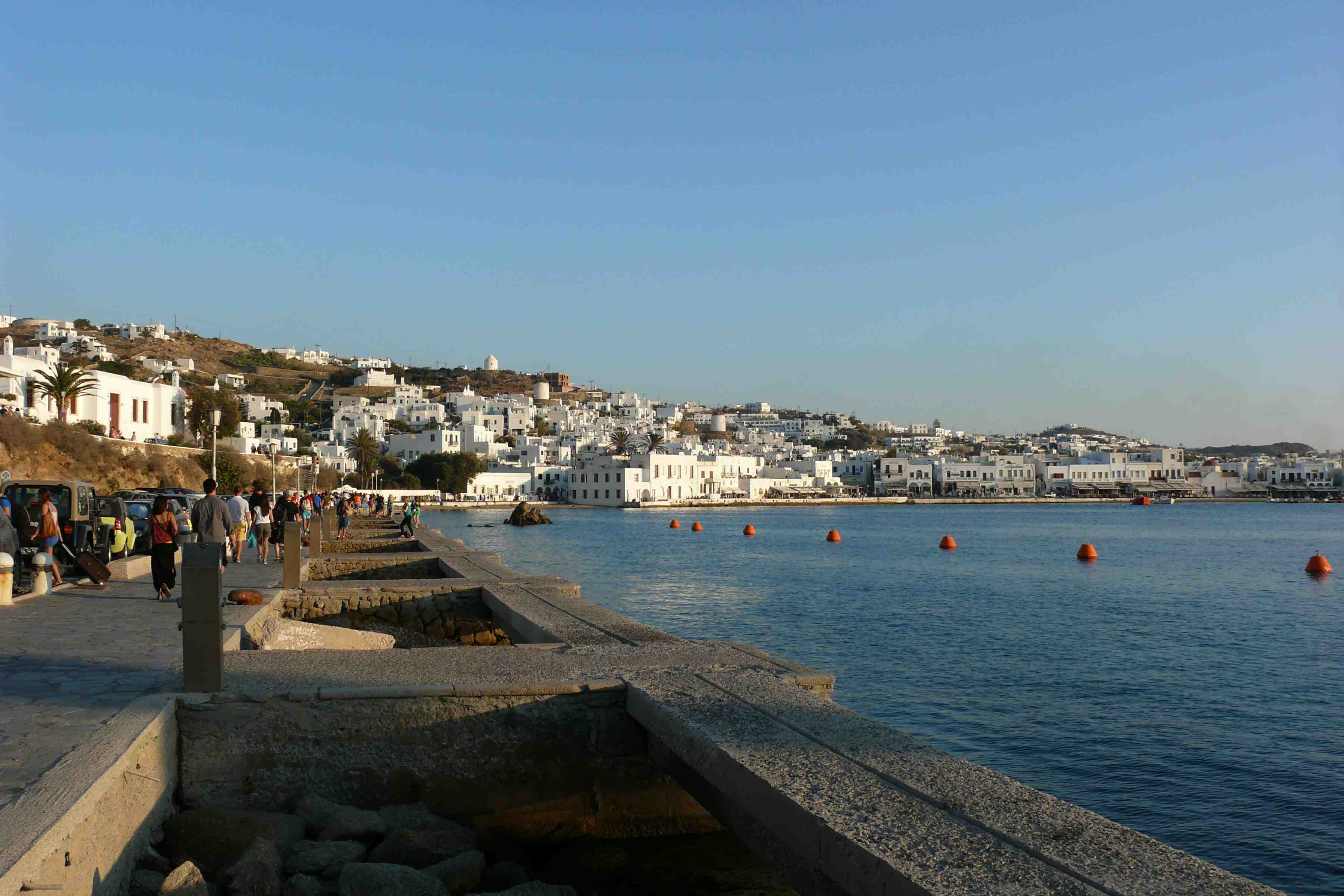
Waterside on Mykonos
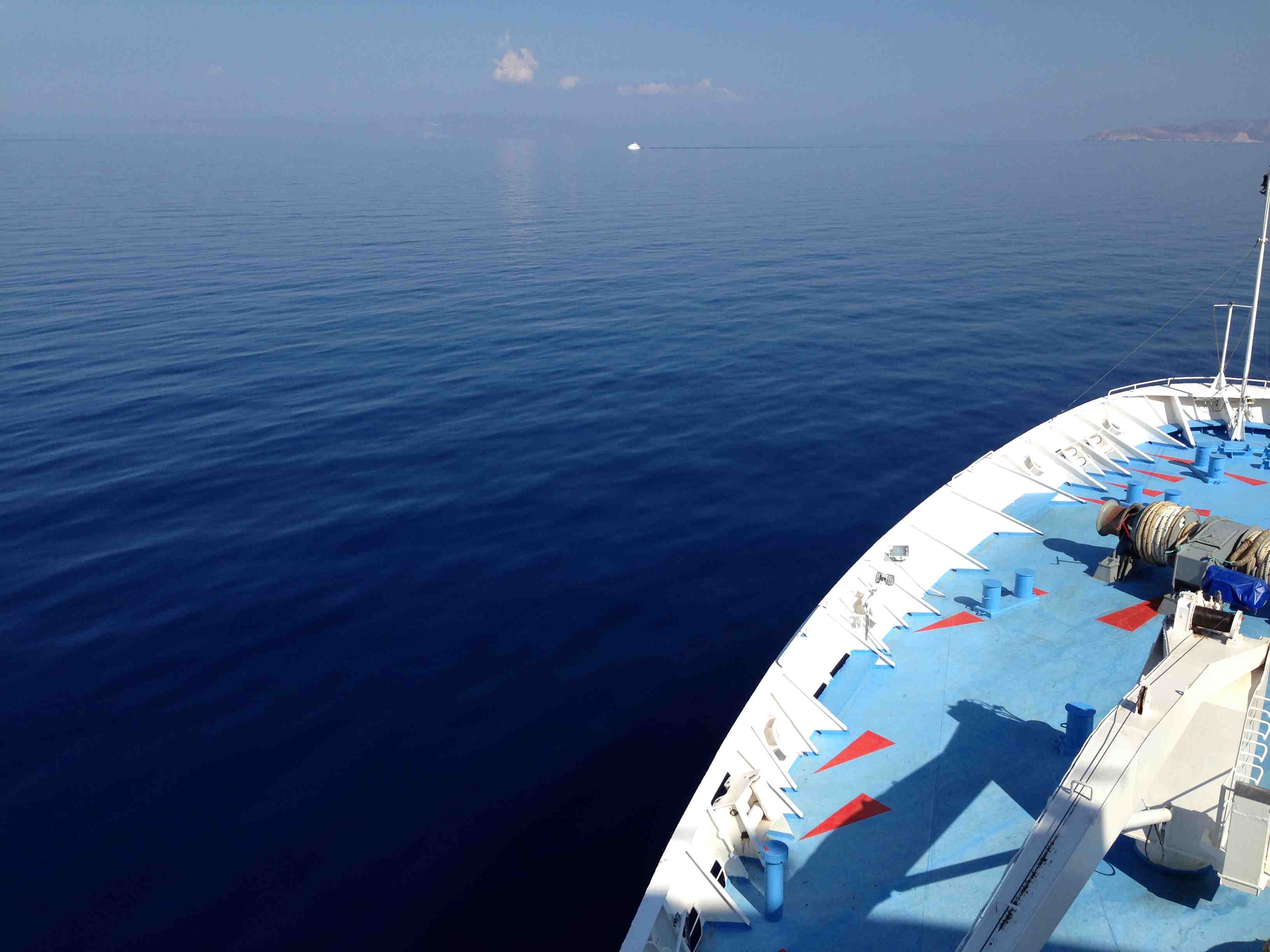
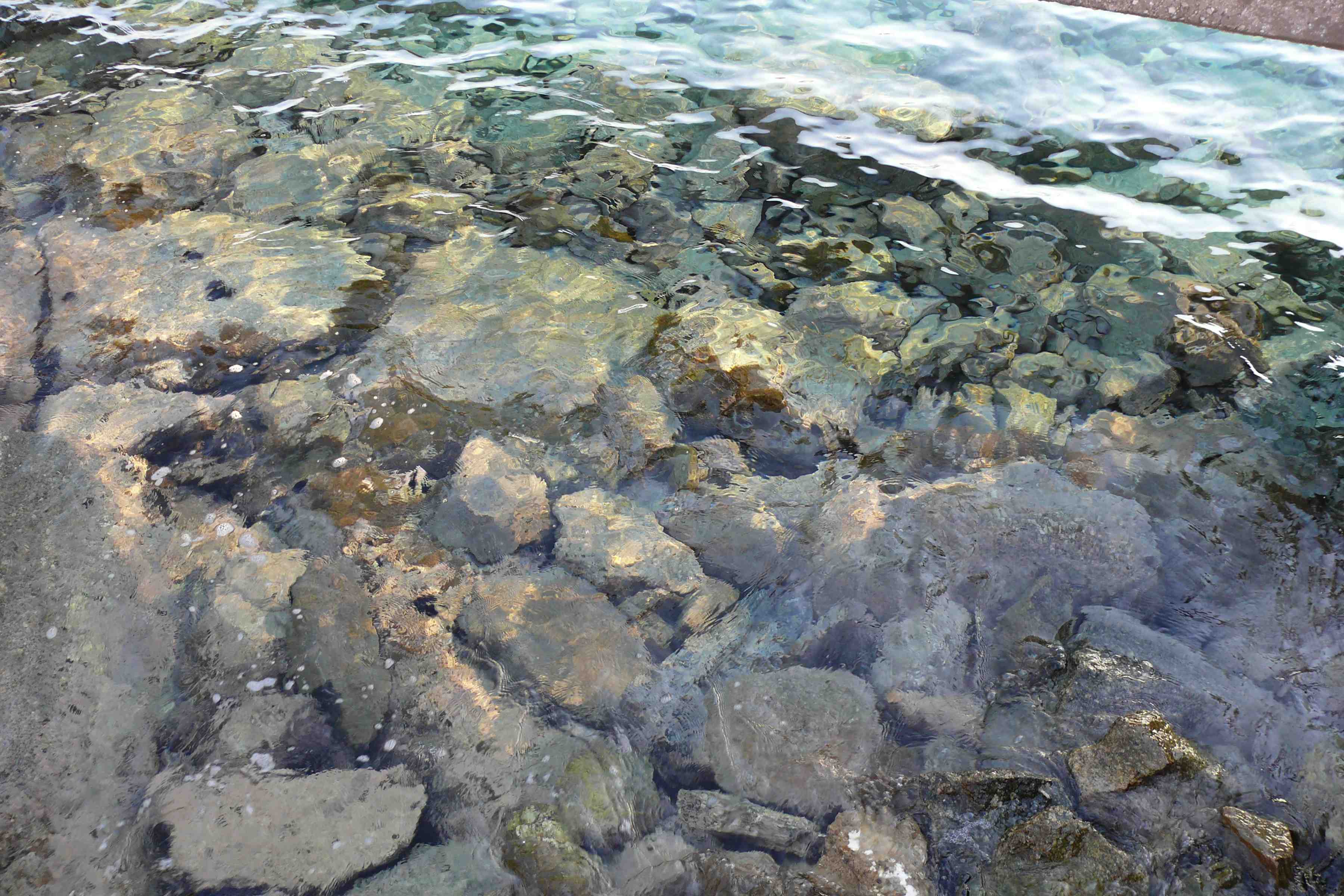
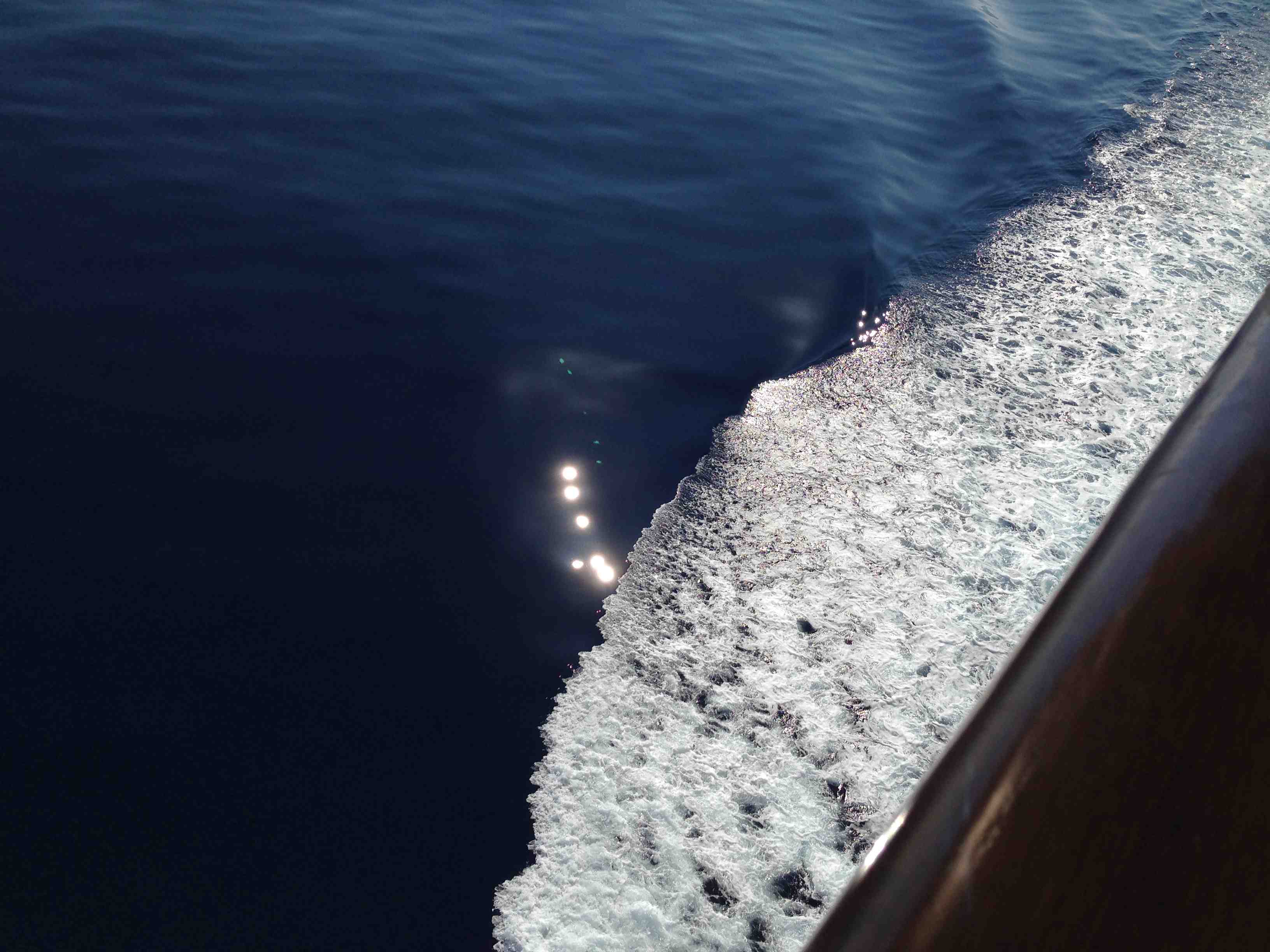
The thing that struck me more than anything else was the colour of the water. We all see photos of the Mediterranean and the Aegean, and it is easy to think that the colour has been enhanced. But as I looked out over the sides of the ship, the colour took my breath away. How could something that looks so artificial be so real. It was calm, it was surreal, it was fantastic. The only thing that could have made it better was for the hazy sky to be clear so that the islands around us were more distinct.
Mykonos
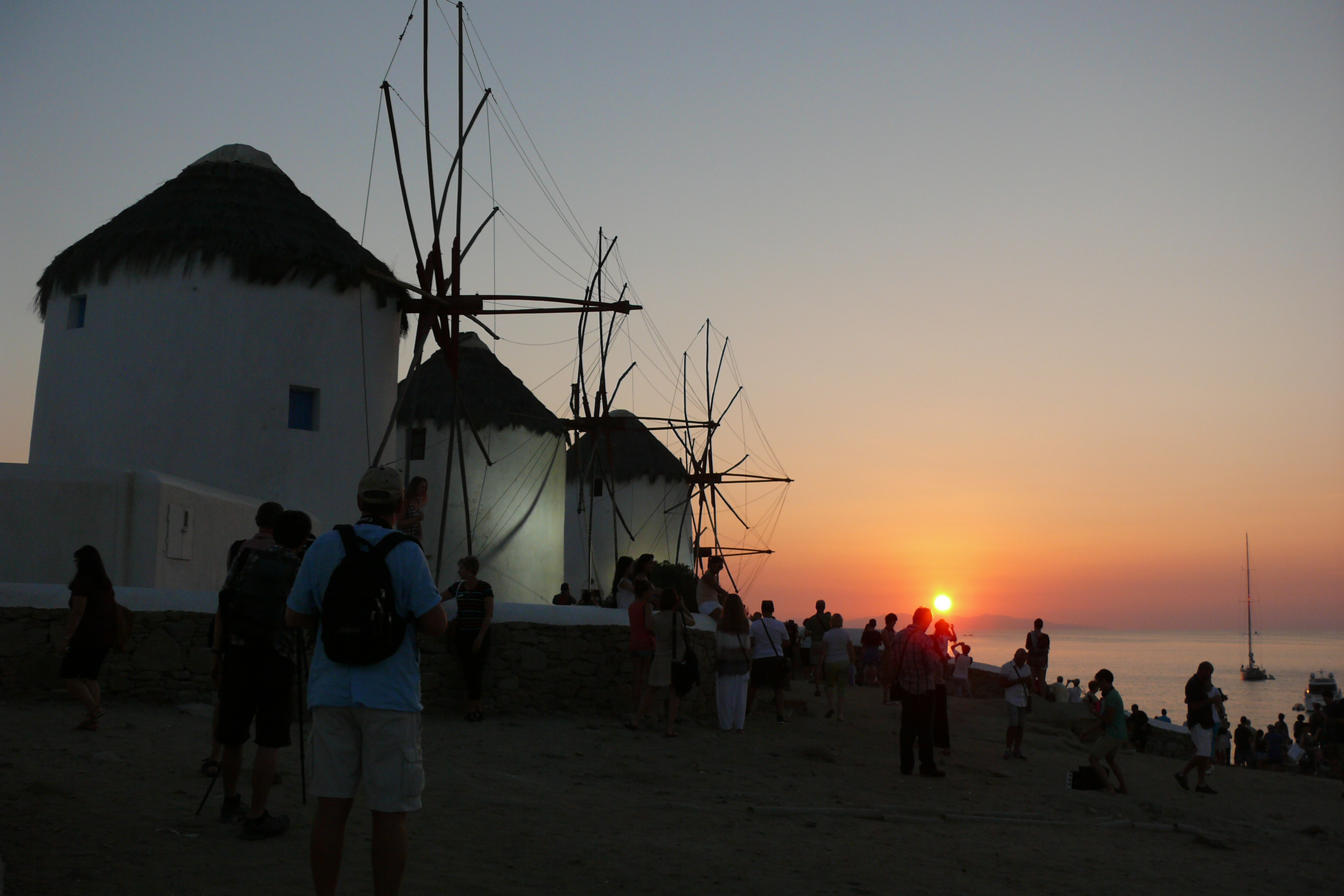
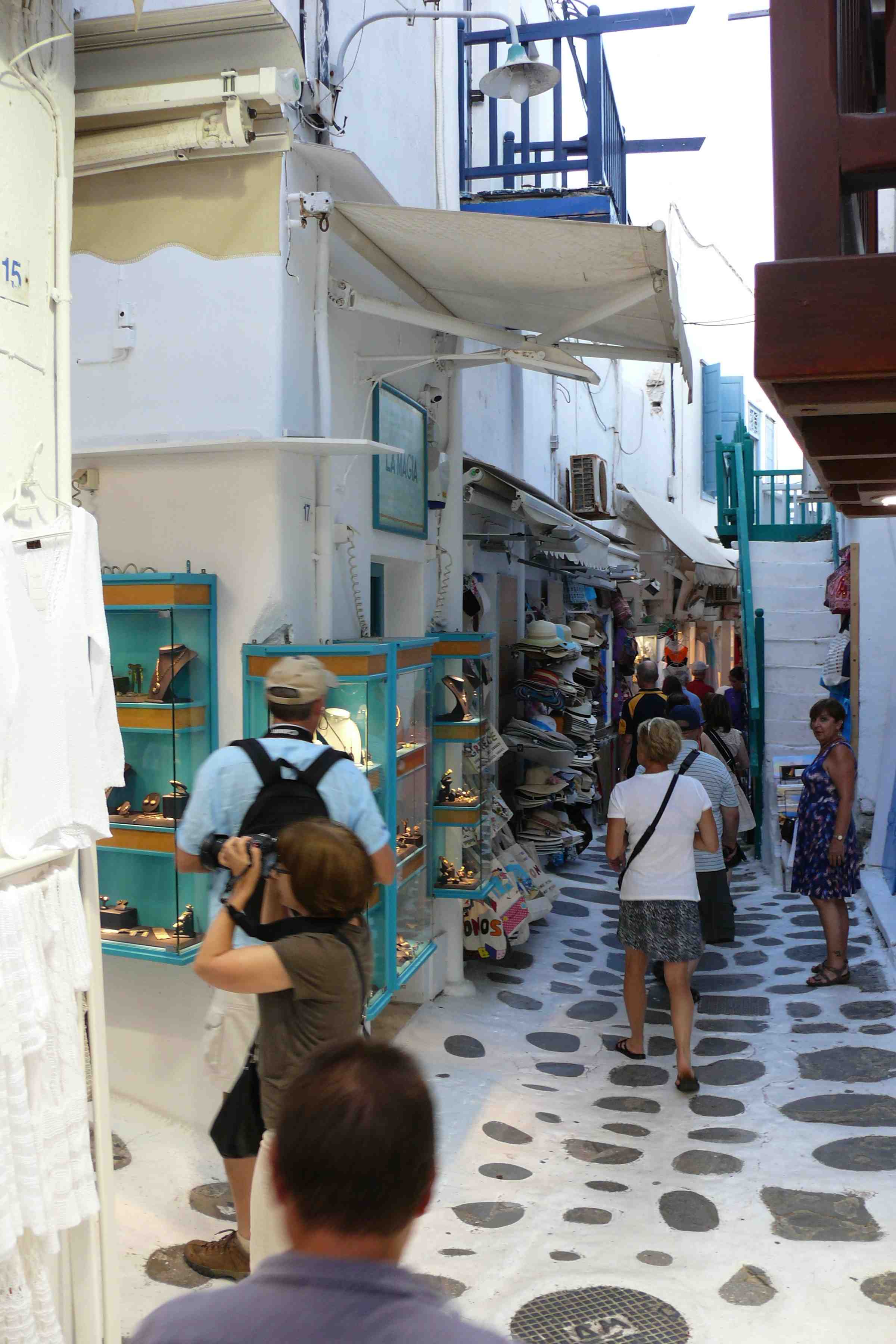
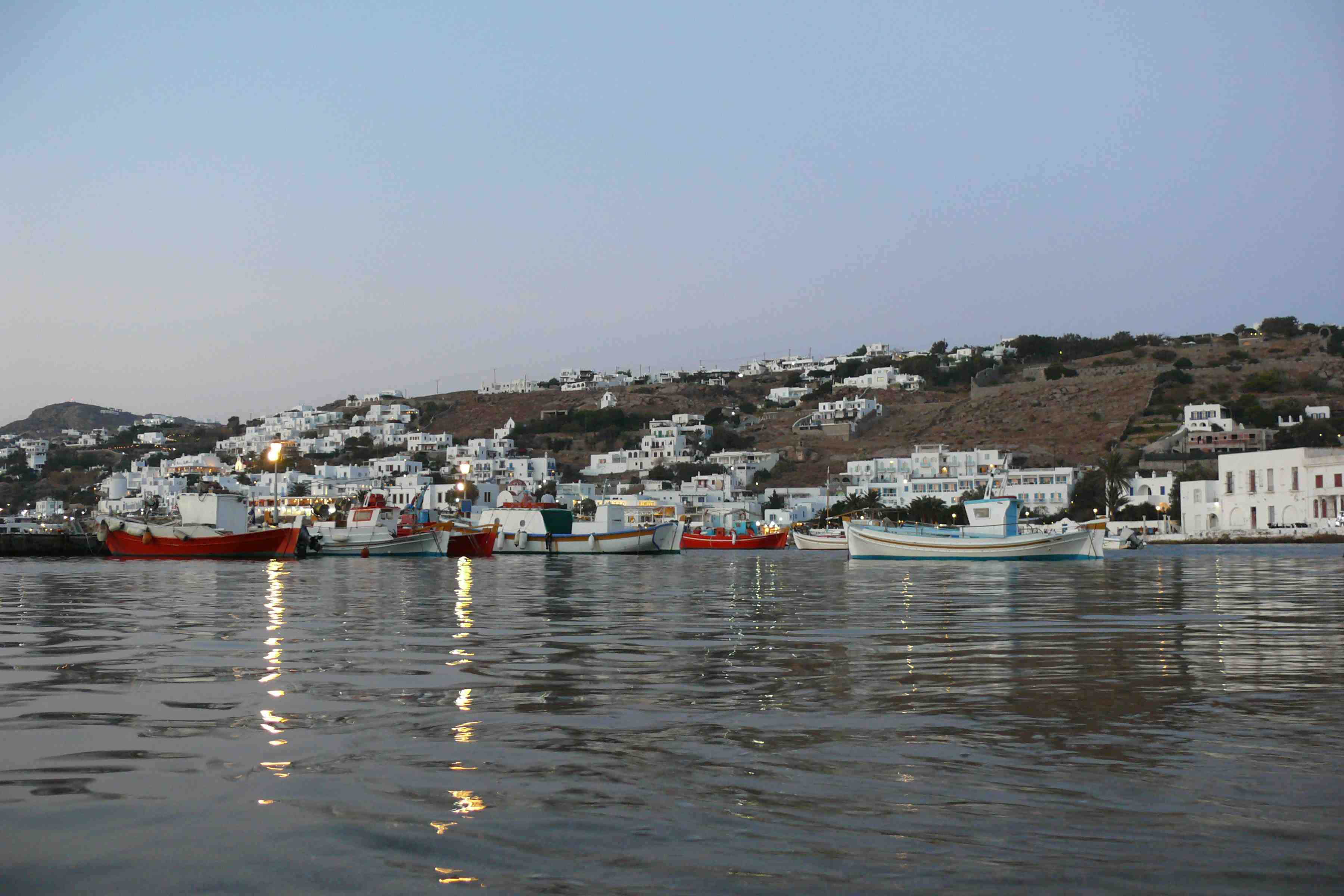
The first port of call was Mykonos and we arrived at 6pm. With still a couple of hours of daylight we were able to get into town fairly quickly and had a wonderful and uplifting walk around this quintessential Greek town on a quintessential Greek island. The sunset was absolutely amazing.
Our tour hostess on the ship, remarked that in all her 15 years of bringing people to Mykonos she had never seen the sea as calm as it was today. Mykonos is known for being a very windy place, which is why the windmills are a real feature of the island. Apparently the sea is normally quite rough and white caps are a familiar sight. Not today, and we really appreciated the beauty and calm of the sea.
Mykonos
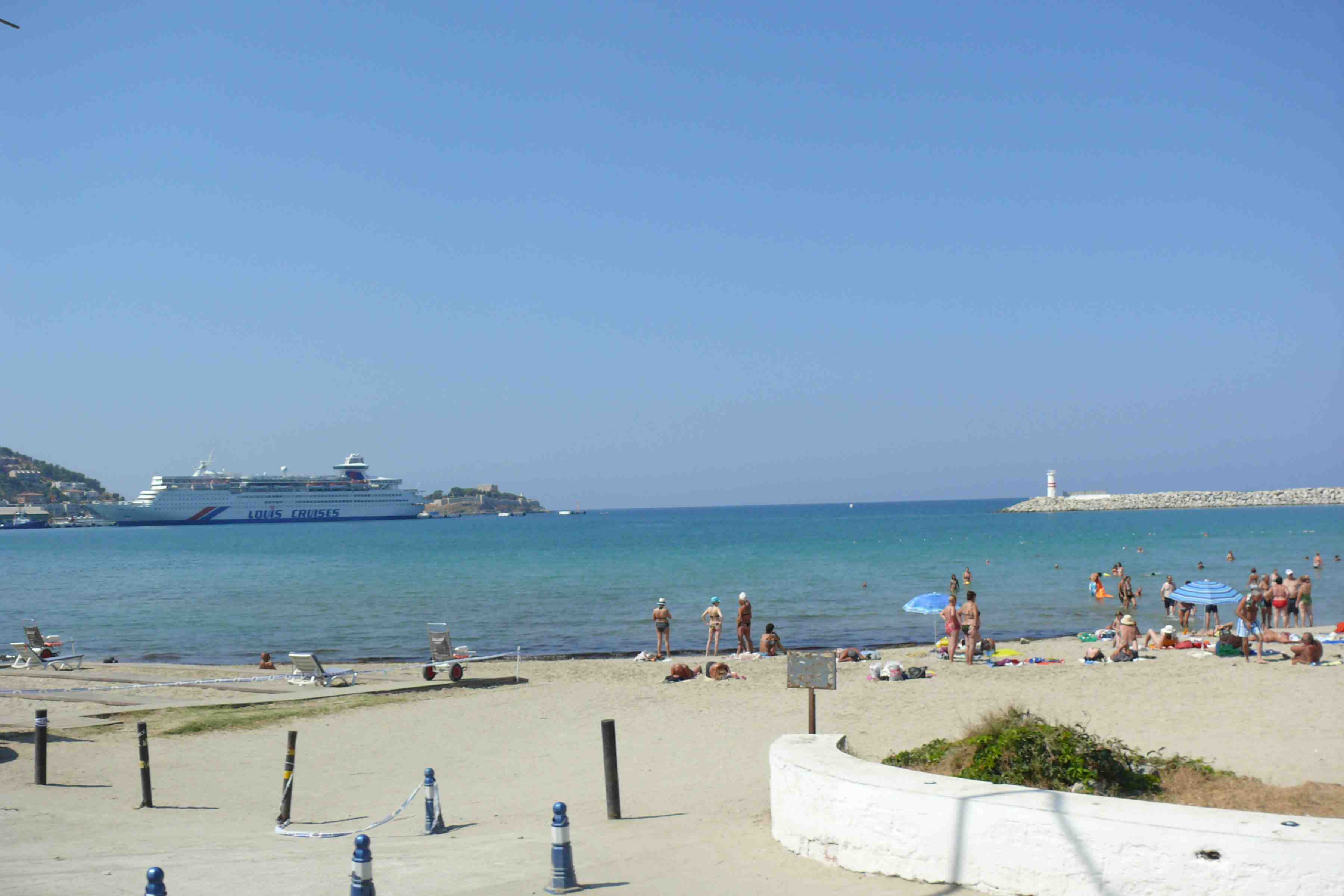
Saturday morning was a very early one for us venturing back to Ephesus. Having docked at Kusadasi at 6am, we were in the restaurant eating breakfast by then as the disembarking for our tour to the House of the Virgin Mary and Ephesus left at 7am. We were very excited to be going back to Ephesus as it was certainly one of the highlights of our tour of Turkey.
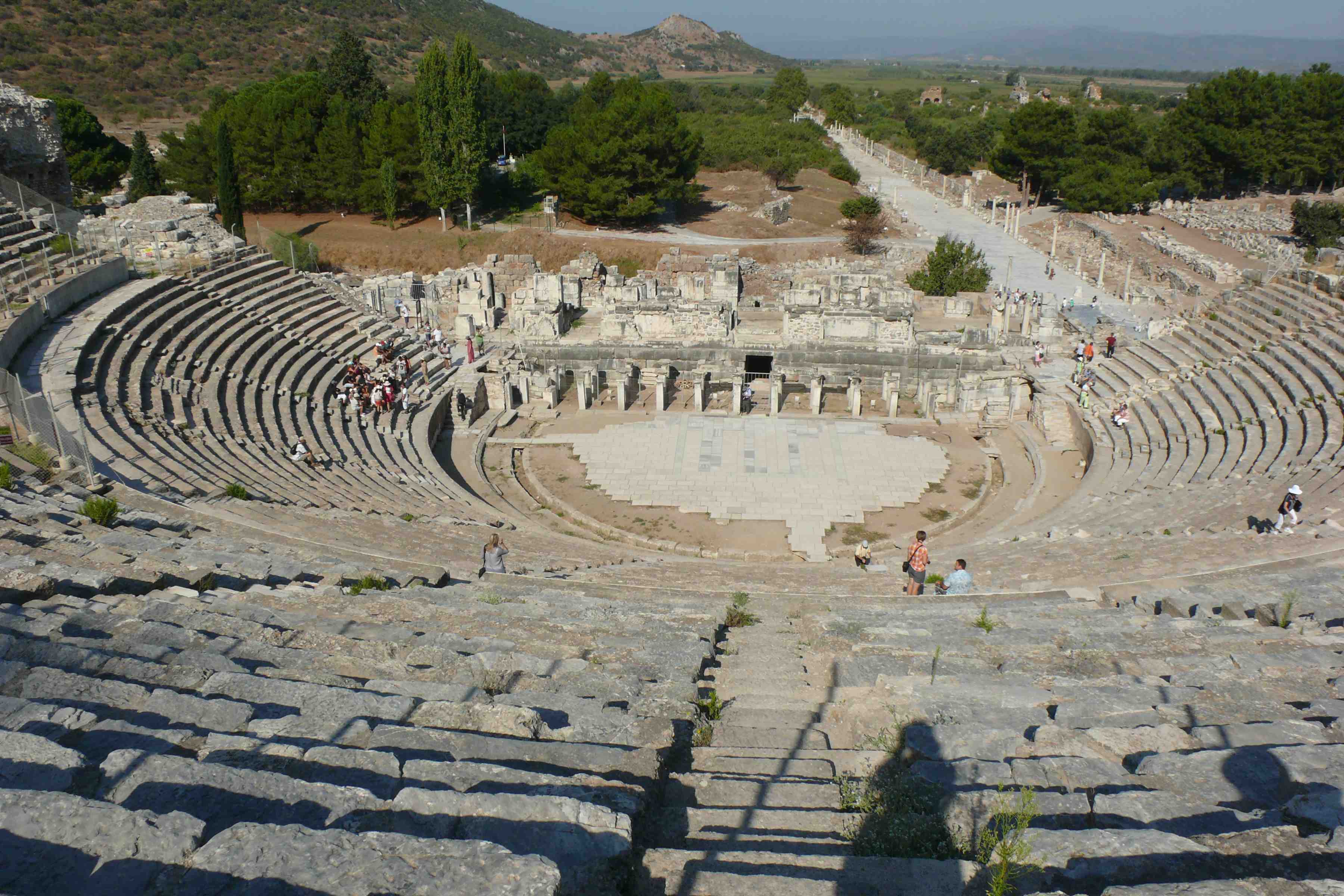
Theatre at Ephesus
As it turned out, we were very glad to have been there before, as the tour this morning was about half the time and twice the speed of our previous one. However we did get some additional information from this guide to add to what we had already learnt.
Kusadasi, Turkey
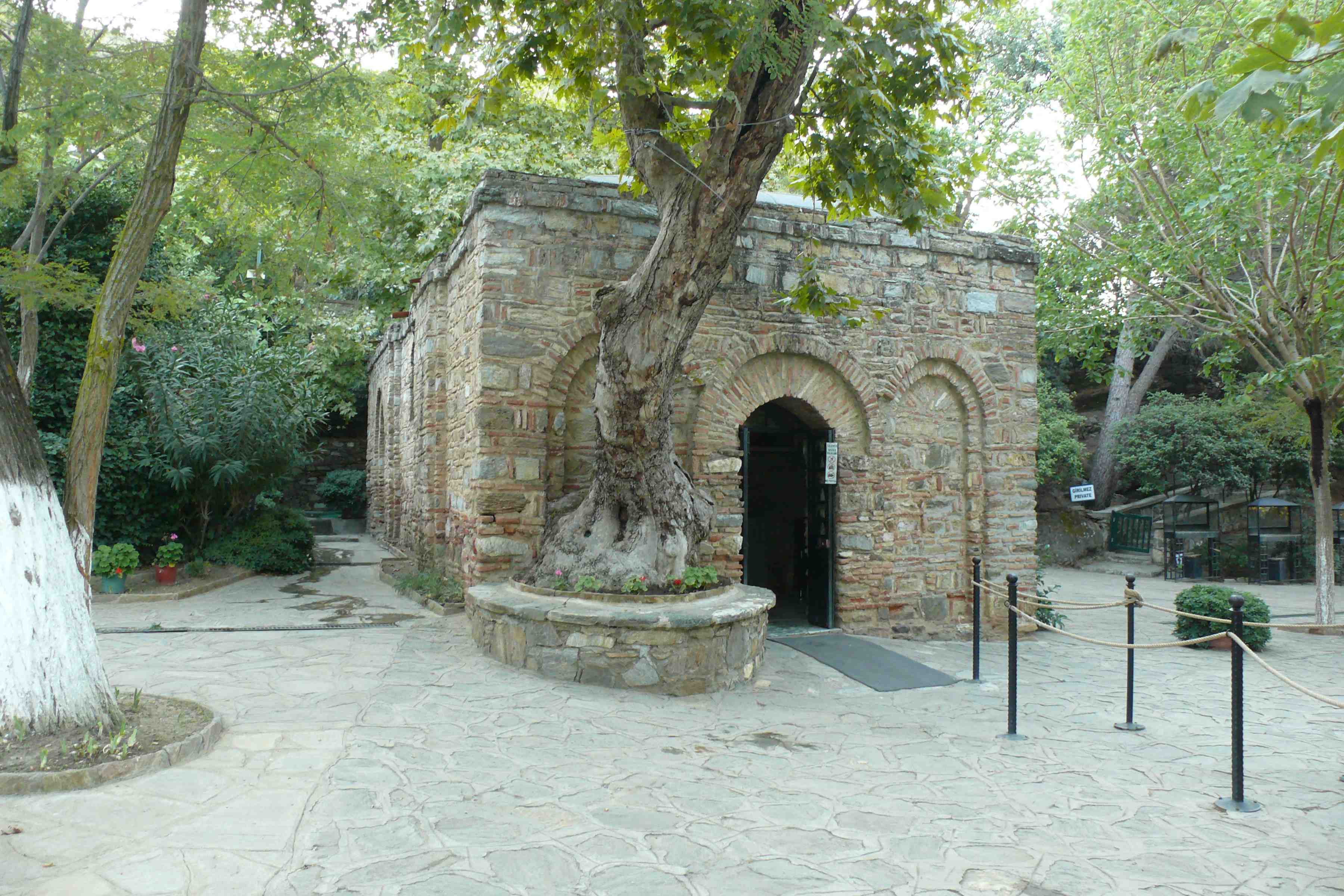
The visit to the House of the Virgin Mary meant going high up a mountain to the remains of an old Christian village, where it was believed Mary and the apostle John lived in a Christian community. The views again were spectacular. What is thought to be Mary’s house has been reconstructed from the lower level ruins, and has been made into a shrine by the Roman Catholic Church.
Patmos
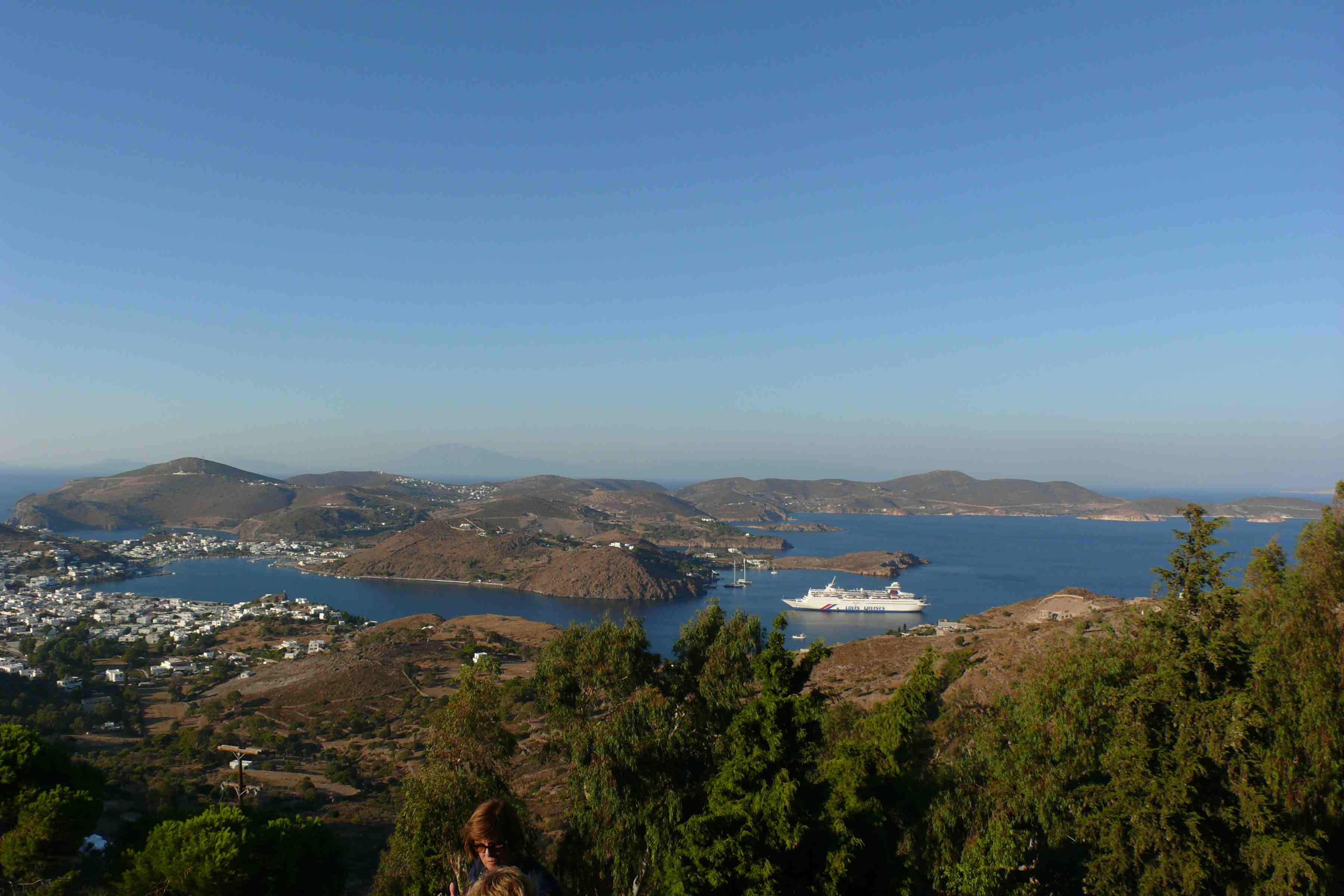
Saturday afternoon we weighed anchor at Patmos and used tender boats to get to the dock. Patmos harbour is too small for a ship the size of the Olympia to fully come in and dock.
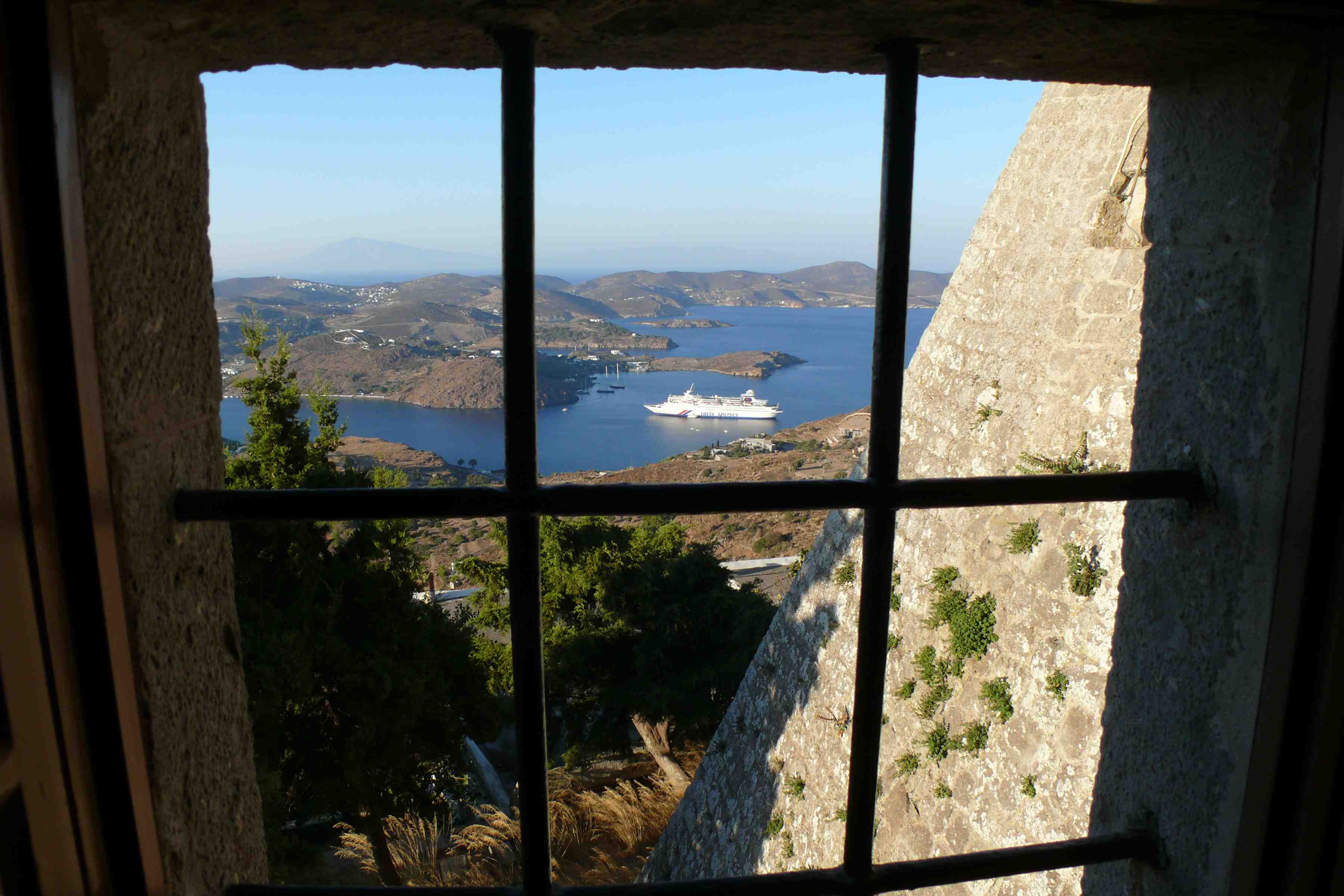
View from the monastery on Patmos
We boarded a bus to see the grotto where it is believed the Apostle John saw his vision of Christ and was instructed to write Revelation. Again it has been made into a shrine by the Greek Orthodox and there are many buildings, including a church, built on top of the cave, and as you weave down the many stairs, it hardly seems to be the place for a cave, until of course, you get inside.
Patmos is a very small island in the shape of a seahorse, and has an interesting history. John arrived there around 95AD as an old man and seemed to have lived for a while in this cave towards the end of his life following his time in Ephesus.
Entry to the cave of St John
About 1,000 years later in 1100, a monk, Khristodhoulos from Cappadocia knew about the cave in Patmos and wanted to build a monastery there dedicated to the Apostle John. He didn’t have the financial resources, but surprisingly the Byzantine Emperor at the time gifted him with the island of Patmos and gave him the money to build the monastery.
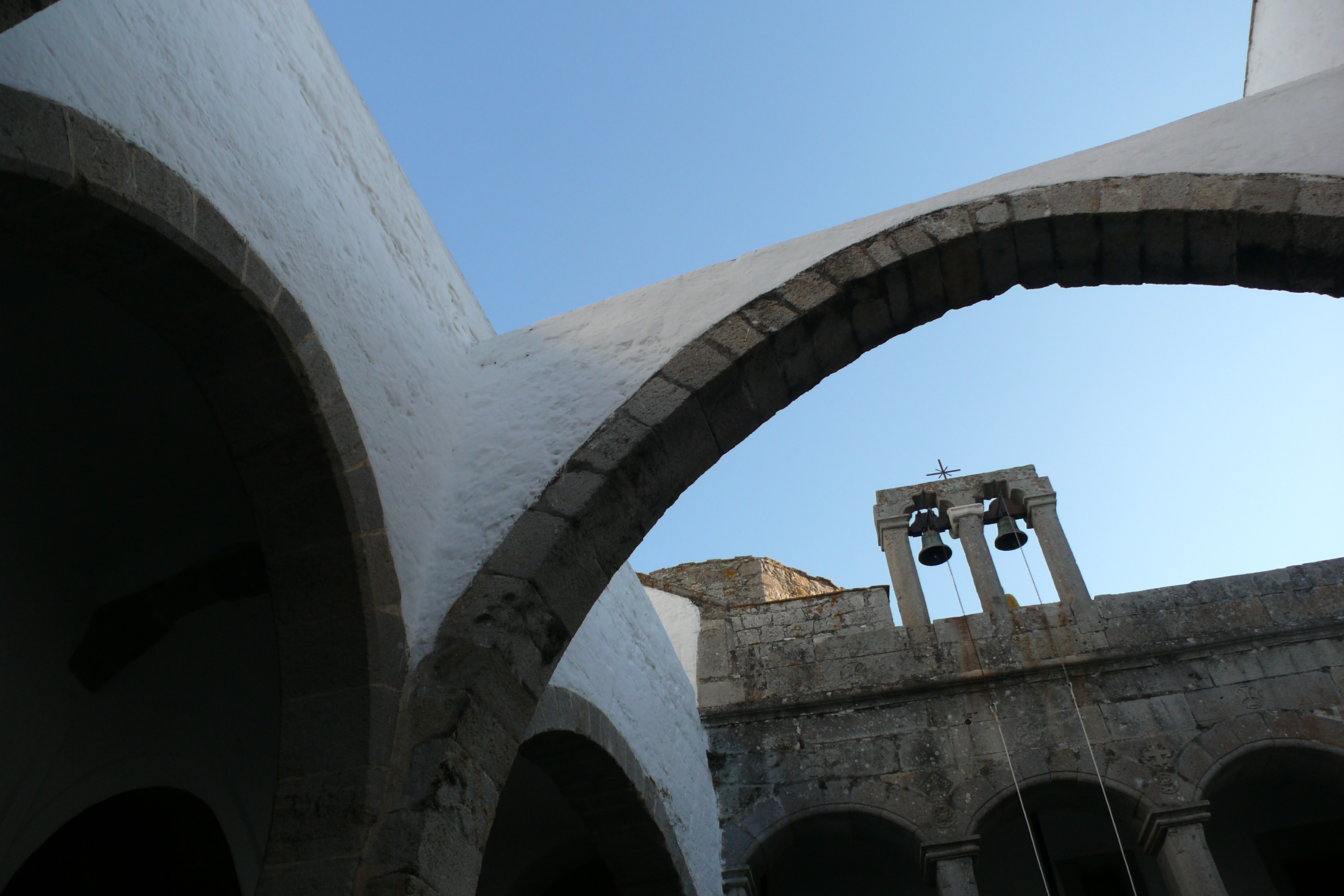
Monastery of St. John
It was fascinating to see the actual long scroll of the deed of gift from the Sultan to the monk on display in the monastery museum. The monastery is built on the highest point of Patmos and the views down to the harbour can only be described as stunning. This has meant that historically the whole island has been dominated and influenced by this monastery. In modern times however, the whole island is no longer wholly owned by the monastery.
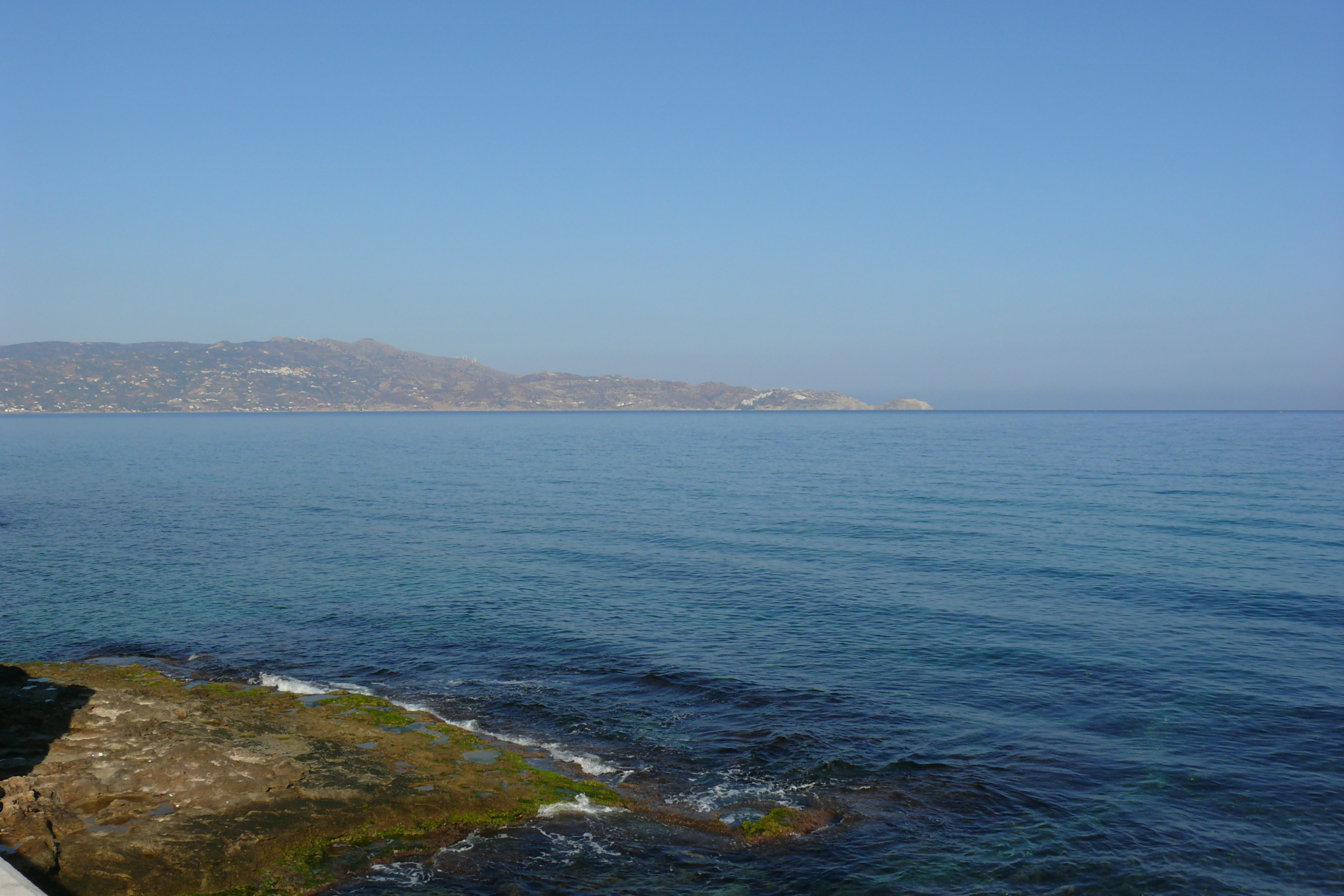
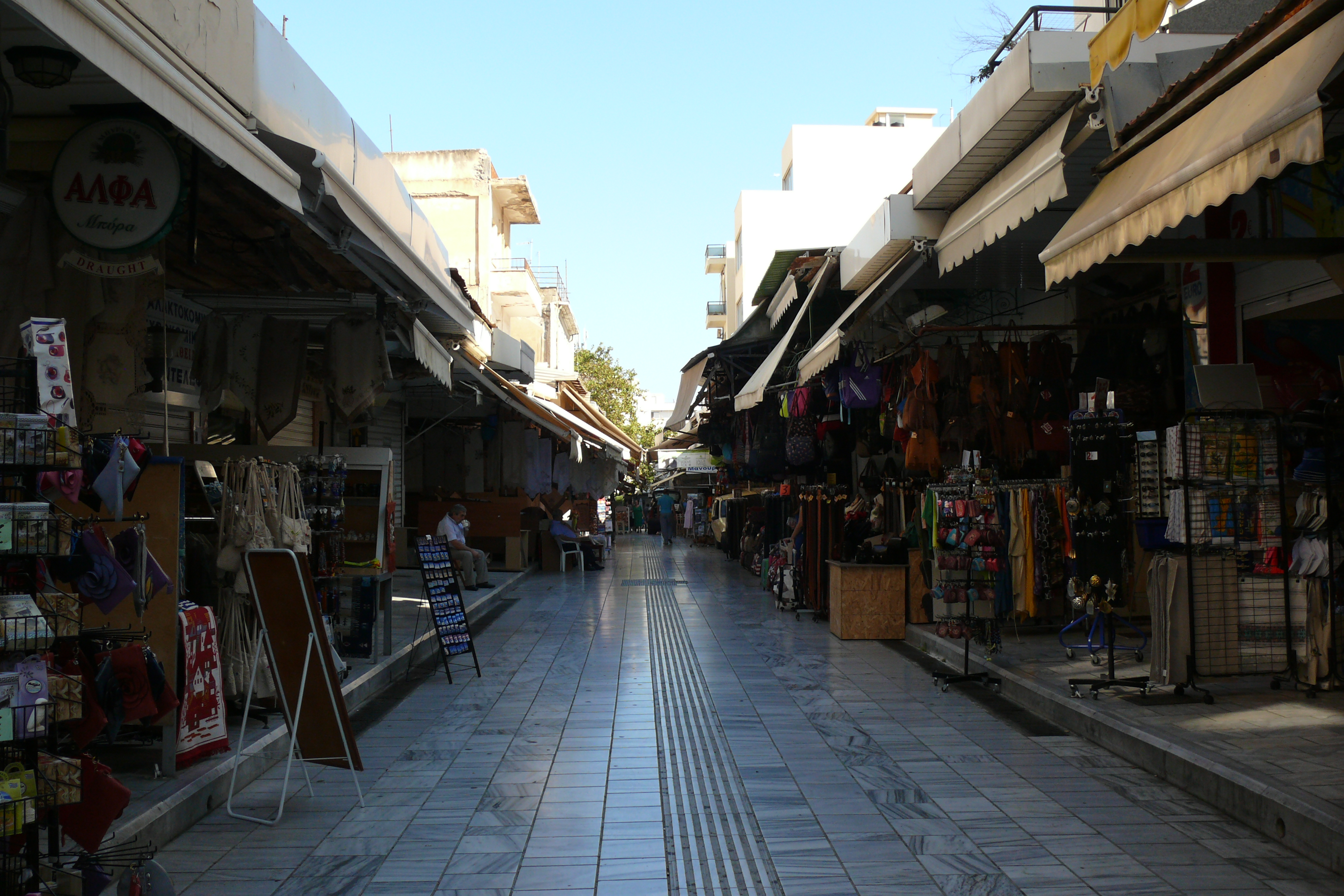
The following morning [Sunday] we docked at Heraklion, the capital of Crete. We chose not to do a specific excursion, but walked into the centre of town, treated ourselves to a fish spa, and then enjoyed a delicious coffee in a beautiful cafe. A fish spa is a tank with a seat beside and as you sit and place your feet in the tank, the tiny fish eat away the dead cells on the feet and lower legs. [Aren’t you glad you know that!] We had missed the opportunity for a fish spa in Turkey, so we gladly took it up as we wandered around Heraklion. The centre of town is called Lion Square, but it was interesting to note that the fountain was round and the square was a triangle.
Cruising into the caldera of Santorini
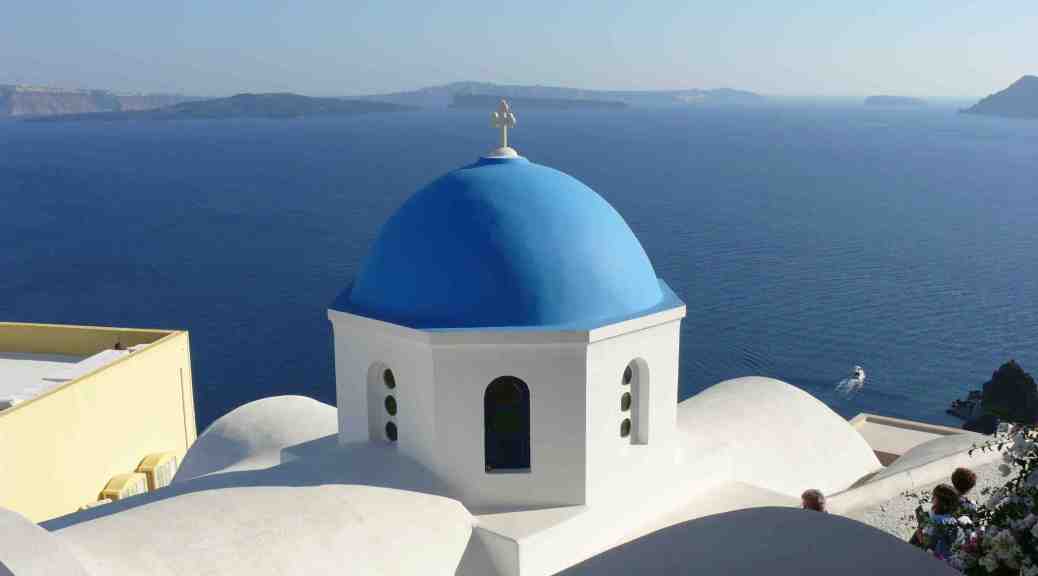
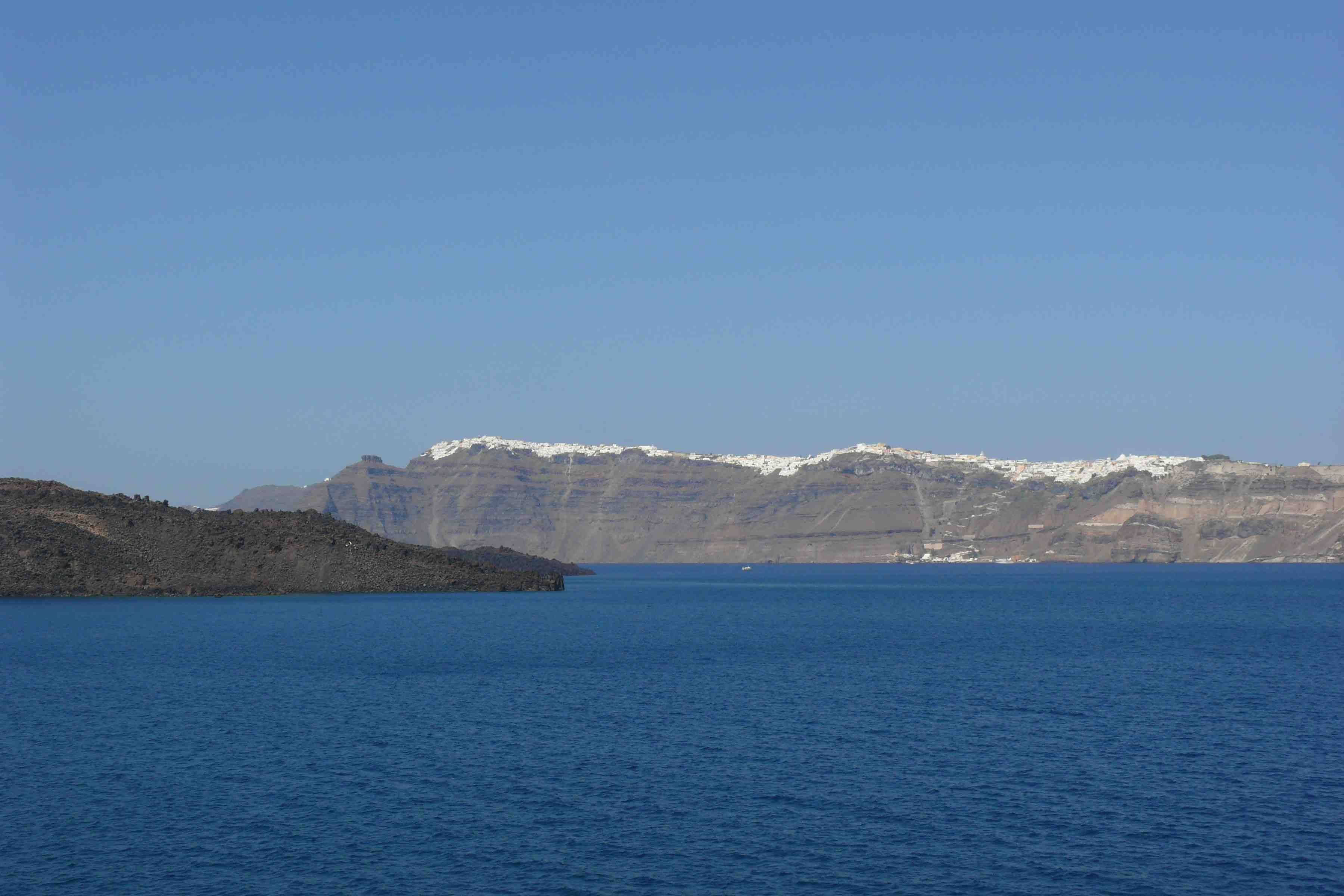
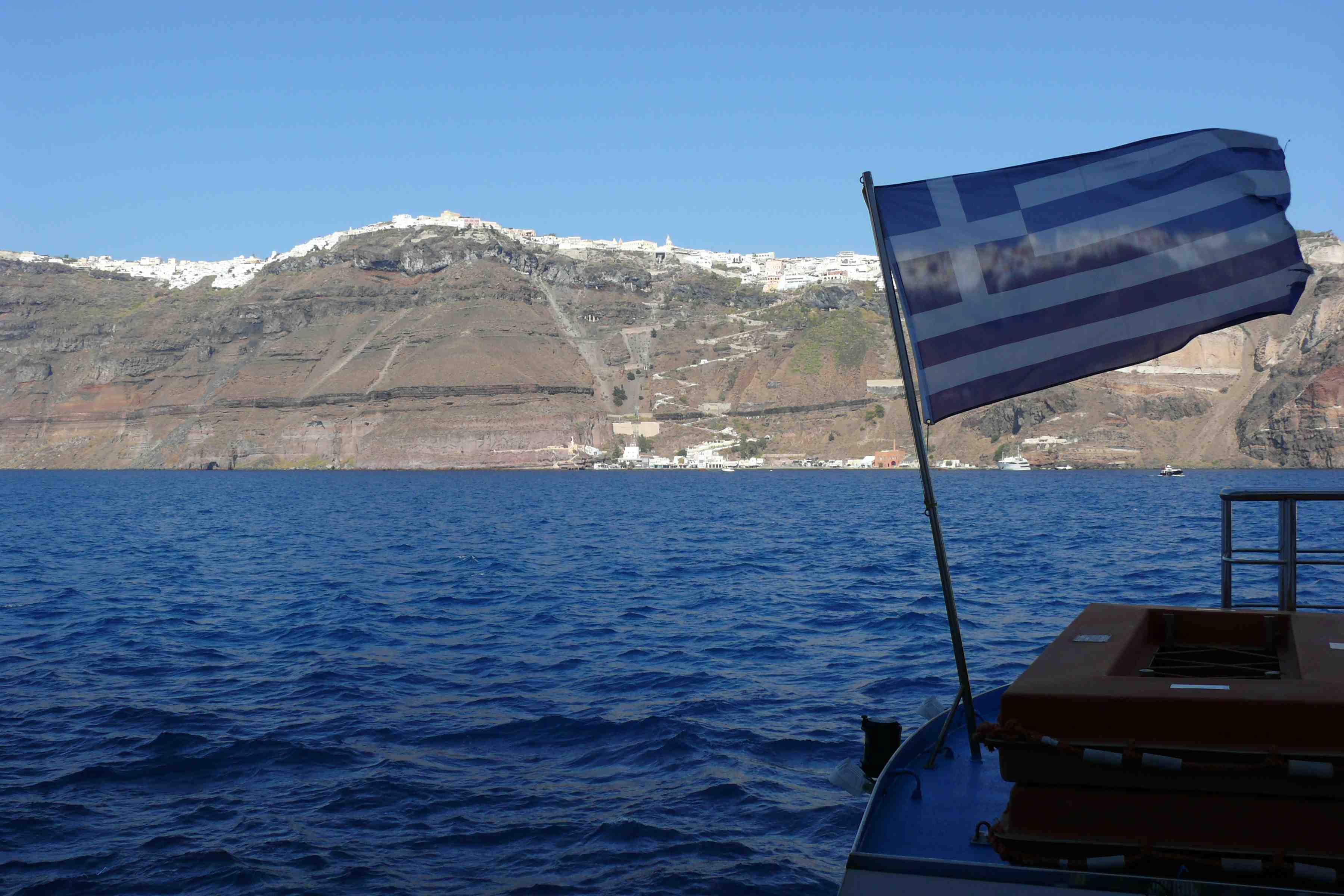
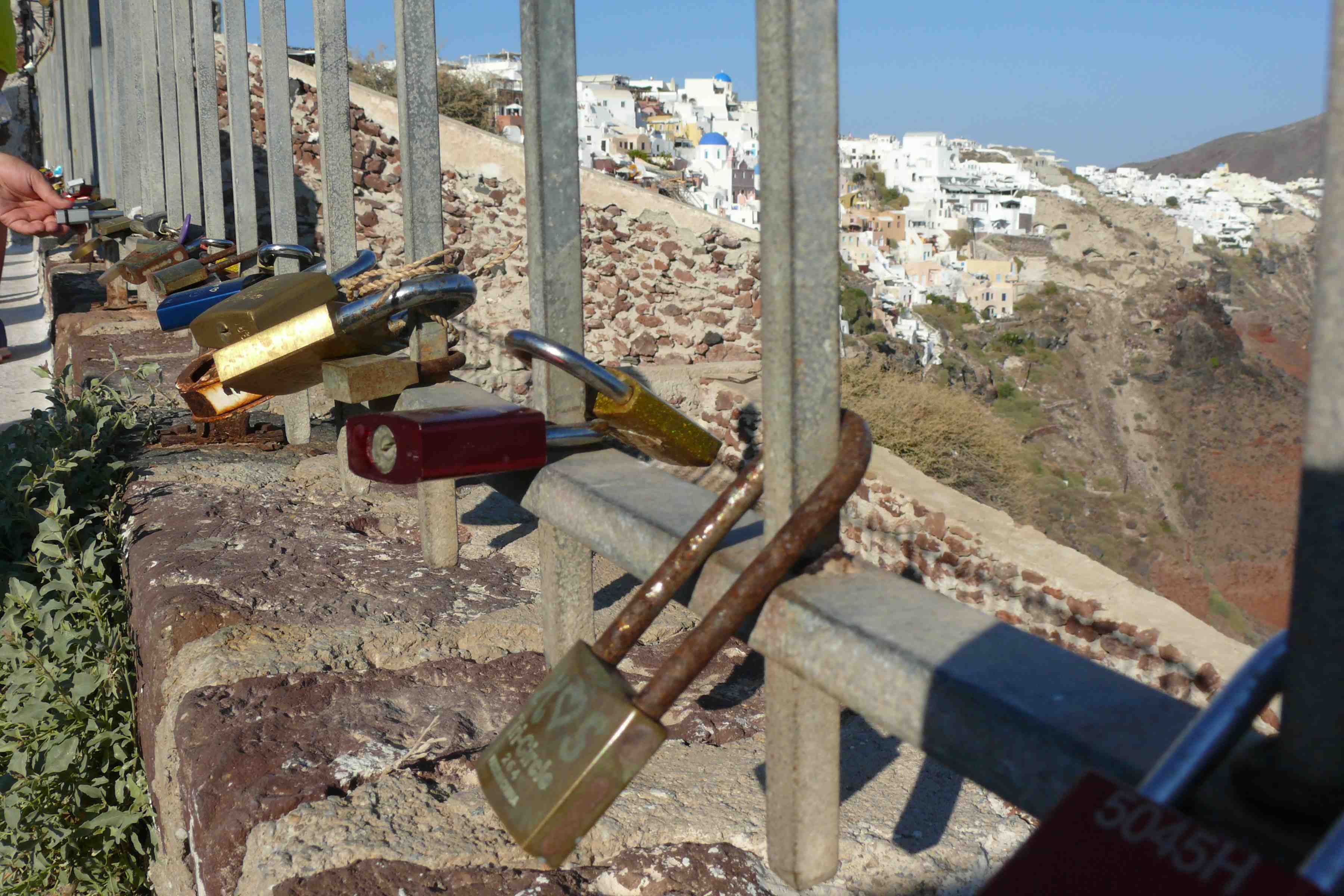
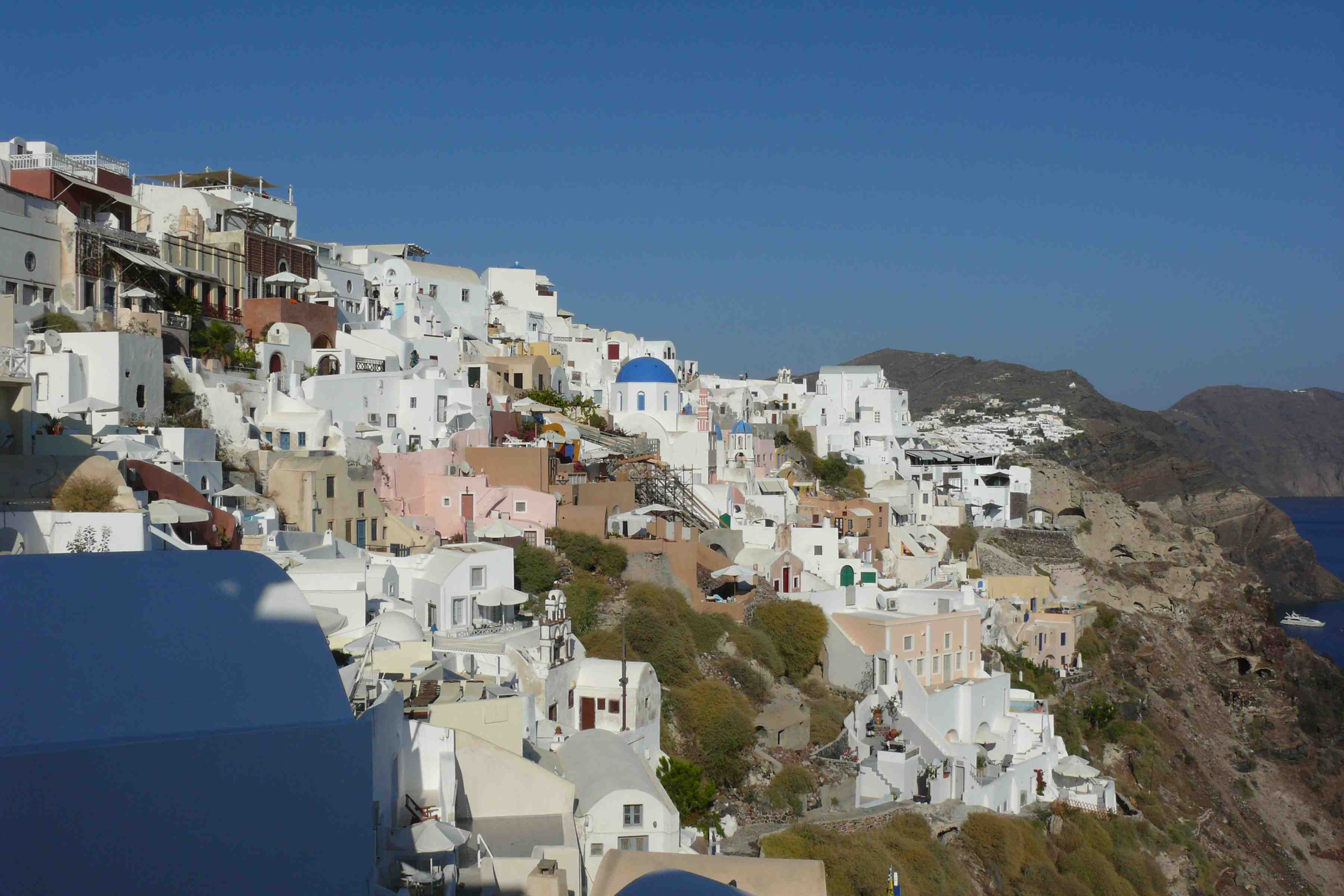
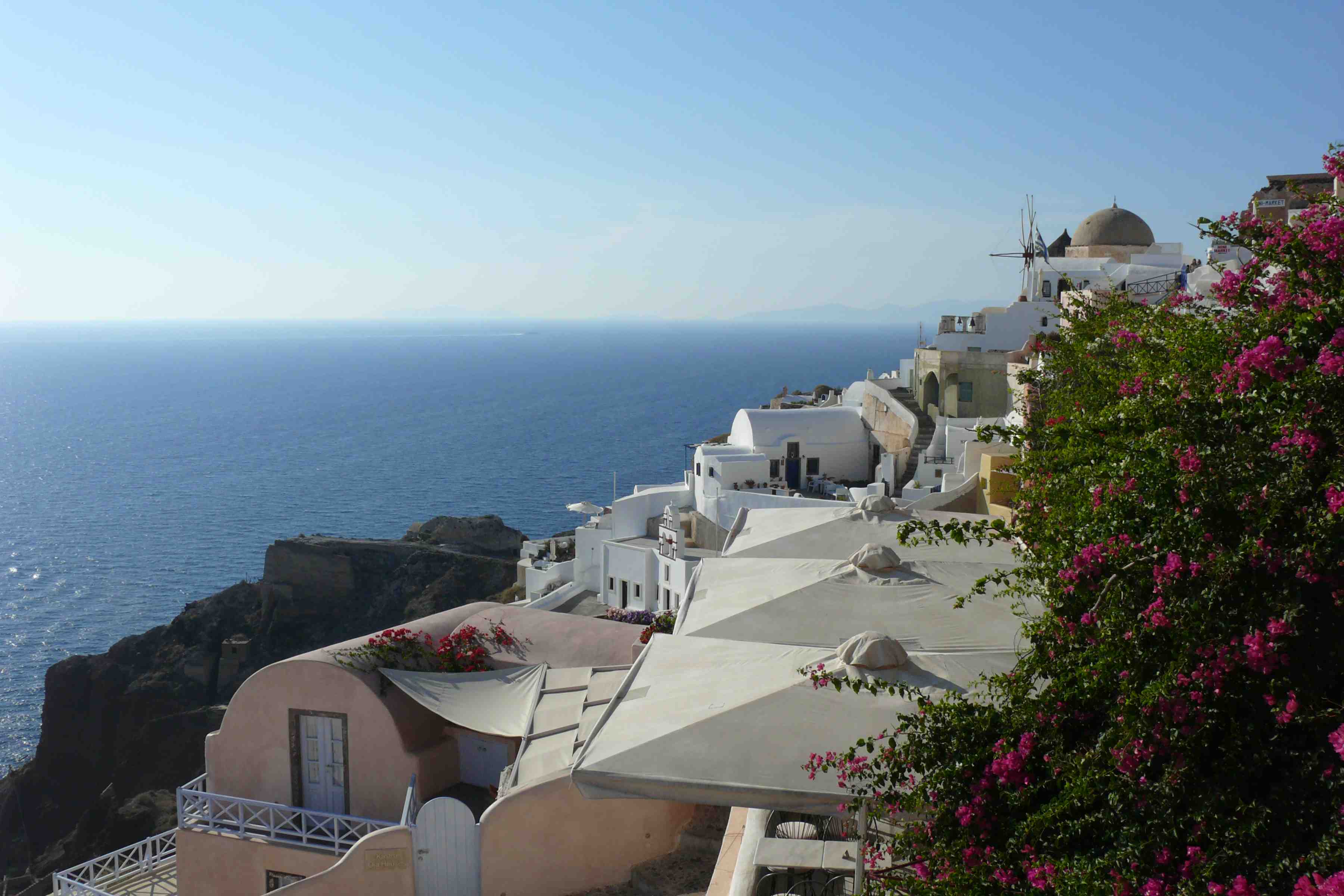
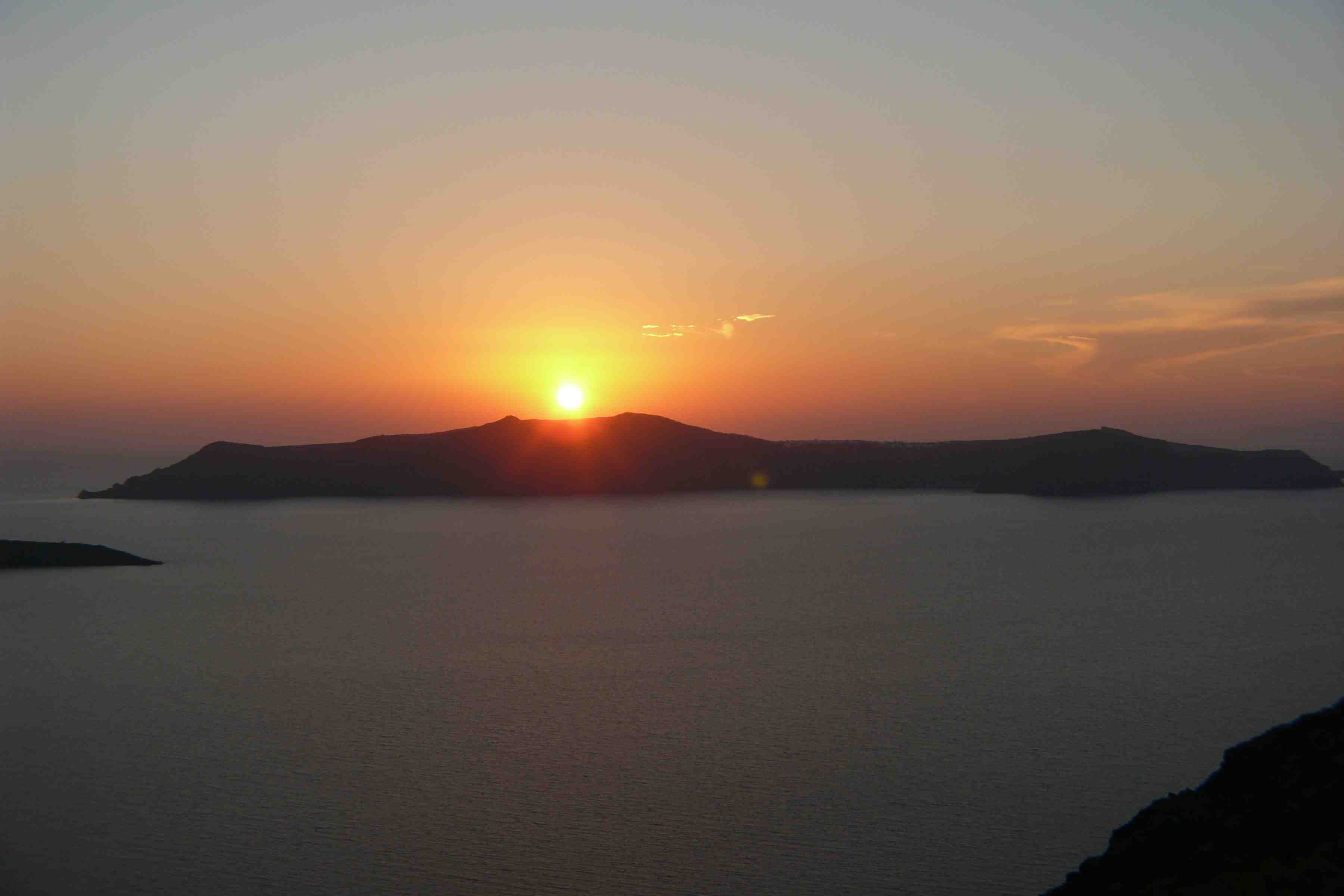
Santorini —- wow … Santorini’s geological story is a fiery one. The ‘island’ is actually five islands which are the result of volcanic eruptions and earthquakes. The largest island is curved around a body of water which is called the ‘caldera’, a Spanish word for cauldron. This of course, refers to the core of the volcano. Cruising into Santorini was very picturesque. The camera got a huge workout! Even seeing the whitewashed towns from the distance, they could easily have been mistaken for snow-caps, which we knew was impossible at this time of year.
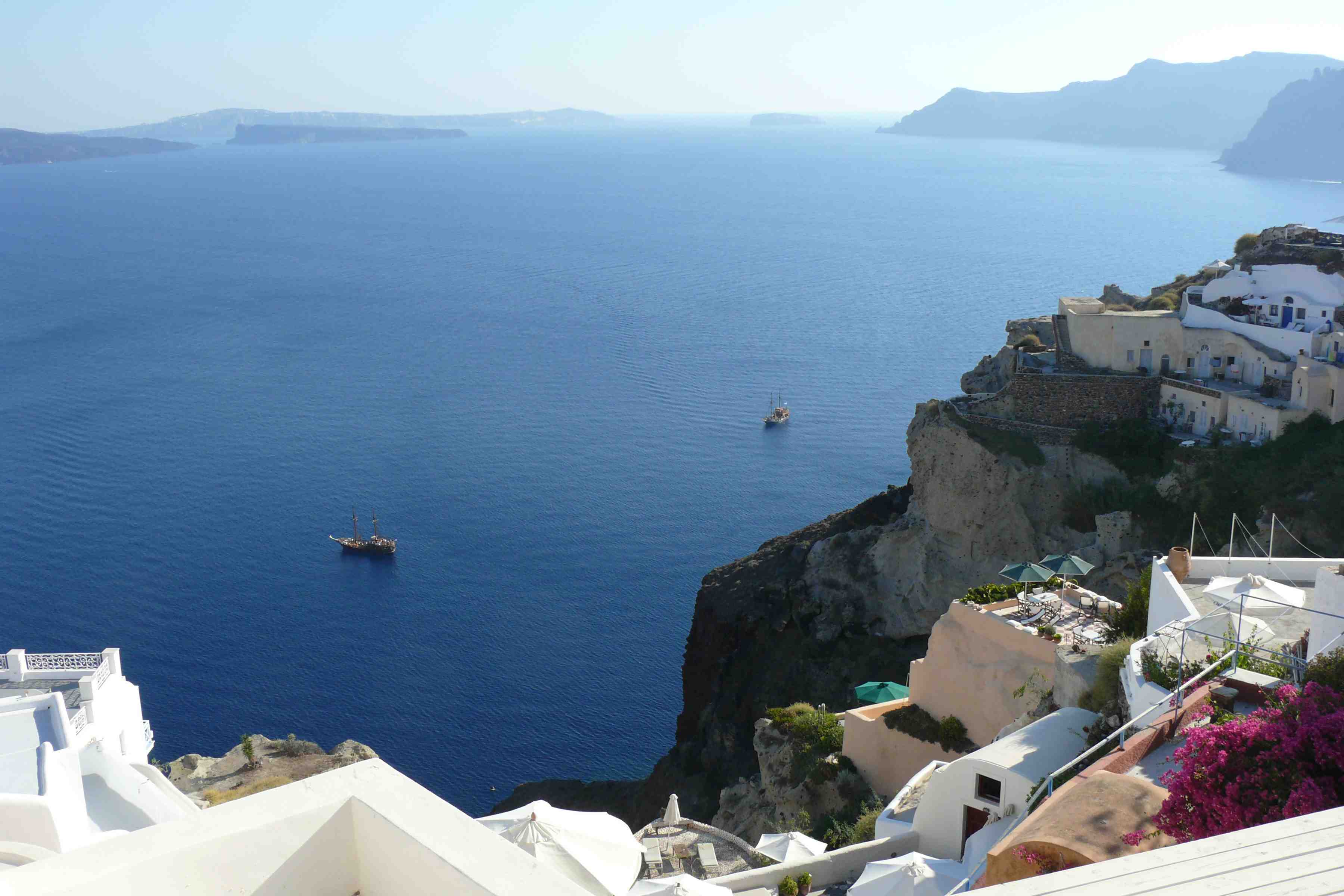
Again, it was impossible to dock at Santorini so tender boats were used to get us to land. We chose the shore excursion which took us to Oia [rhymes with ‘clear’]. Around the Caldera are vertical cliff faces so the towns are at the top. As we boarded the bus and drove the zigzag road to get to the top the various rock strata were very clear, finishing with a huge layer of pumice on the top.
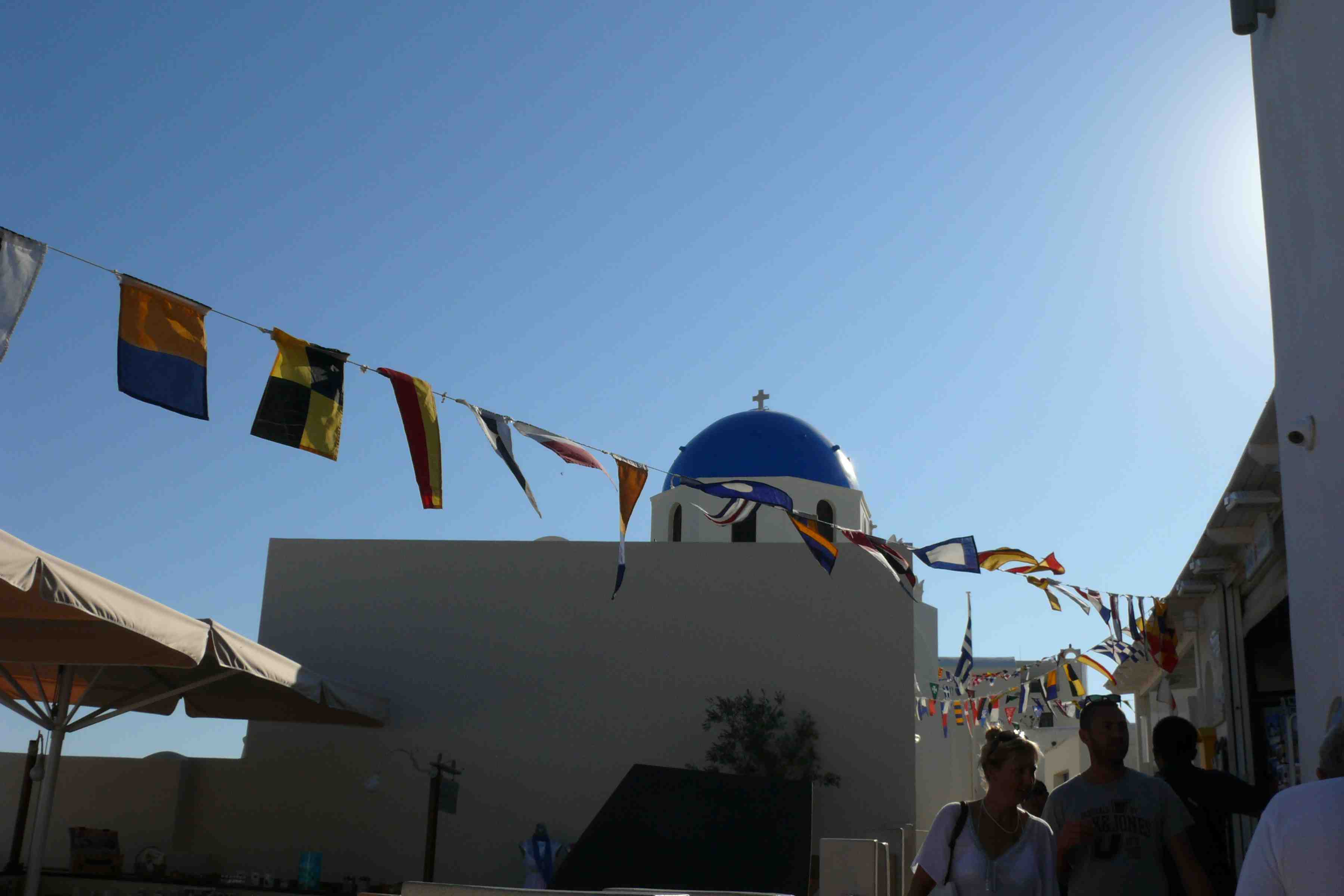
Travelling along the top of the cliff face gave some wonderful vistas, but getting to the little town of Oia was such a treat. The marble lanes are very narrow, the hotels and villas are built down the cliff face, the shop fronts, cafes and other speciality merchants were all worthy of photos, but the whitewashed churches with blue domes were the picture stealers. Again … quintessential Greek island is the only way to describe it. Again, the camera was screaming for a rest.
We finished by going to the main town of Santorina, Fira, for another spectacular sunset, before we joined the huge queue to go down the cable car to get back to the tender boats returning to the ship. A beautiful day.
As the Greek islands are very close to one another, there is hardly opportunity to actually take advantage of onboard life. Being in two ports per day means for a very full and tight schedule. However, our overall our first impressions of cruising on this short and very busy three days is a positive one, and we would love to have the opportunity for a longer and more restful cruise at some point in our lives.
Wednesday September 10 was a day with some Biblical history, some Christian Orthodox history, and some geological awesomeness!
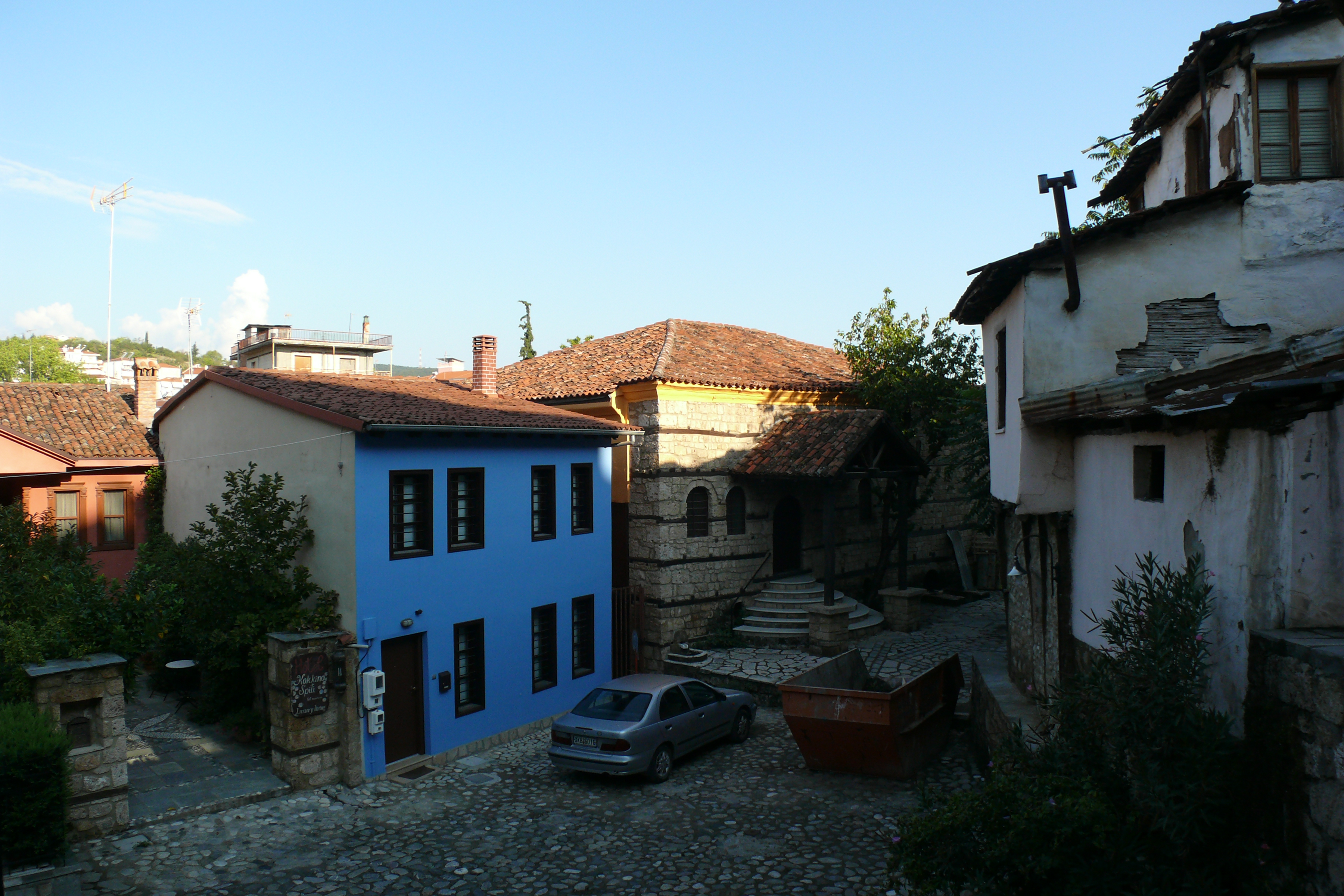
We firstly drove from Thessaloniki to Veria, the ancient Biblical town of Berea where Paul and Silas were helped to get to from Thessaloniki when things got a bit hairy for them there. This is a beautiful little town on a Greek hillside with so much appeal. We firstly went to a spot remembered as a place where Paul preached, and there was a plaque with the very telling verse from Acts 17, saying that the Jews there were more noble than in Thessaloniki, and that they received the word from Paul with eagerness. We walked to the Jewish portion of Veria, where there is a small but quaint synagogue.
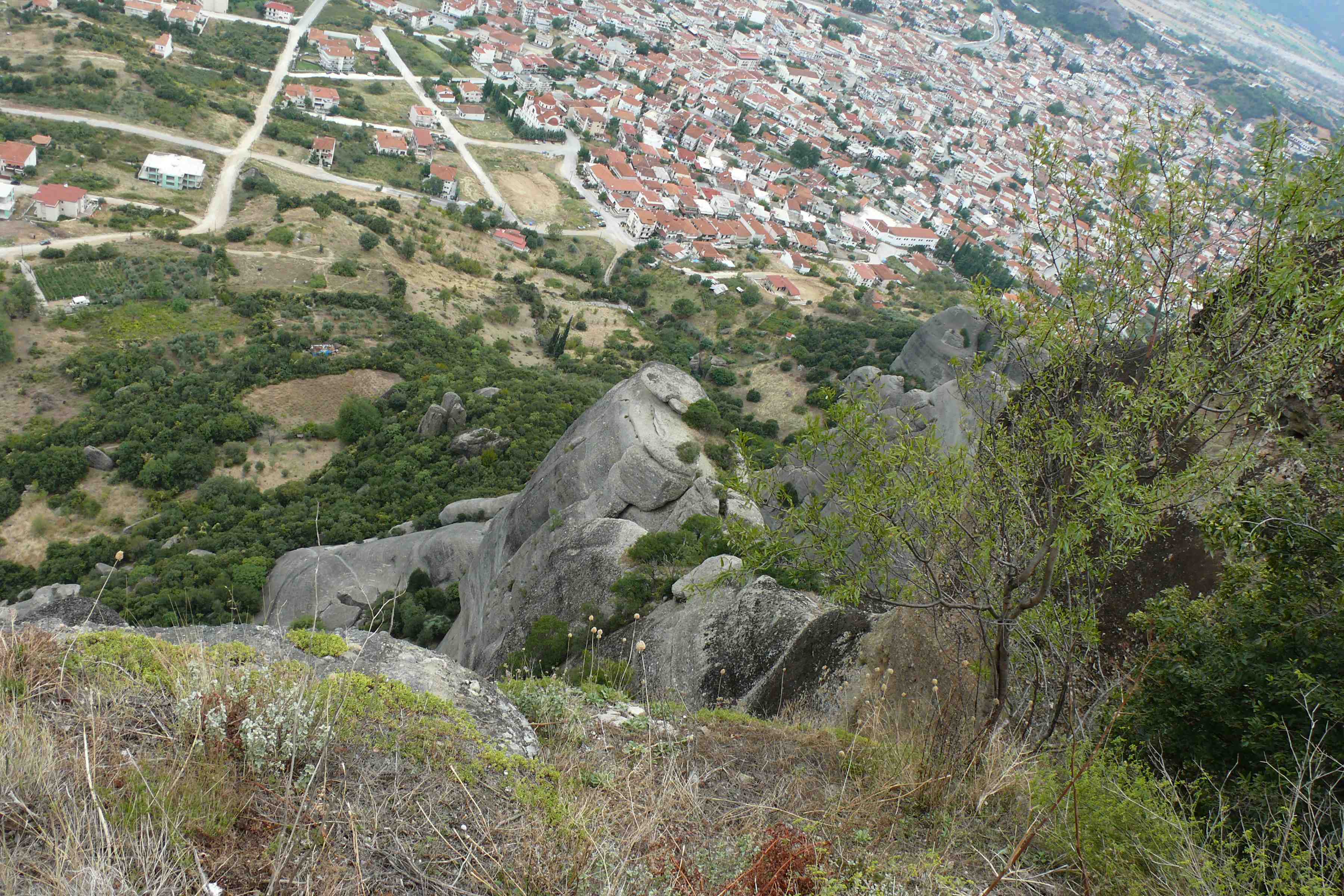
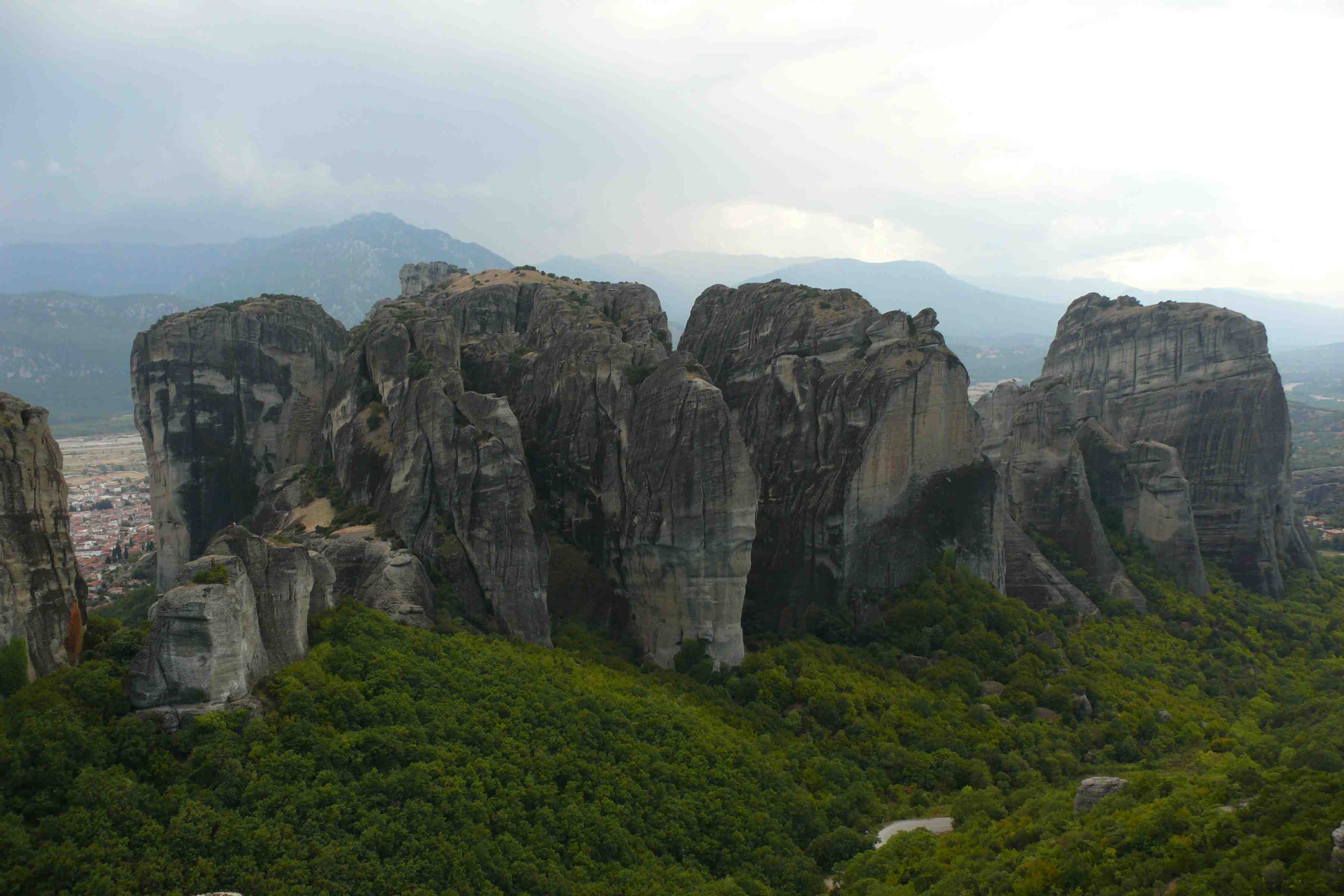
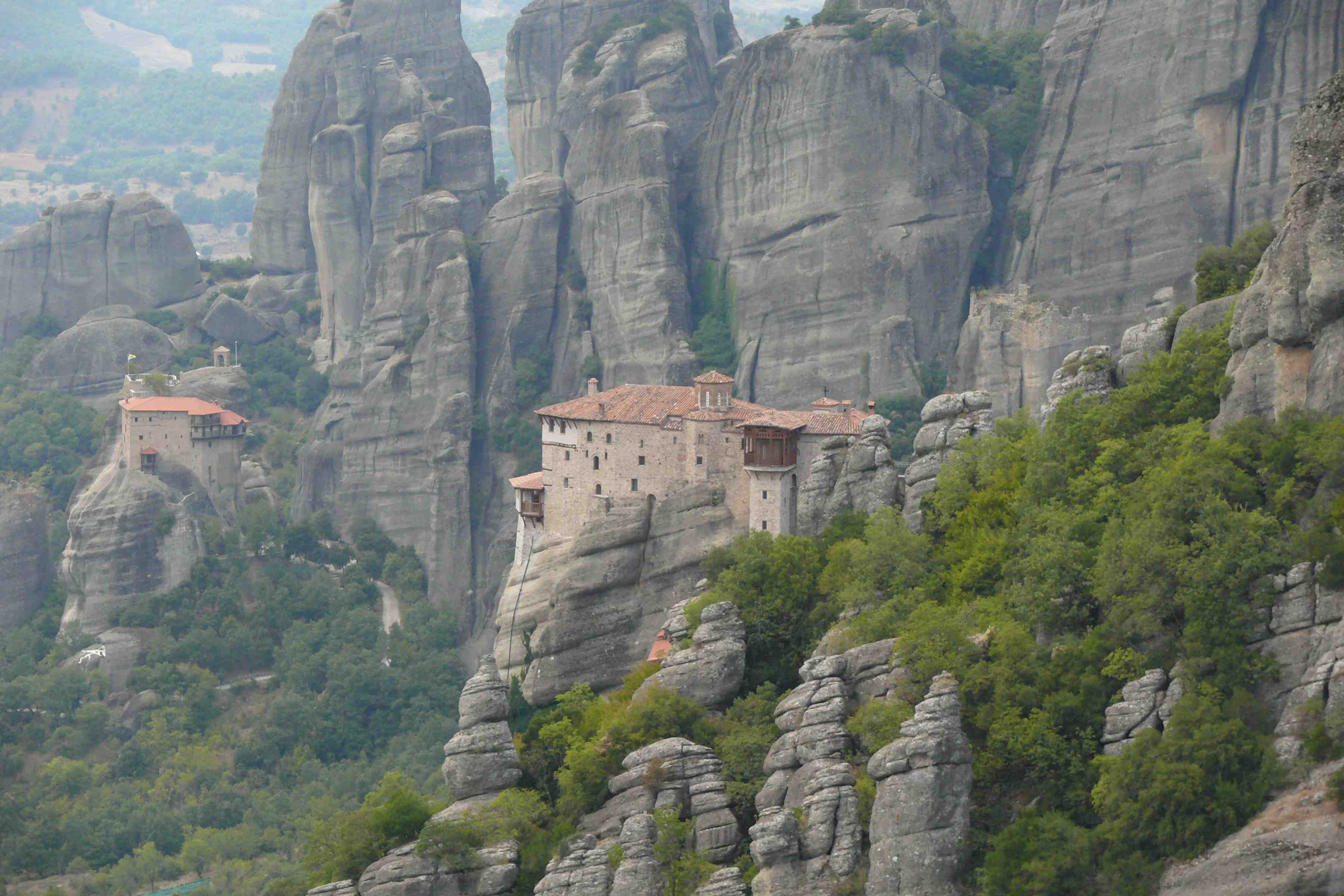
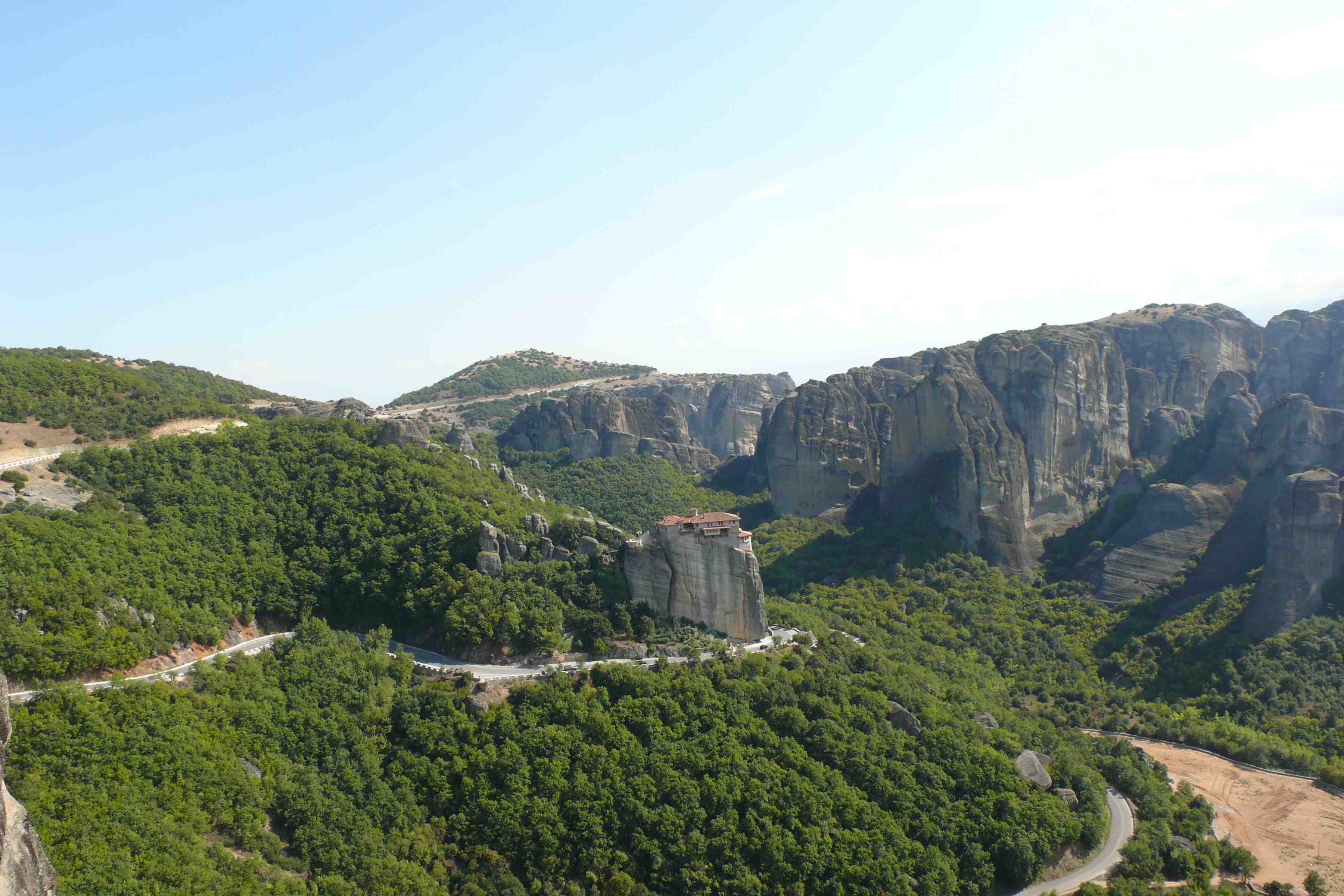
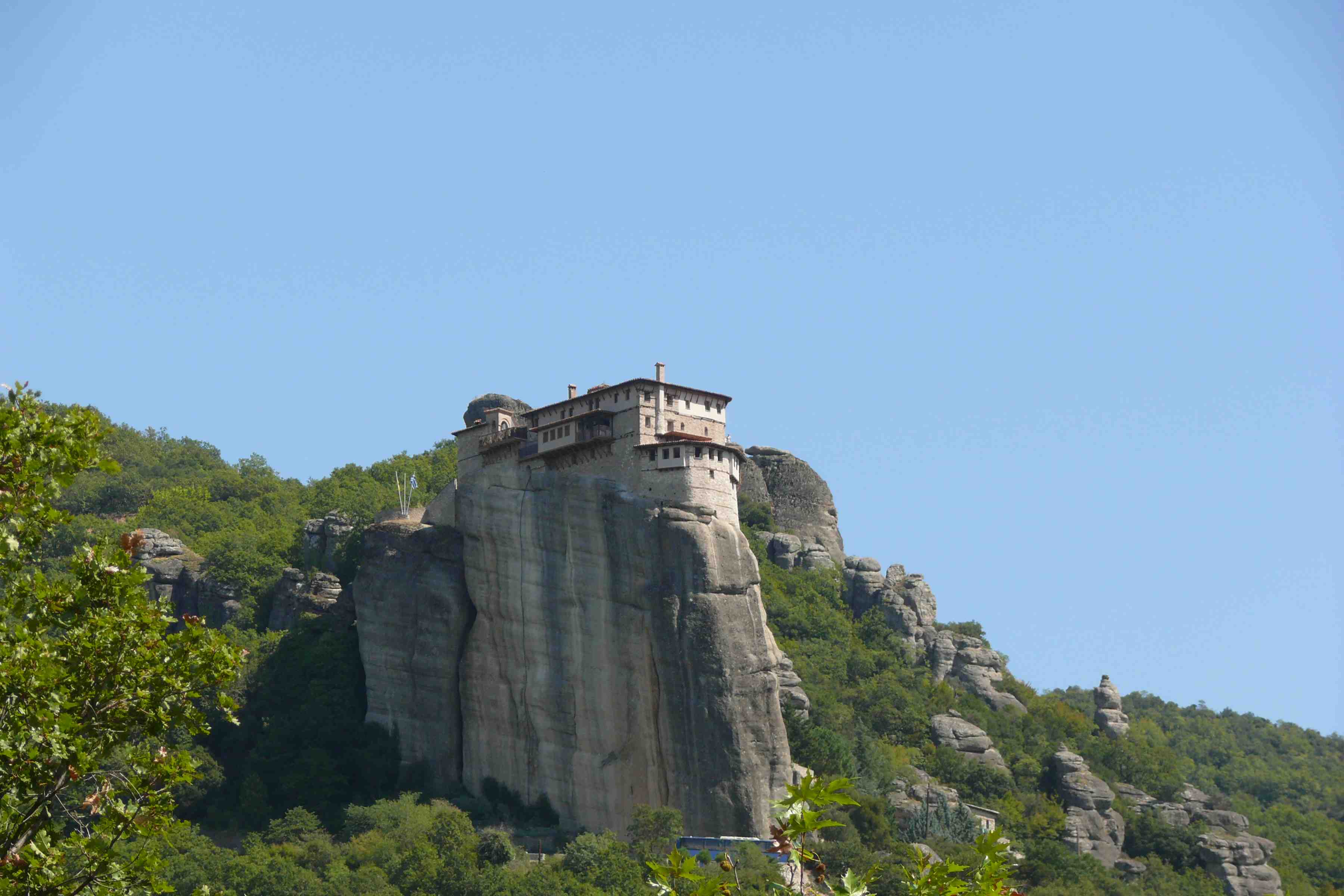
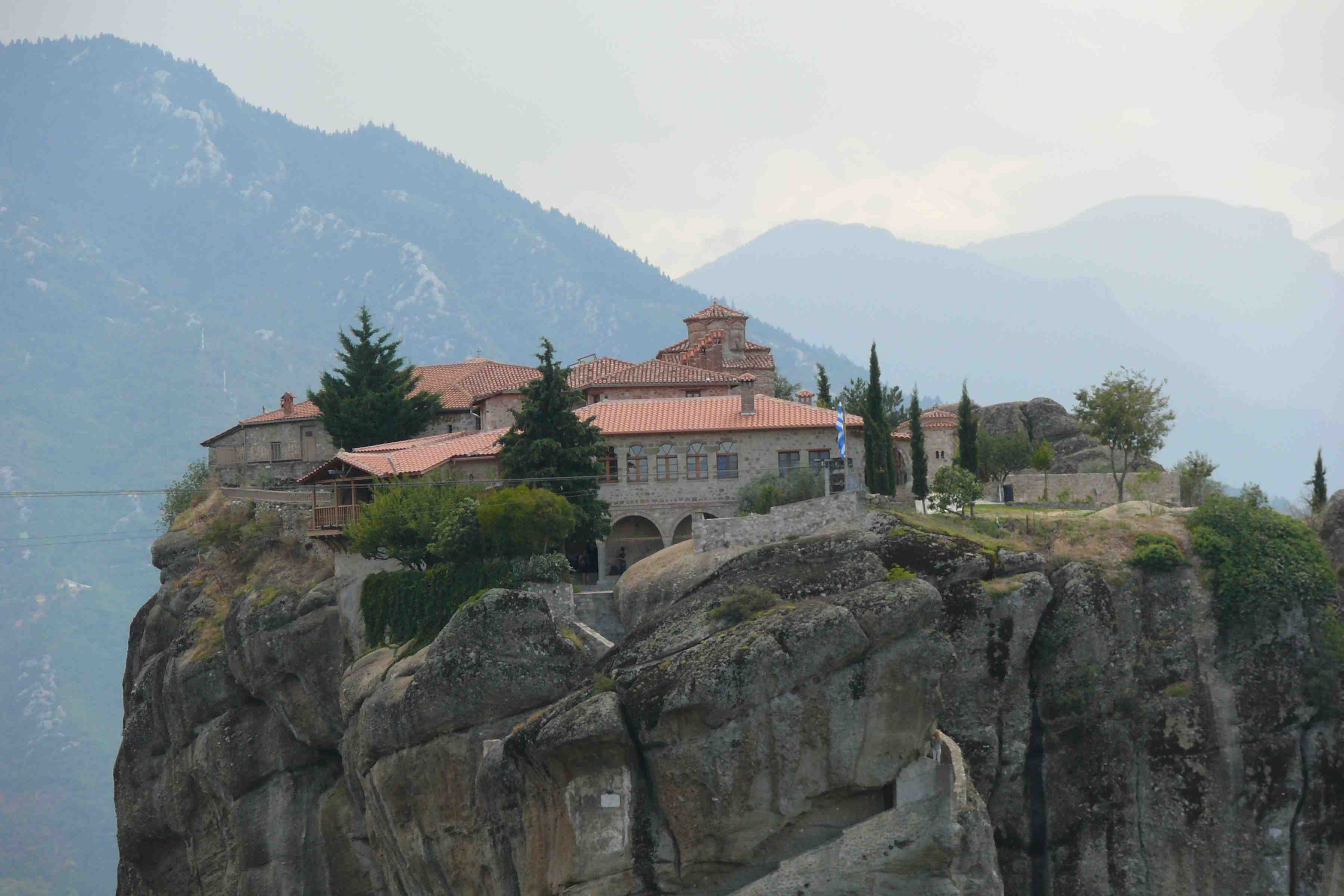
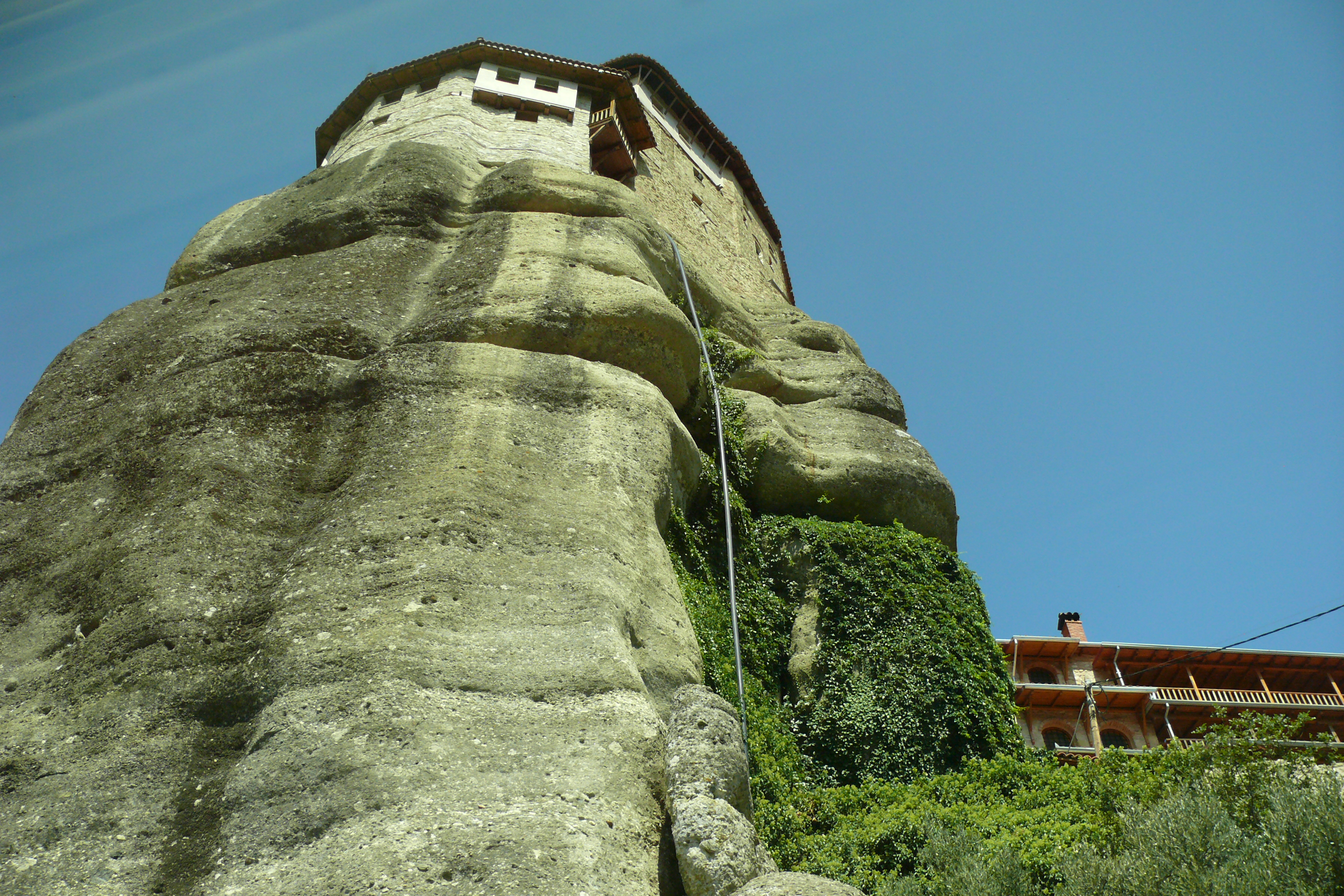
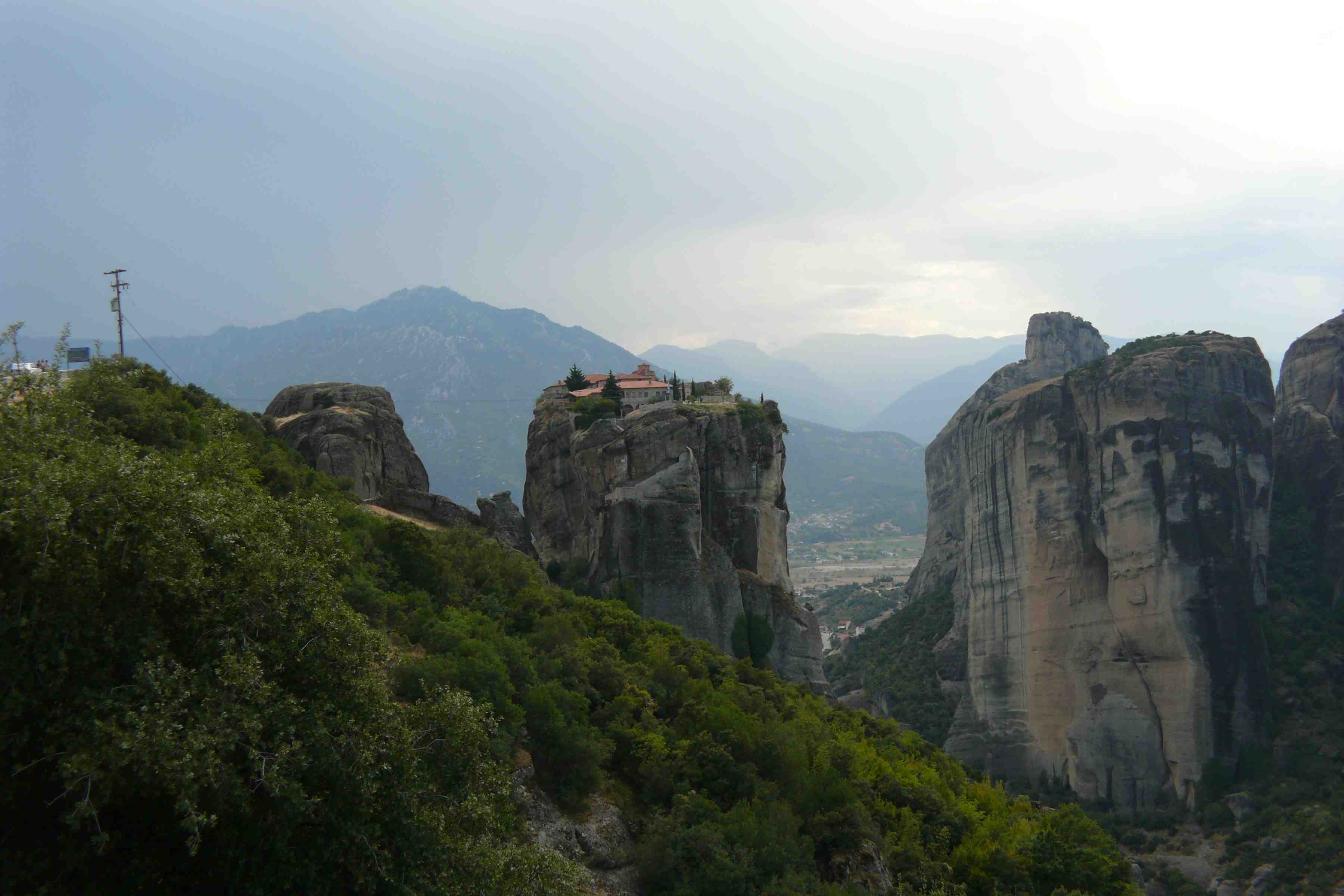
We drove through some very mountainous terrain with picturesque valleys to get to Kalambaka, the town at the base of the incredible rocks of Meteora. Geological study tells us that these rocks were under water tens of thousands of years ago, and a geological event then drained the area of water and these rock formations appeared. From the 14th and 15th centuries there have been monasteries built on the top of many of these rocks, but now, out of an original 24, there are only six left, due mainly to Nazi bombing in the second world war.
The drive from the town to get to the top of these rocks had so many wonderful moments of oohs and aahs. We felt privileged to be seeing how awesome our God is to gift us with these amazing and wonderful sights. Also the ingenuity and skill of the builders of all the monasteries continually stunned us.
Of course, it was also wonderful to see the location of the James Bond movie, ‘For Your Eyes Only’ – the monastery of the Holy Trinity although it was not a monastery we visited.
We walked up 200 steps to visit Varlaam, and saw the very tiny orthodox chapel with every possible portion of the internal walls and ceiling covered with intricate paintings depicting Bible stories, and the life of Christ, along with many of the apostles.
Following that we went to a nunnery, St Stephen’s, and at the entrance greeting us was a young Aussie Orthodox nun from Perth.
It was only a short drive to our hotel on the outskirts of Kalambaka, and we enjoyed a wonderful dinner and breakfast there.
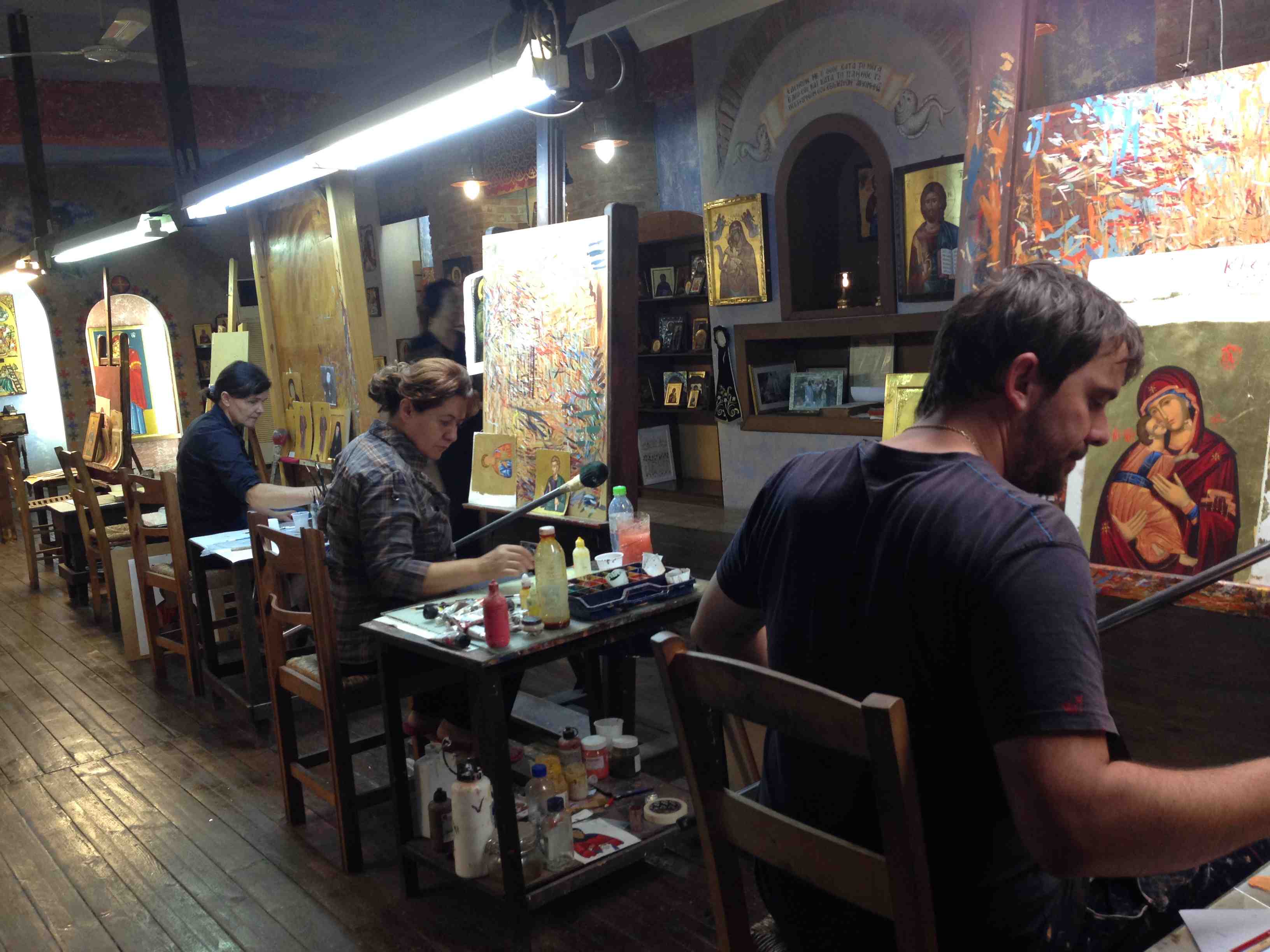
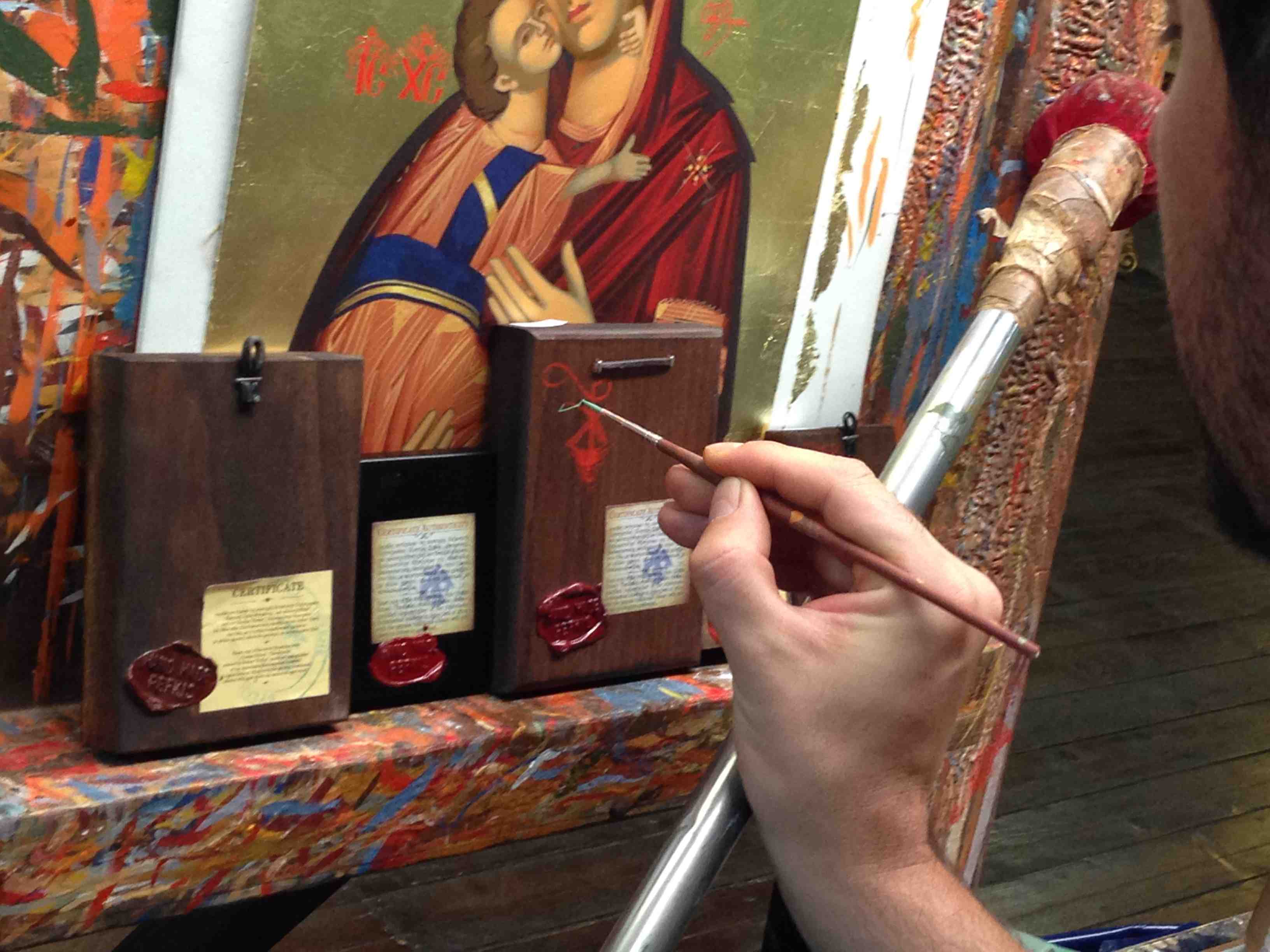
Thursday morning we knew was to bring a long day of driving to get back to Athens. Quite early in the journey we visited a Byzantine icon workshop and saw the method of hand painting orthodox icons, from the preparation of the canvas, the wooden frames through to the intricate painting. There were three artists in the workshop and it was fascinating to see how they worked, and also to find out that every icon is hand painted, and not printed. Each one is a copy of the 11th or 12th century established forms of each parable, miracle, saint or Bible story. If any of the tour group purchased an icon the artist was there to personally sign the back.
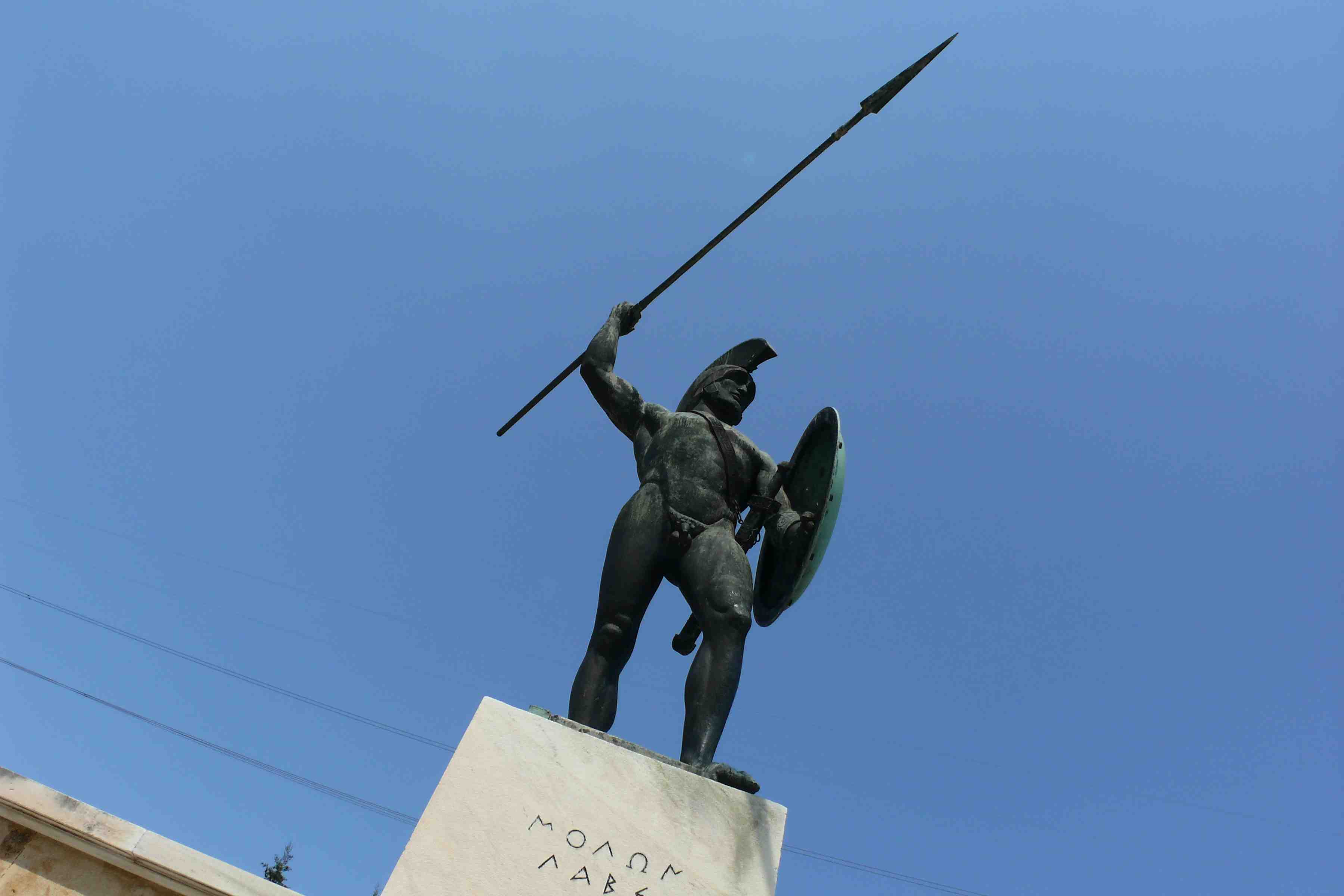
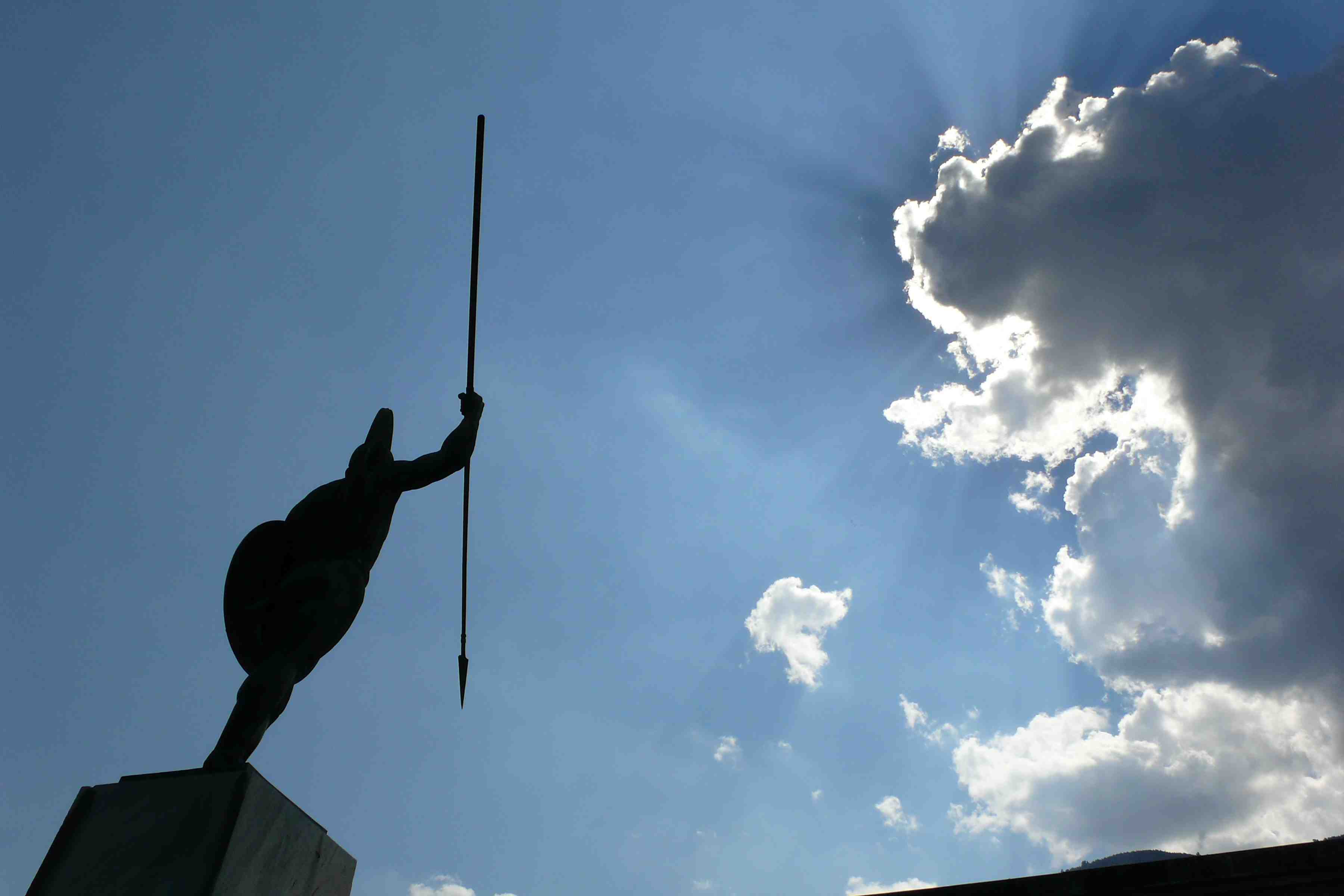
Further on our long drive we stopped at the monument to the 300 spartans at the likely place of the Battle of Thermopylae. We walked up the walls of the fortification, which now simply look like, and are used as a walkway. The modern monument has a huge statue of Leonidus, the Spartan King wielding a spear. The Spartans held off the Persians for 3 days, and are remembered as great heroes of nationalistic fervour. The Persian victory was, in effect, hardly a victory as they suffered almost as much loss as the Spartans, but the impact of the victory meant that the Persians were able to conquer much more of Greece in the ensuing years.
We arrived back in Athens, after a long day’s journey and there were a few of us chose to go to our wonderful restaurant we found last weekend, near the hotel, rather than pay an exorbitant amount of money to go on the optional dinner excursion in the city. We had a wonderful evening together – a pair of Aussies and 3 pairs of yanks, joined in fellowship through the gospel.
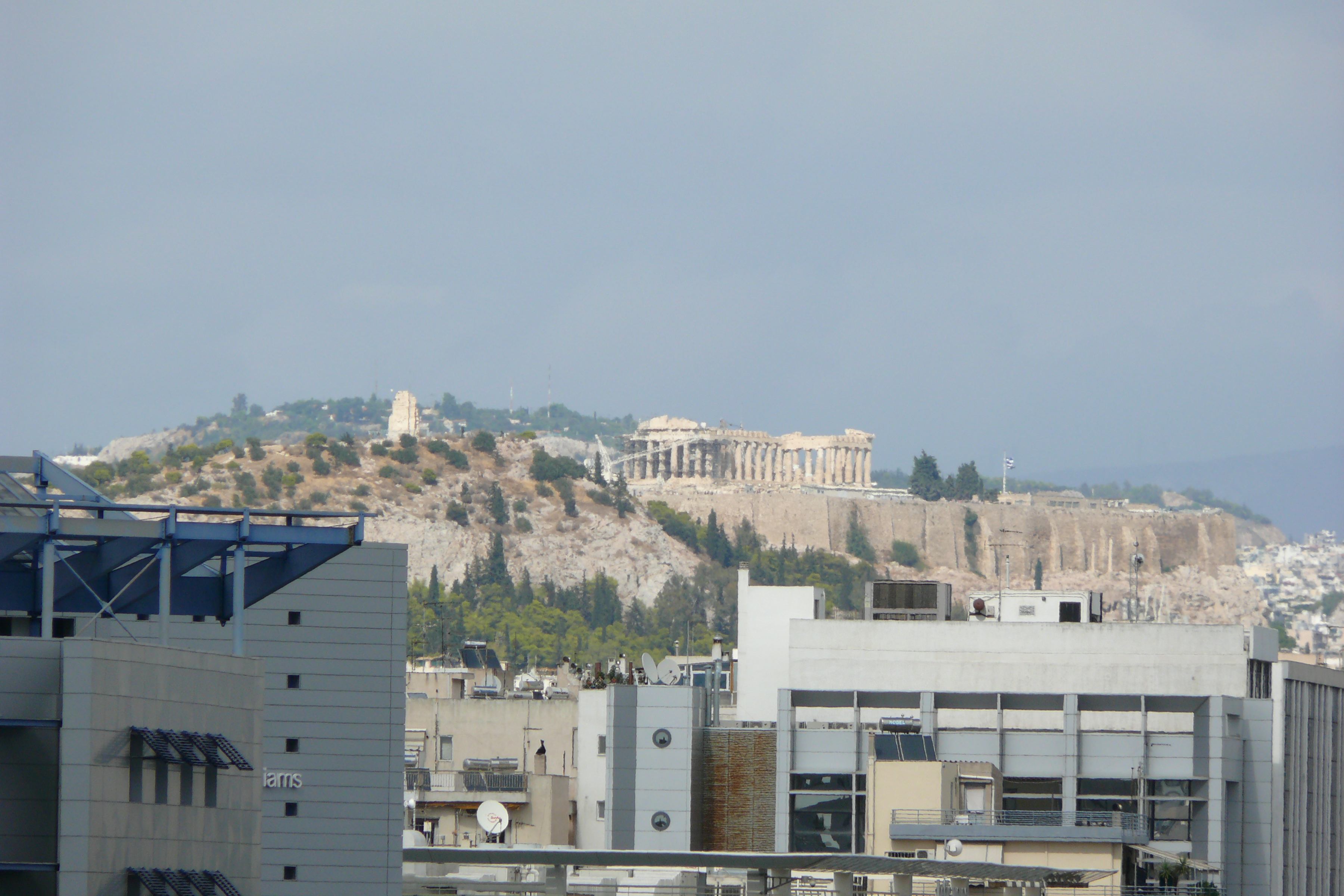
A sneaky peak at the acropolis whilst having a coffeeA zoom from our hotel
We began our time in Greece with a couple of down days in Athens. We rested and didn’t really do very much at all except explore some of the centre of the city. We did find a great little restaurant about 10 minutes walk from the hotel, which had very cheap food and wine, and very generous hosts. We went there both nights as it was so good. First night we got tzatziki on the house, and the second night I got a glass of wine on the house. After every meal, you get free grapes, and free fresh, hot cinnamon donuts with honey on half, and chocolate sauce on the other half. No wonder we went back!! It was extremely good value.
We met up with our next tour group and our first day was mostly travel getting north to Thessaloniki, a beautiful city on the northern shores of the Aegean built around a very protected bay. We were very surprised by the number of toll booths on the motorway north. They just kept coming.
On our journey north we saw Mt Olympus, or should I say, part of Mt Olympus as the cloud cover was pretty dense. That mountain range is home to a huge number of species of plant and animal, including bear, boar, wolf, deer and eagle.
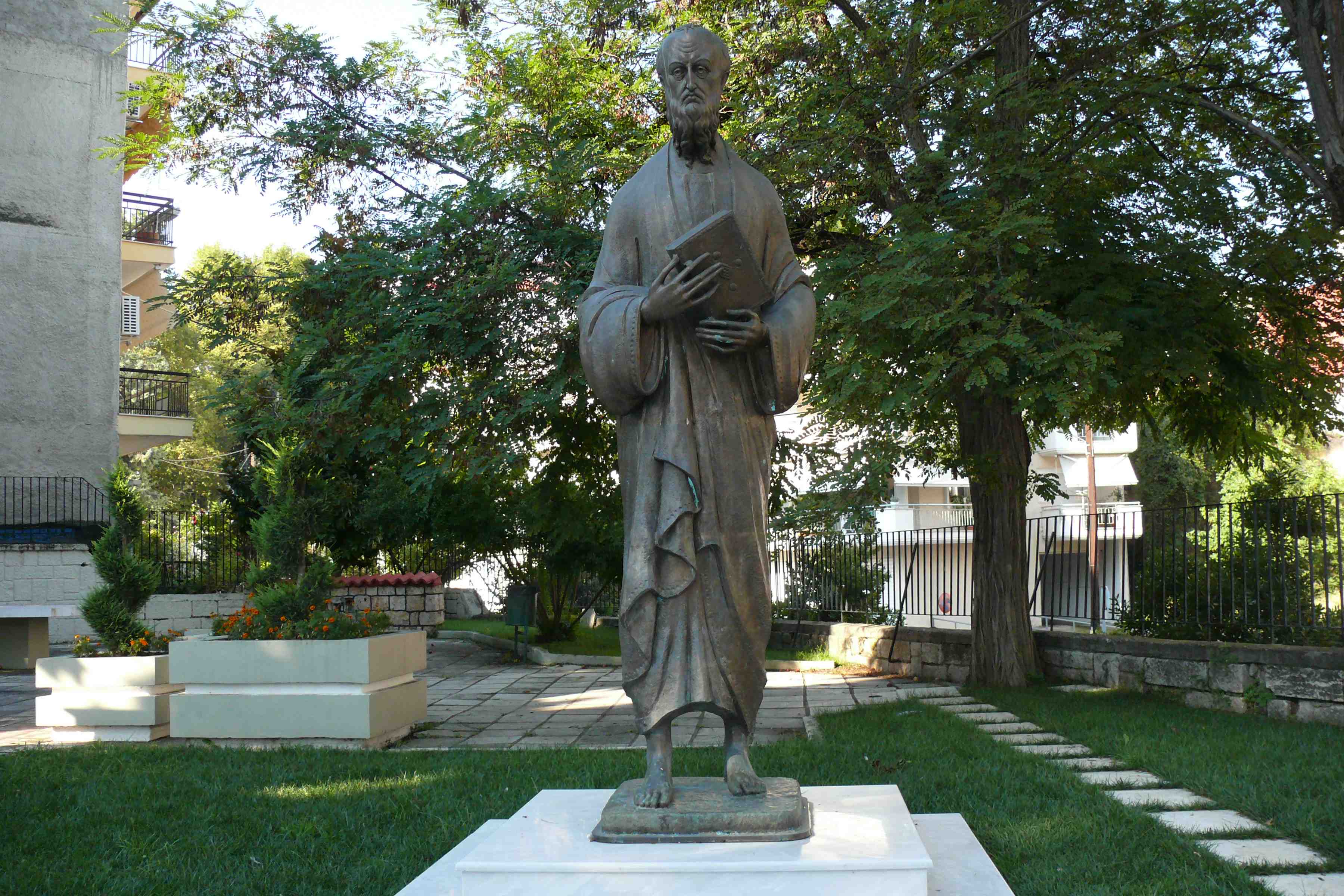
As we approached Thessaloniki we visited a panoramic view of the city from a high point of the old city wall. Following narrow quaint lane ways down the hillside we were in the middle of the city and visited an orthodox basilica dedicated to Demetrios, saw an arch and rotunda built by the 4th century Roman emperor, Galerius, and statues of Philip, Alexander the Great’s father, and Alexander the Great himself, the great Greek leader, who conquered so much of the known world.
Alexander the Great
Paul visited Thessaloniki on his second missionary journey, and preached for 3 consecutive weeks in the synagogue. His preaching and message to the people caused a rabble amongst the Jews, and he ended up being chased out of the city.
He wrote to the Thessalonians …
“ 1Th. 1:2 We give thanks to God always for all of you, constantly mentioning you in our prayers, 3 remembering before four God and Father your work of faith and labour of love and steadfastness of hope in our Lord Jesus Christ. 4 For we know, brothers and sisters loved by God, that he has chosen you, 5 because our gospel came to you not only in word, but also in power and in the Holy Spirit and with full conviction. You know what kind of men we proved to be among you for your sake. 6 And you became imitators of us and of the Lord, for you received the word in much affliction, with the joy of the Holy Spirit, 7 so that you became an example to all the believers in Macedonia and in Achaia. 8 For not only has the word of the Lord sounded forth from you in Macedonia and Achaia, but your faith in God has gone forth everywhere, so that we need not say anything. 9 For they themselves report concerning us the kind of reception we had among you, and how you turned to God from idols to serve the living and true God, 10 and to wait for his Son from heaven, whom he raised from the dead, Jesus who delivers us from the wrath to come.”
River near Philippi, possibly where Lydia was baptised
It was raining as we drove from Thessaloniki to Philippi. We hadn’t seen rain in several weeks so it was a bit of a novelty. We were pleased though that it didn’t stop us from getting out, and when we came to the area of Philippi the rain had eased. We first visited a site believed to be where Lydia, the seller of purple goods, was baptised by Paul after hearing the gospel and responding. Acts 16 tells the story of Paul coming to Philippi, and going outside the city gates to the riverside where they were looking for a place of prayer, and found a group of women. The river we saw was a beautiful narrow stream that flowed over rocks, it was wonderful to consider the ministry that had happened somewhere near where we were.
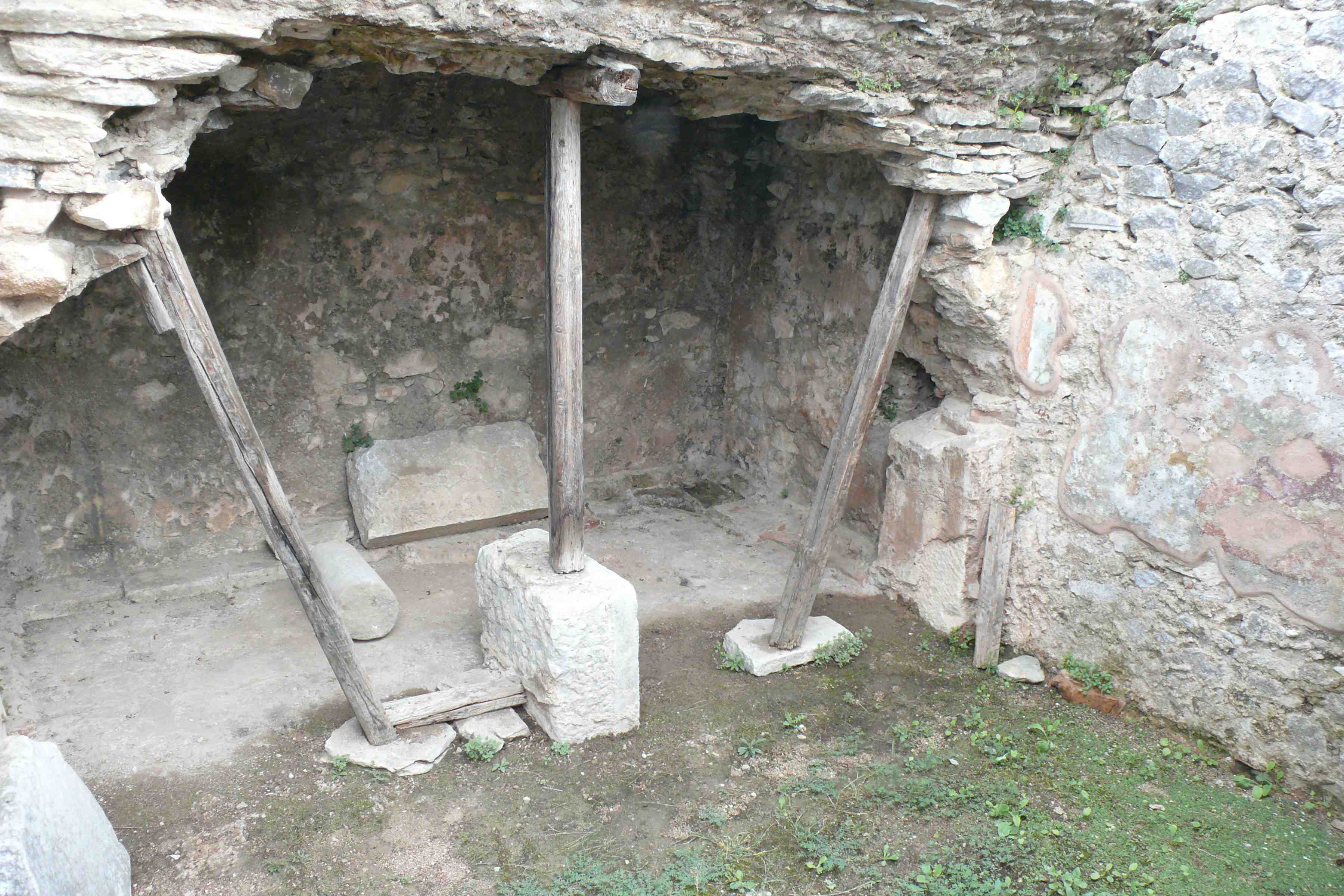
Possible site of Paul’s imprisonment
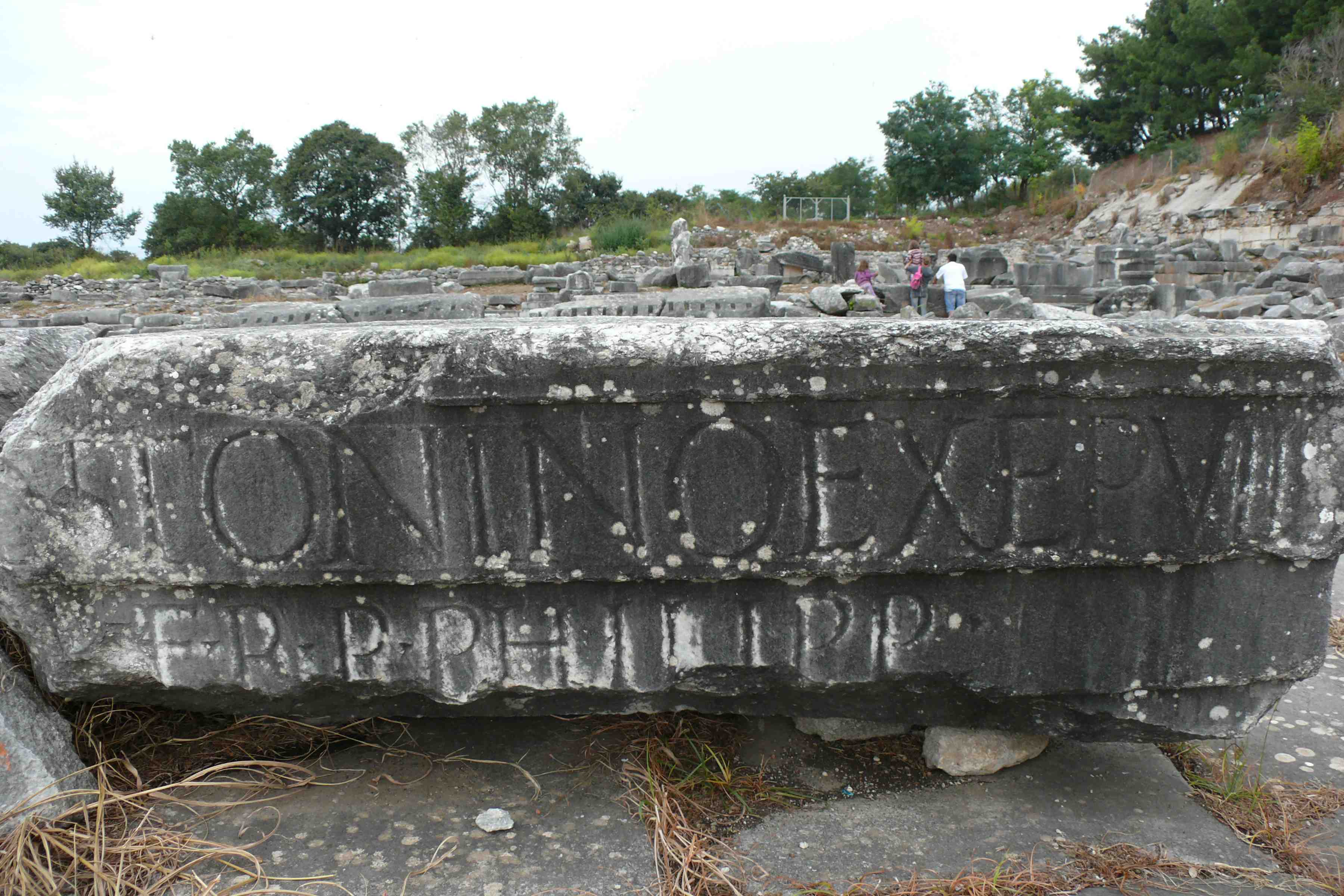
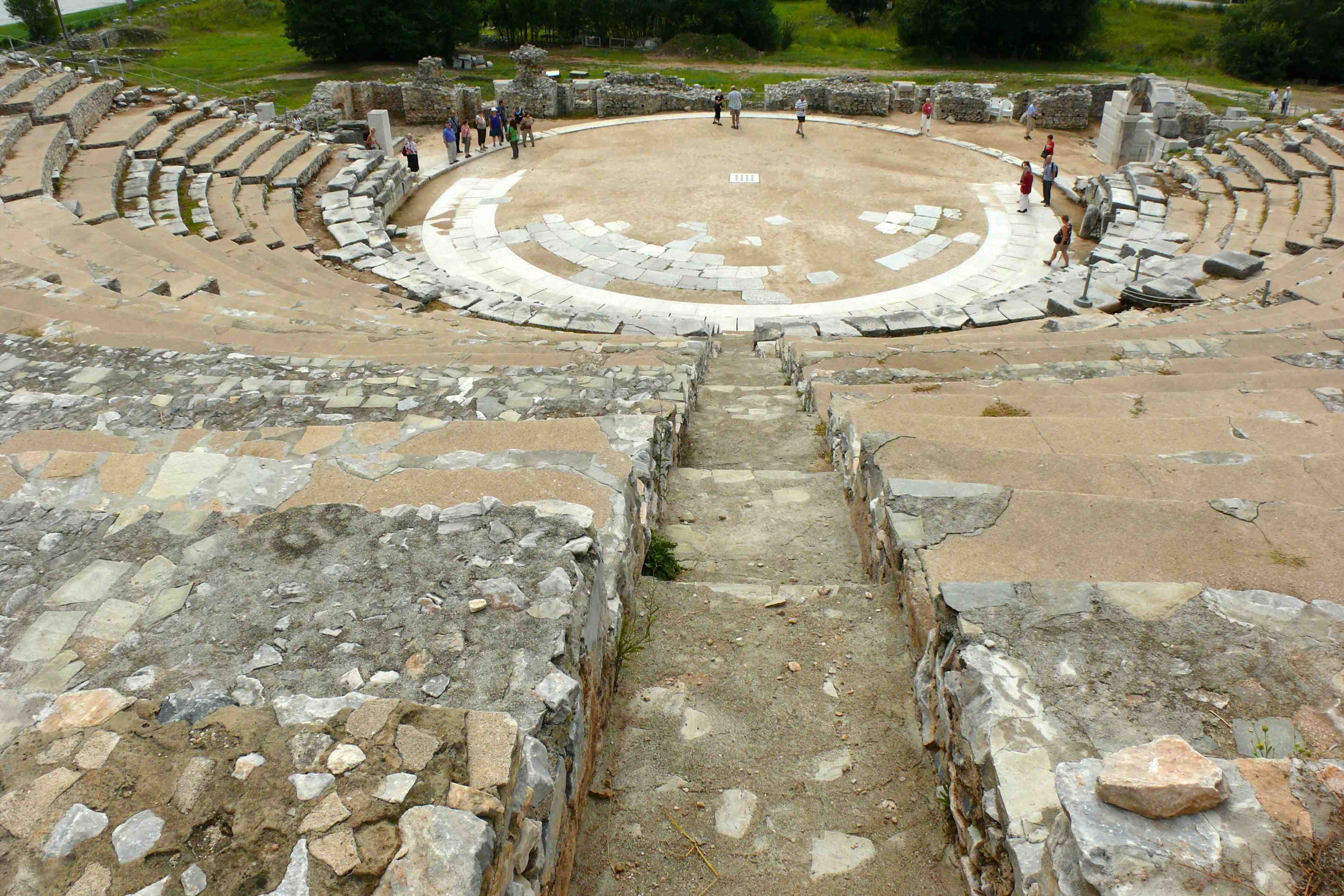
We then went to the ancient site of Philippi, and walked among the ruins, seeing the Agora [market place], the remains of an early Christian basilica, the possible place where Paul was imprisoned, and the Philippian theatre.
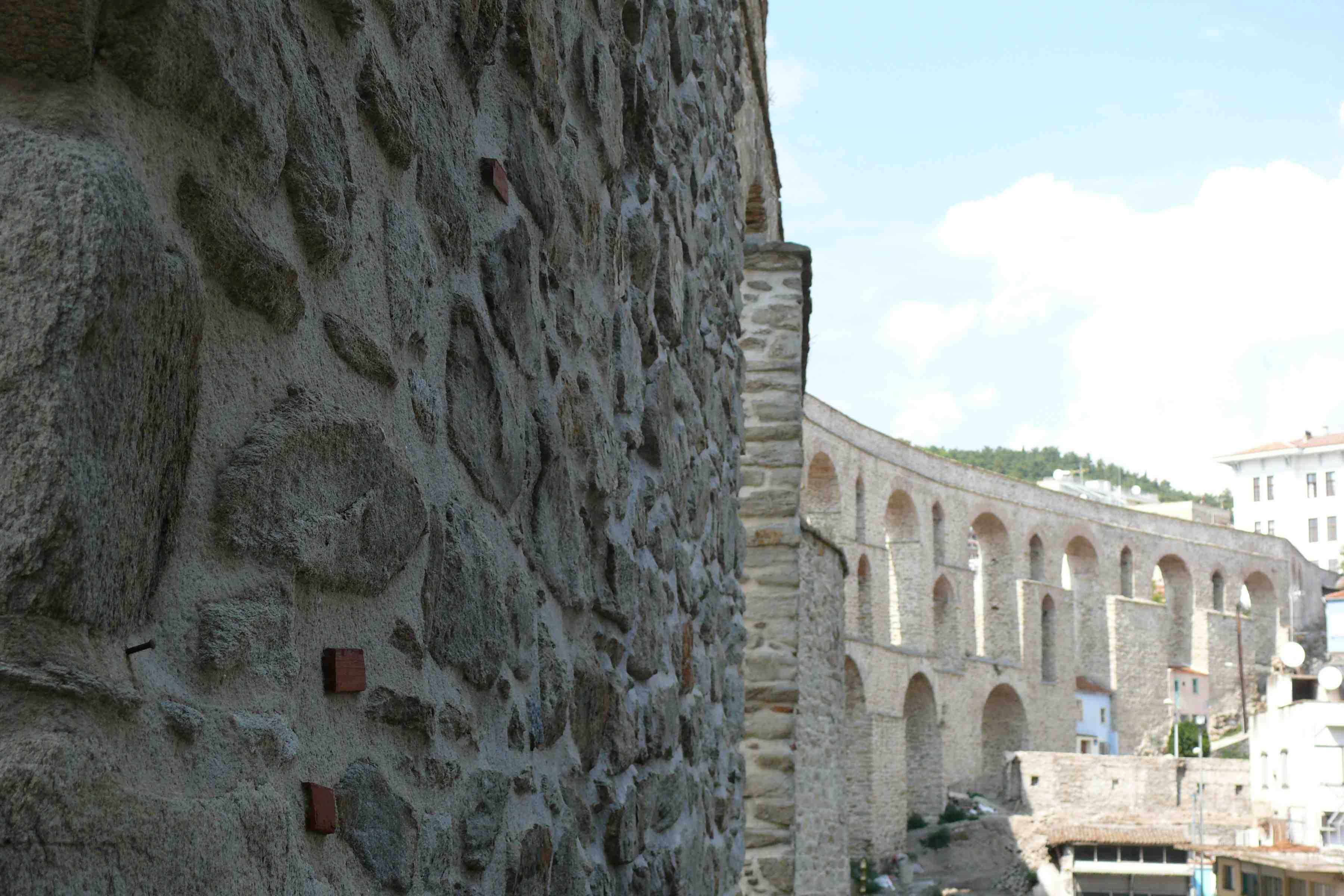
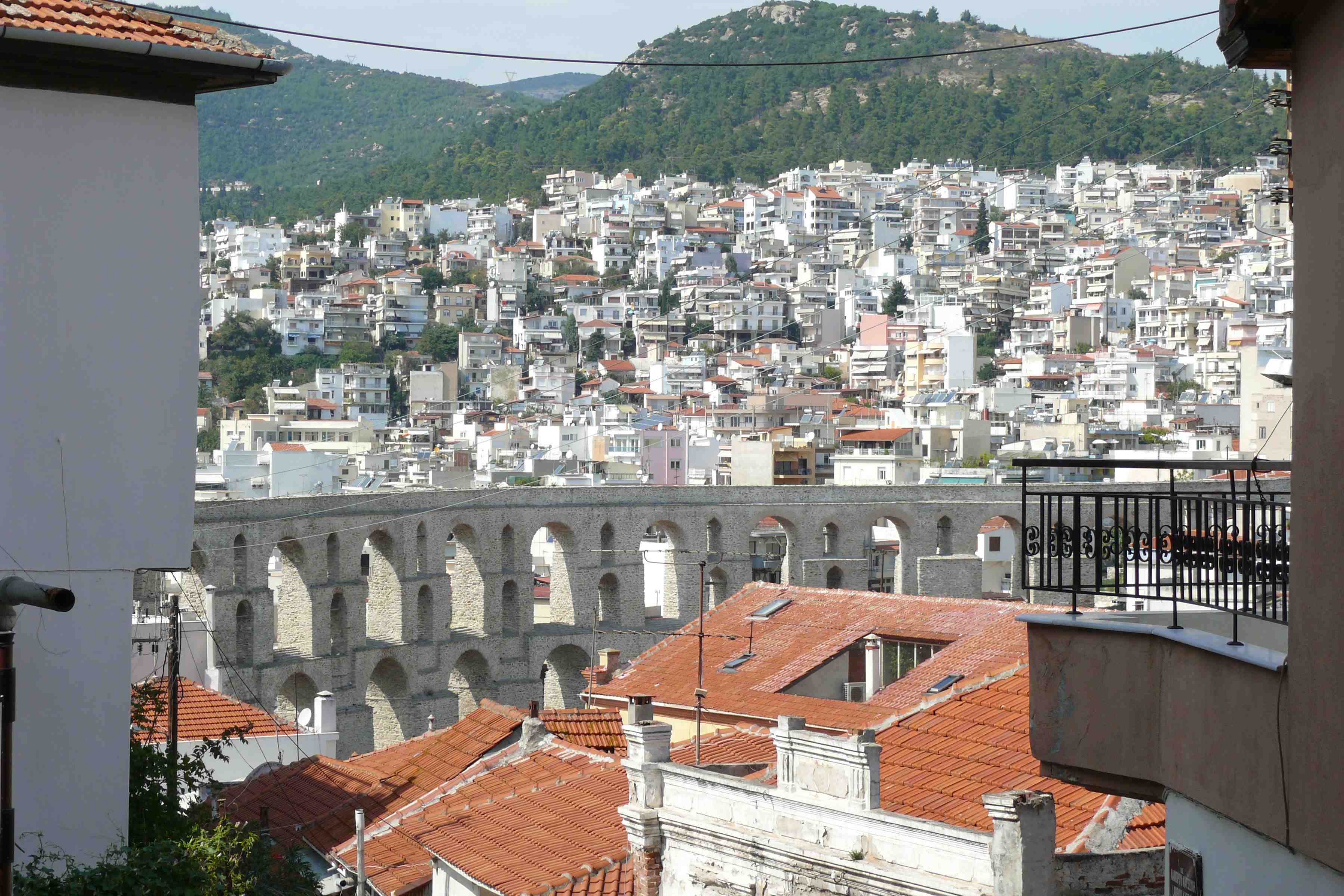
Viaduct at KavalaKavala
We went to Kavala for lunch, which is on the site of ancient Neapolis, where Paul arrived in Greece after sailing from Samothrace. We walked a short way around the town and saw a viaduct initially built by the Romans, and renovated and renewed by the Ottomans. It was in great condition, and very impressive, as was the view from the top of the hill, looking out over both sides of this gorgeous little Greek town towards the Aegean Sea.
We continued back to Thessaloniki for our second night and before dinner we took a walk down to the water’s edge and back through the city centre. A lovely way to conclude our time there.
Phil. 1:3 I thank my God in all my remembrance of you, 4 always in every prayer of mine for you all making my prayer with joy, 5 because of your partnership in the gospel from the first day until now. 6 And I am sure of this, that he who began a good work in you will bring it to completion at the day of Jesus Christ. 7 It is right for me to feel this way about you all, because I hold you in my heart, for you are all partakers with me of grace, both in my imprisonment and in the defense and confirmation of the gospel. 8 For God is my witness, how I yearn for you all with the affection of Christ Jesus. 9 And it is my prayer that your love may abound more and more, with knowledge and all discernment, 10 so that you may approve what is excellent, and so be pure and blameless for the day of Christ, 11 filled with the fruit of righteousness that comes through Jesus Christ, to the glory and praise of God.



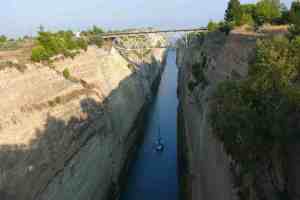 On the way we had a photo stop at the Corinth Canal, a 6.3km canal joining the Ionian and Aegean seas between the Athens area and the Peloponnese. Construction took 11 yrs, begun by the same company that built the Suez Canal, but finalised by a Greek company after the first one ran out of money. The canal can accommodate small to medium size craft, and is 79 metres high, 24 metres wide with a water depth of 8 metres. It was lovely to see a couple of craft proceeding through.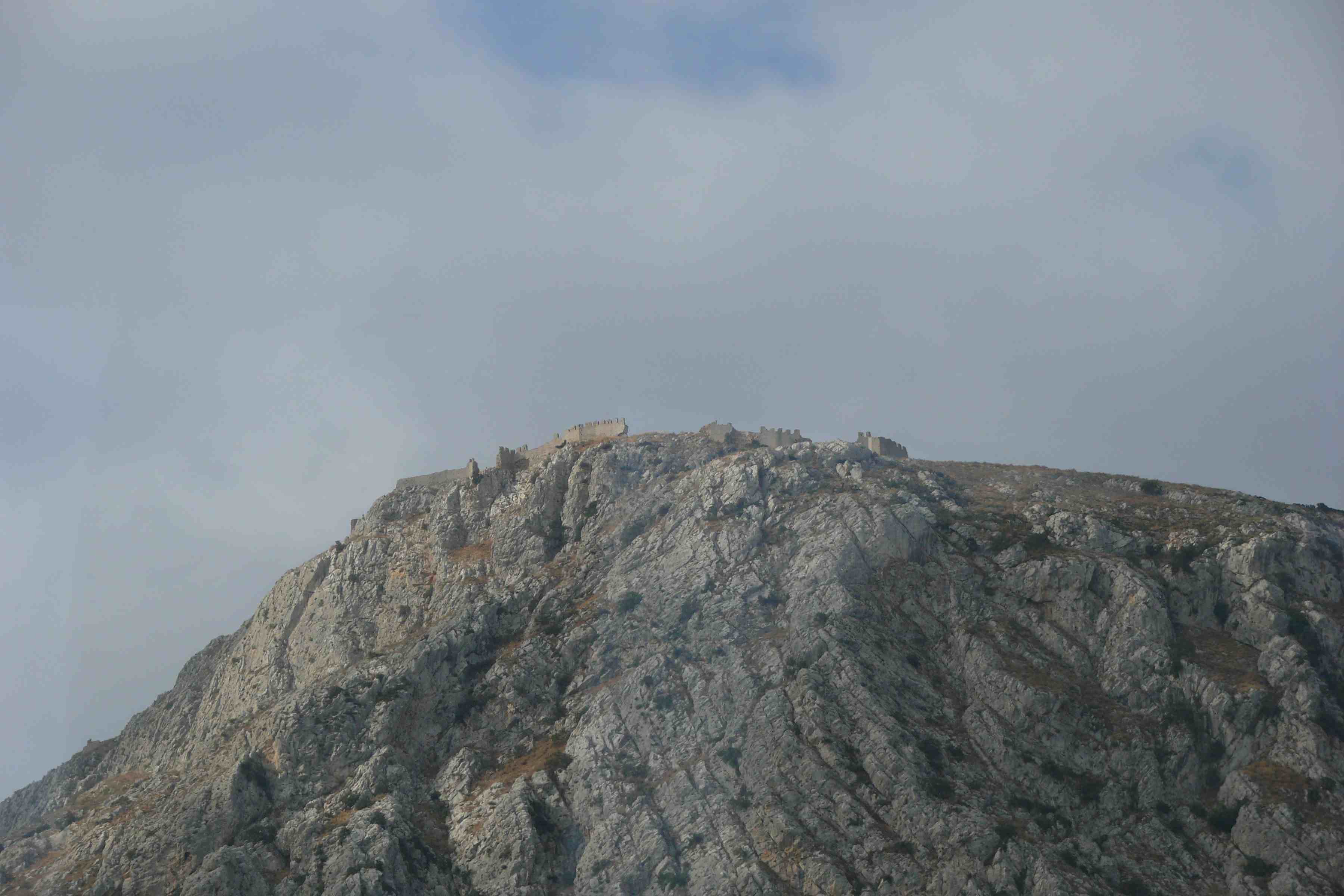






 We had missed the opportunity for a fish spa in Turkey, so we gladly took it up as we wandered around Heraklion. The centre of town is called Lion Square, but it was interesting to note that the fountain was round and the square was a triangle.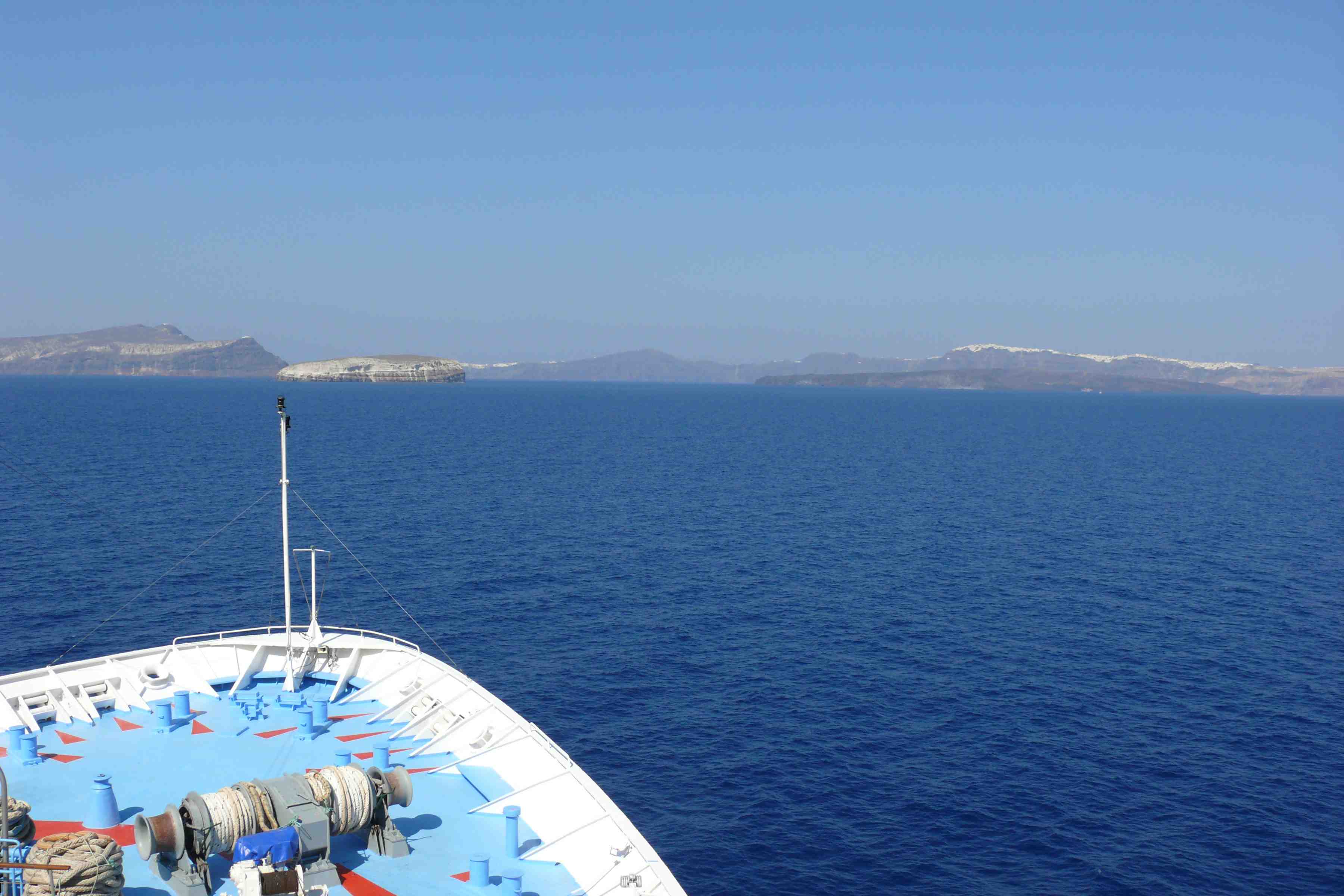





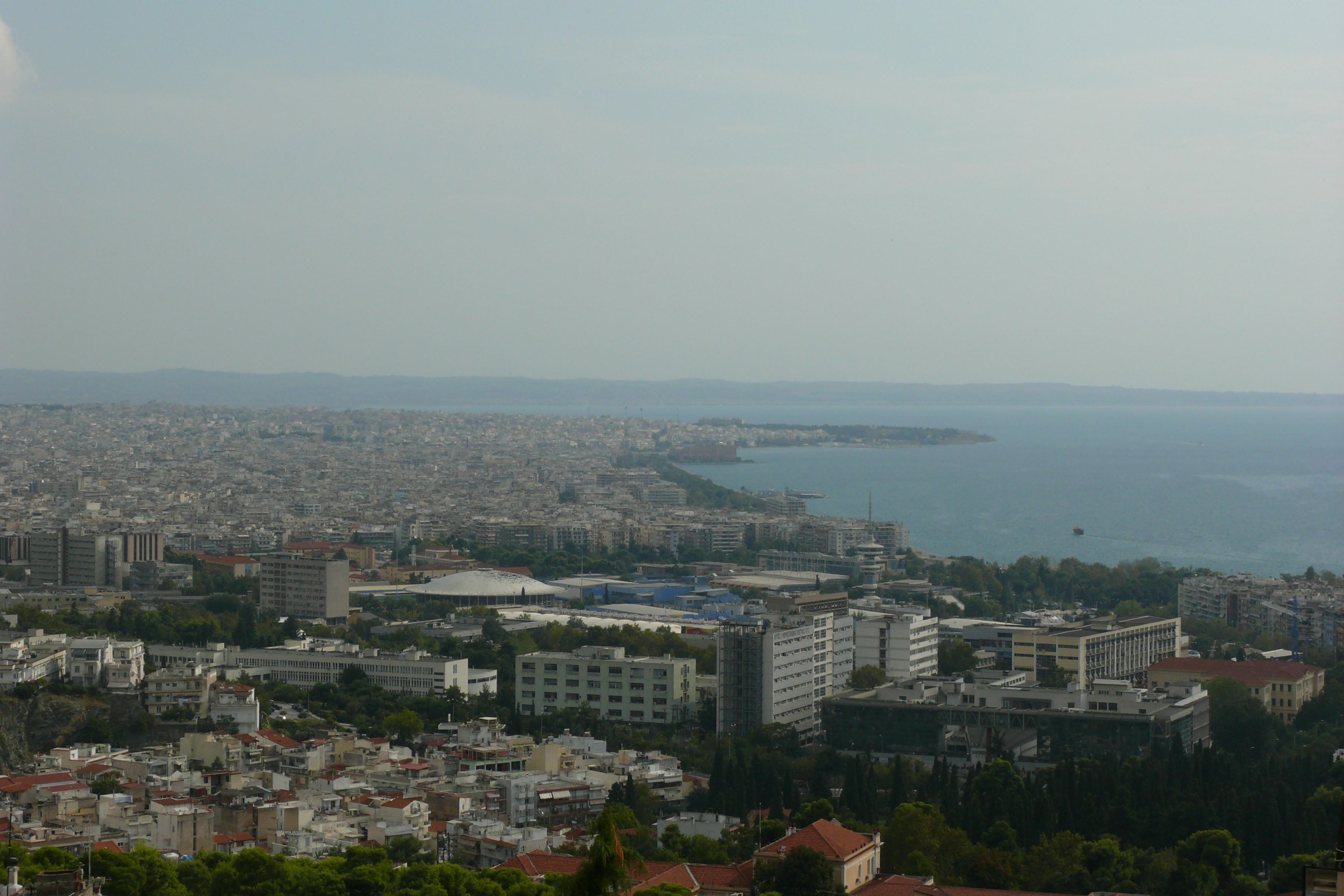
 n our journey north we saw Mt Olympus, or should I say, part of Mt Olympus as the cloud cover was pretty dense. That mountain range is home to a huge number of species of plant and animal, including bear, boar, wolf, deer and eagle.
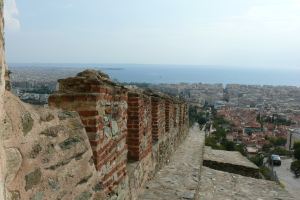 visited a panoramic view of the city from a high point of the old city wall. Following narrow quaint lane ways down the hillside we were in the middle of the city and visited an
 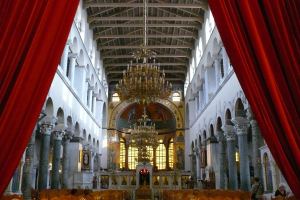 orthodox basilica dedicated to Demetrios, saw an arch and rotunda built by the 4th century Roman emperor,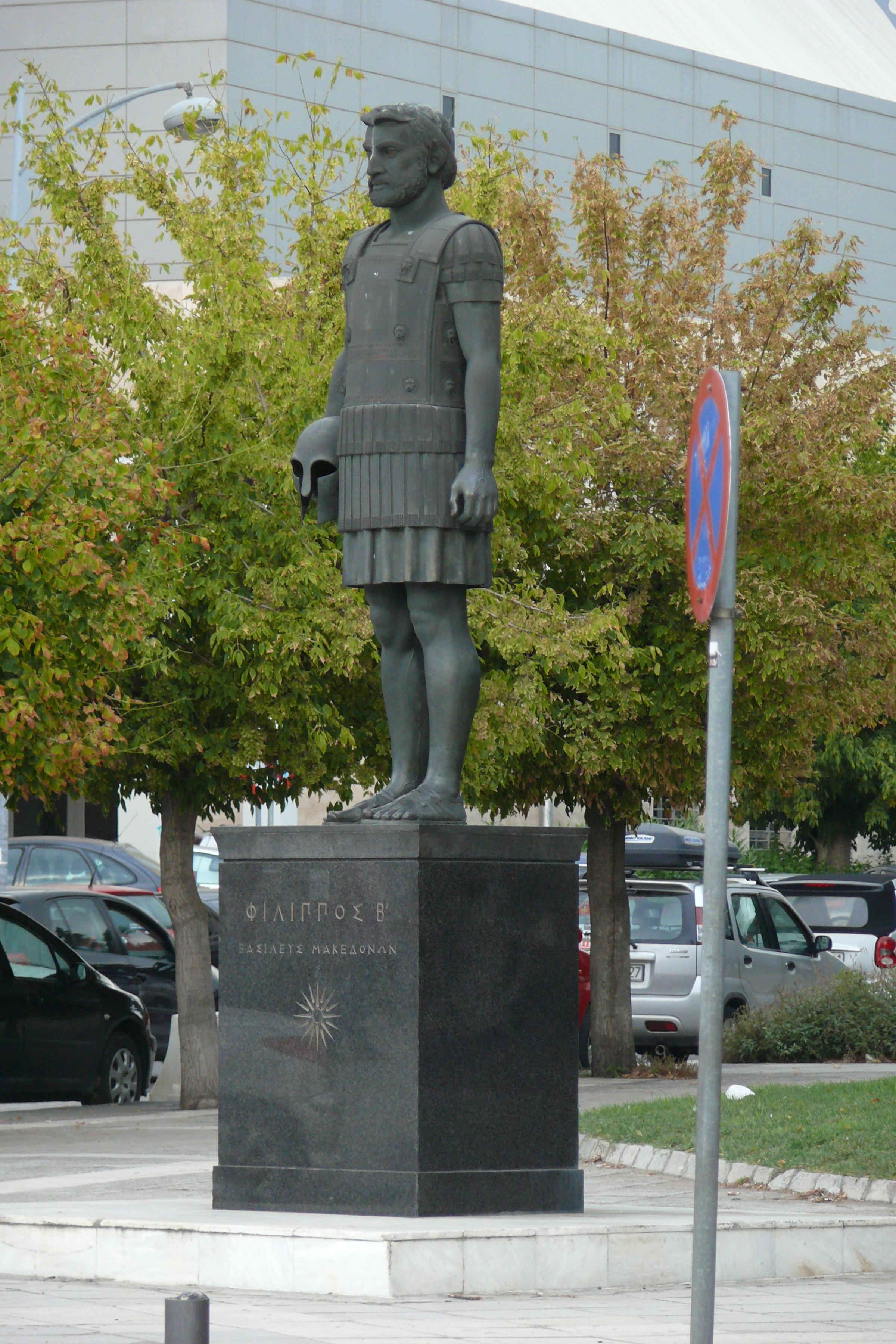



 Chris and Lynda Johnson